

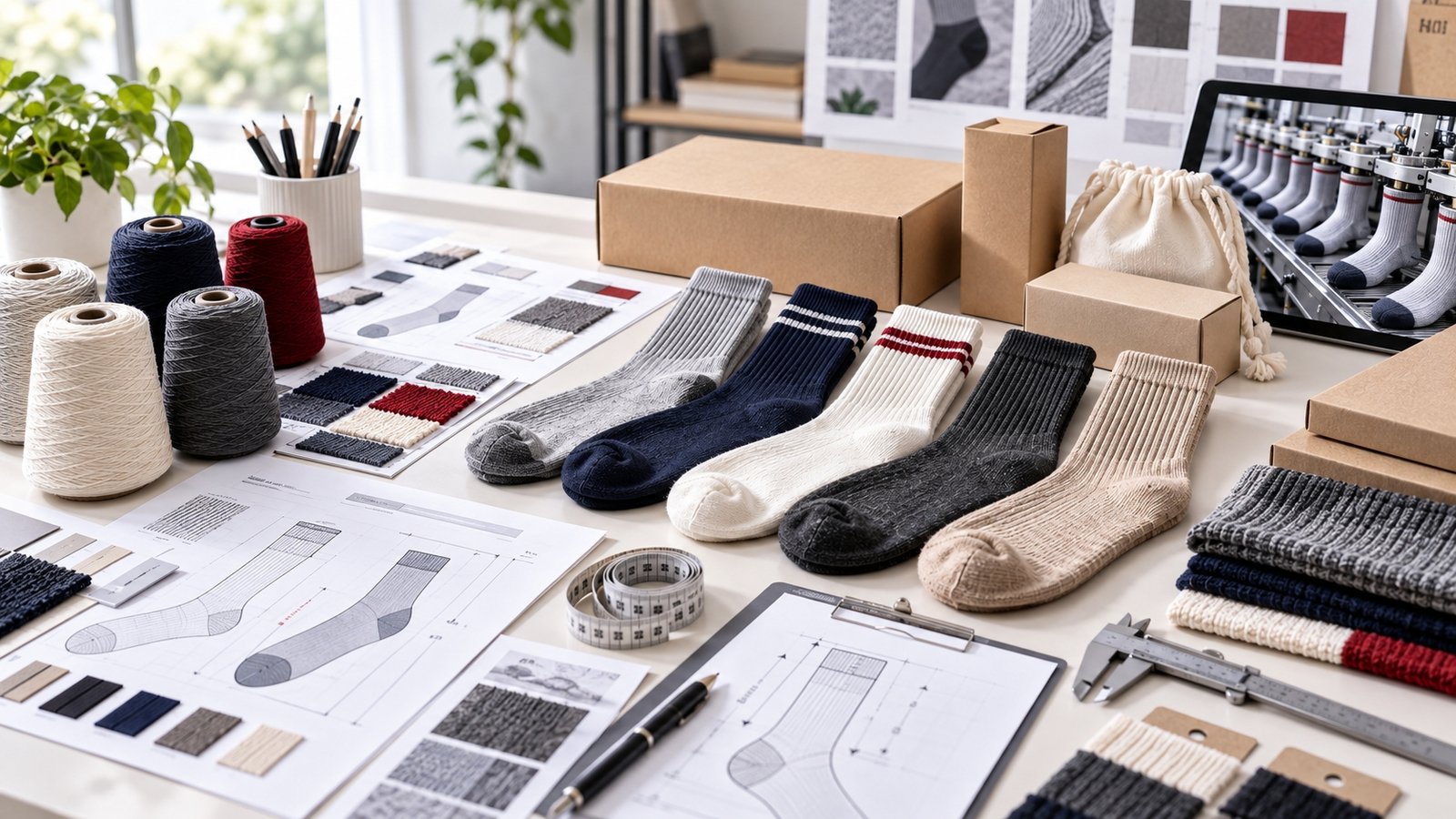
After more than 10 years in the sock industry, I have learned that a successful sock project depends on more than production capacity.
I started on the manufacturing side, working with production follow-up, quality coordination and shipment management. Later, I worked with an overseas sourcing team, supporting supplier selection and supply chain coordination.
Seeing the same project from both sides changed how I evaluate a sock supplier. Factories need to make the product correctly. Buyers also need confidence that the supplier understands the commercial goal, communicates clearly and responds when conditions change.
01 · Two Sides of the Same Sock Project
On the factory side, daily attention usually goes to yarn availability, knitting schedules, machine settings, finishing, inspection, packaging and shipment deadlines.
These activities are essential. Without effective production control, even a strong design or approved sample cannot become a reliable bulk order.
The buyer views the same project through a different set of questions:
- Will the bulk product match the approved specifications?
- Will the quality remain consistent across sizes, colours and production lots?
- Will the order be ready when the sales or retail programme requires it?
- Will the supplier communicate early if a problem appears?
A reliable sock supplier must connect these two perspectives.

A reliable sock supplier connects factory execution with the buyer’s product, quality and delivery priorities.
02 · Stable Quality Requires a Shared Reference
Buyers cannot inspect every production decision inside a factory. They depend on clear specifications and agreed references.
Before bulk production, both sides should confirm:
- Yarn composition and colour references
- Sock dimensions and tolerances
- Knitting structure and functional zones
- Logo placement and production method
- Approved sample status
- Packaging, labelling and carton requirements
The factory needs these details to organise production. The buyer needs them to judge whether the delivered goods match the agreement.
When the same approved information guides sampling, production and inspection, quality discussions become more objective.
03 · Clear Communication Protects the Project
Good communication is not simply replying quickly. It means providing the information the buyer needs to make a decision.
If a yarn colour is unavailable, a measurement cannot be achieved or a packaging material may delay shipment, the supplier should explain:
- What has changed
- Why it has changed
- Which products or dates may be affected
- What practical options are available
- Which decision requires buyer approval
Early and specific communication gives both parties time to manage the risk. A late surprise can affect launch dates, inventory planning and customer commitments.
04 · Delivery Reliability Begins Before Production
Delivery performance is often discussed only when an order is close to shipment. In practice, reliability begins much earlier.
Sampling time, material confirmation, packaging approval, testing requirements and production capacity all influence the final schedule.
A responsible supplier should identify the main checkpoints, confirm what information is still missing and update the timeline when an approved change affects production.
This creates a schedule that both the factory and the buyer can use, rather than a date based only on an initial estimate.
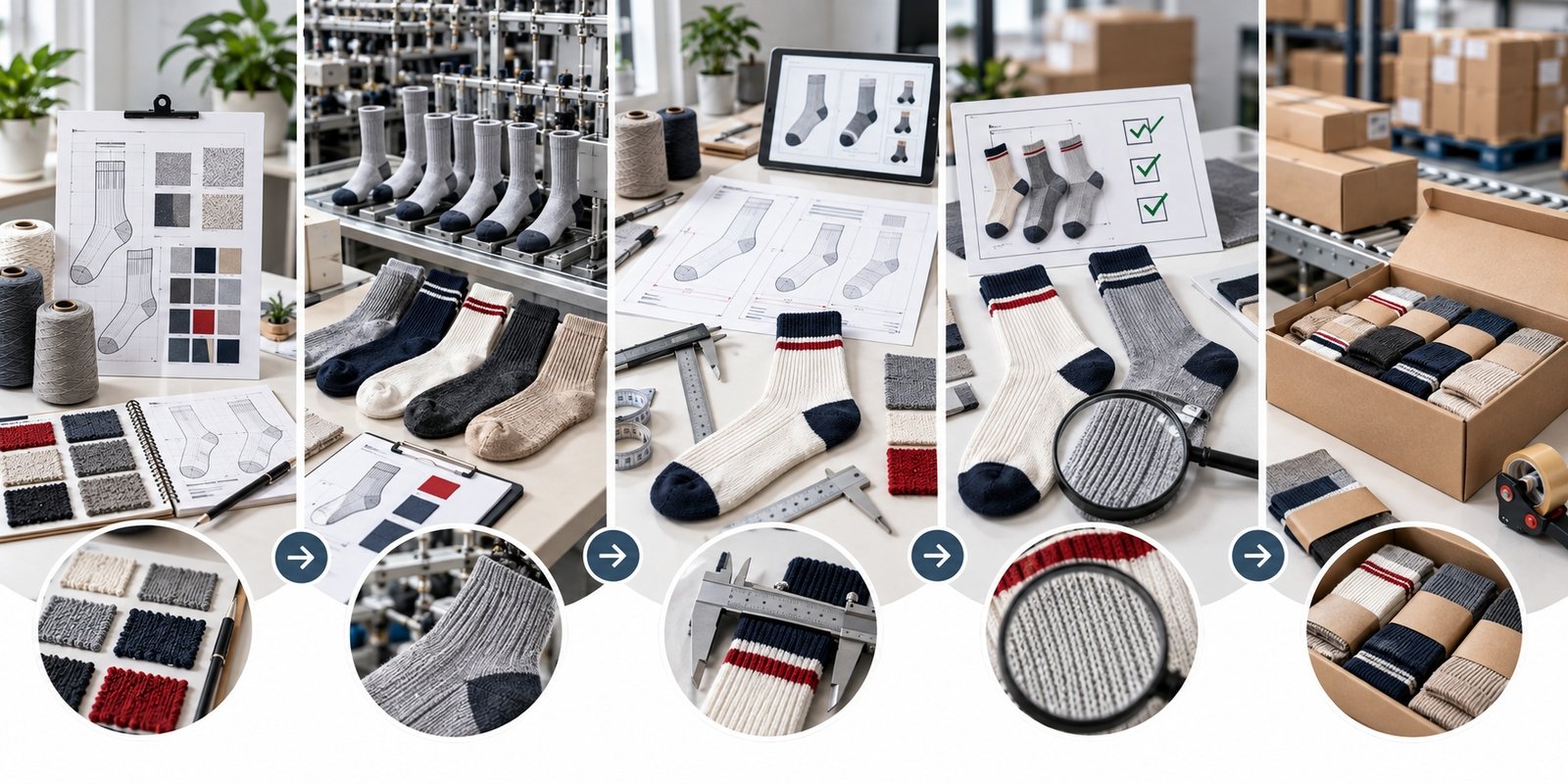
Reliable delivery connects confirmed specifications, production, inspection, approval and shipment preparation.
05 · Buyers Need Practical Problem Solving
Problems can happen in any supply chain. The supplier’s response often matters as much as the original issue.
When a problem appears, buyers need a supplier that can:
- Identify the affected order, style, colour or quantity
- Separate confirmed facts from assumptions
- Explain the likely cause
- Propose realistic corrective options
- Record the agreed decision
- Prevent the same issue from being repeated
This approach helps protect the current order while improving future production.
06 · Evaluate Understanding, Not Only Equipment
Machines, capacity and product samples are useful indicators, but they do not show the complete working relationship.
When evaluating a sock supplier, discuss one of your actual products. Ask how the supplier would confirm the specification, manage sampling, prepare bulk production, control quality and communicate a change.
The response will show whether the supplier understands both manufacturing requirements and buyer priorities.
At Canfly Socks, we support brands, retailers and private label customers through product development, sampling, manufacturing, quality control, packaging and shipment coordination.
If you are developing a sock programme or reviewing your current supply process, send us your product brief, reference images or specification sheet.
Email: sales05@zjcanfly.com
WhatsApp: +86 137 3535 0489