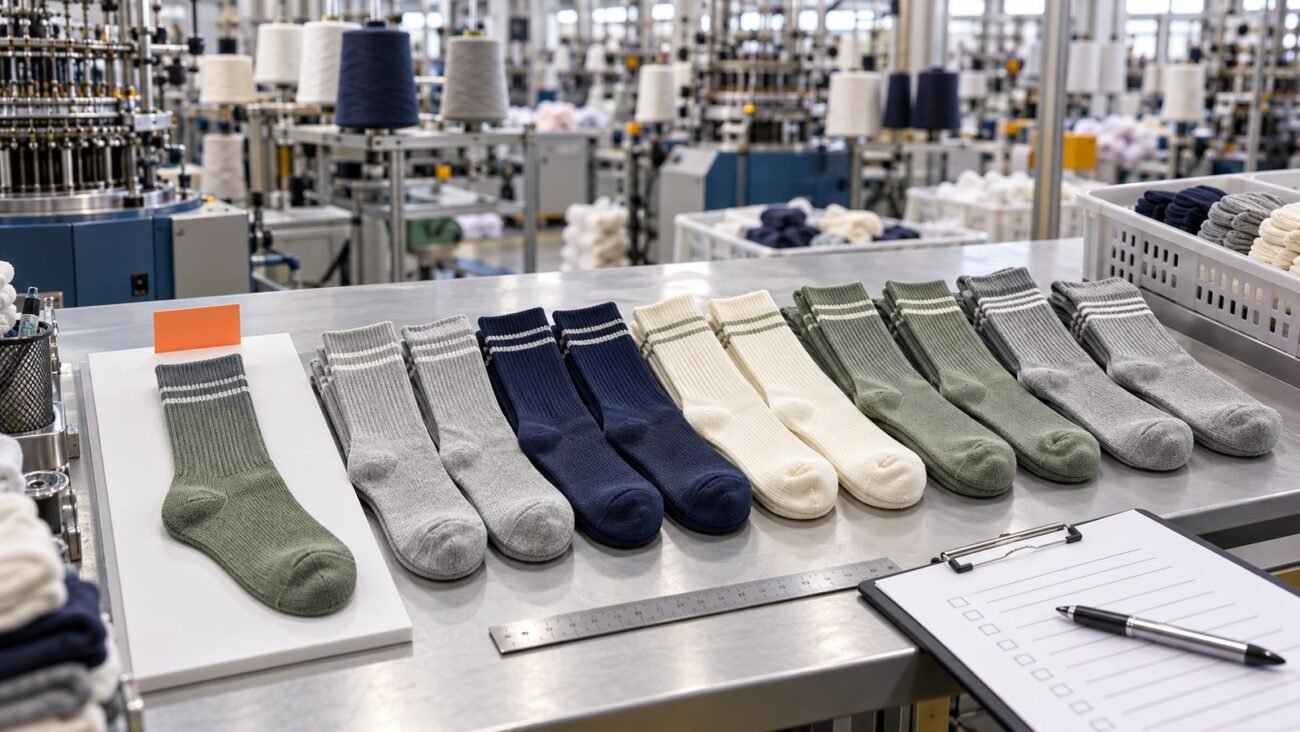

A sock sample can look good and still require changes before bulk production. Appearance is only one part of approval. The buyer and supplier also need to confirm measurable dimensions, construction, materials, function, artwork, finishing and packaging.
The purpose of a development sample is to make those decisions visible. A requested adjustment does not automatically mean that the sampling process has failed. It may show that the product is moving from an initial idea toward a specification that can be produced and checked consistently.
Looking right is not the same as being production-ready
A photograph can confirm the general appearance of a sock, but it cannot fully show stretch, thickness, internal loops, toe-seam feel or measurement recovery. Even a physical sample may not control every characteristic unless the approved requirements are recorded.
Before approving bulk production, identify what the sample proves and what must be supported by a specification, color reference, packaging file or agreed test method.
- Overall appearance and proportion
- Yarn and construction reference
- Finished measurements and tolerances
- Color and artwork position
- Functional zones or special features
- Finishing and packaging version
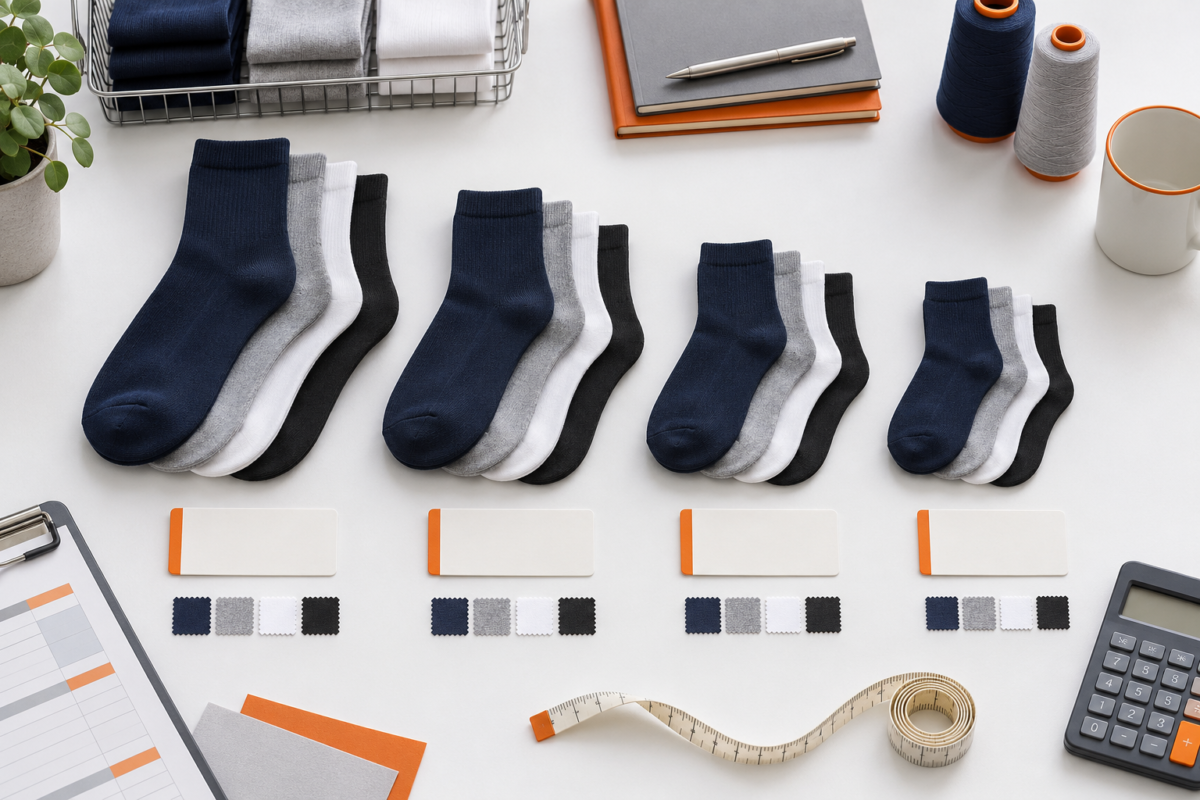
1. Confirm the measurements after finishing
Knitted products can change during boarding, washing, setting or other finishing processes. The relevant finished measurements should therefore be checked on the prepared sample using the agreed method.
Depending on the sock, the review may include foot length, leg height, cuff width, heel position and other construction-related dimensions. The buyer and supplier should also agree on the measurement points and tolerance rather than relying only on a retail size label.
If the sample is too short, too loose or out of proportion, the production team may need to adjust the construction or finishing conditions before another sample is made.
2. Review fit, stretch and recovery together
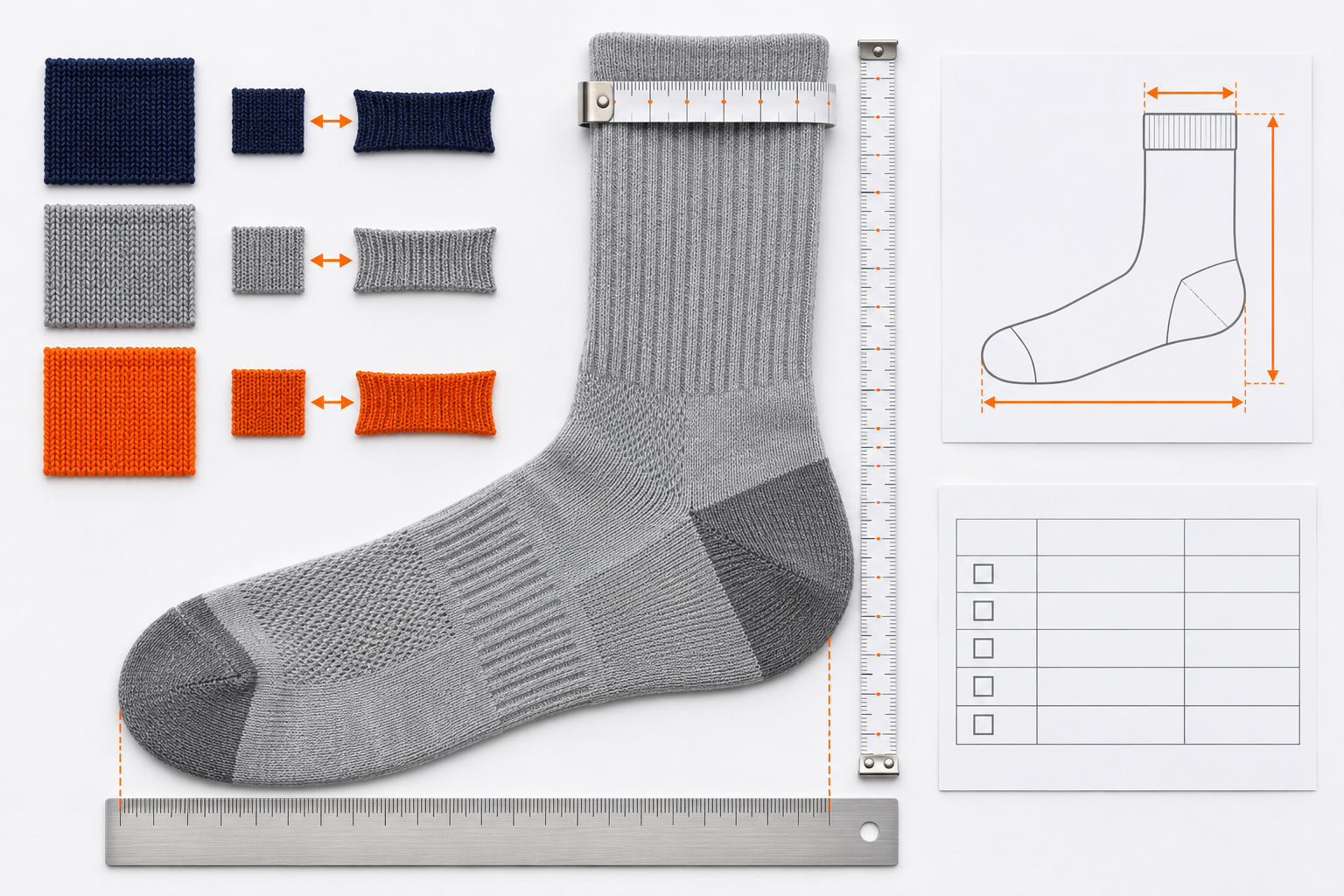
Finished measurements, stretch and recovery should be checked using an agreed method.
A sock should not be evaluated by one flat measurement alone. Stretch and recovery affect how the product fits, stays in position and returns after use.
Yarn selection, elastic content, stitch density and knitted structure can all influence the result. A tighter construction may improve definition but reduce stretch. A looser construction may feel softer while changing support, appearance or dimensional stability.
The appropriate balance depends on the product purpose. Everyday socks, sports socks, thermal socks and grip socks may require different decisions.
3. Check whether the requested construction is stable
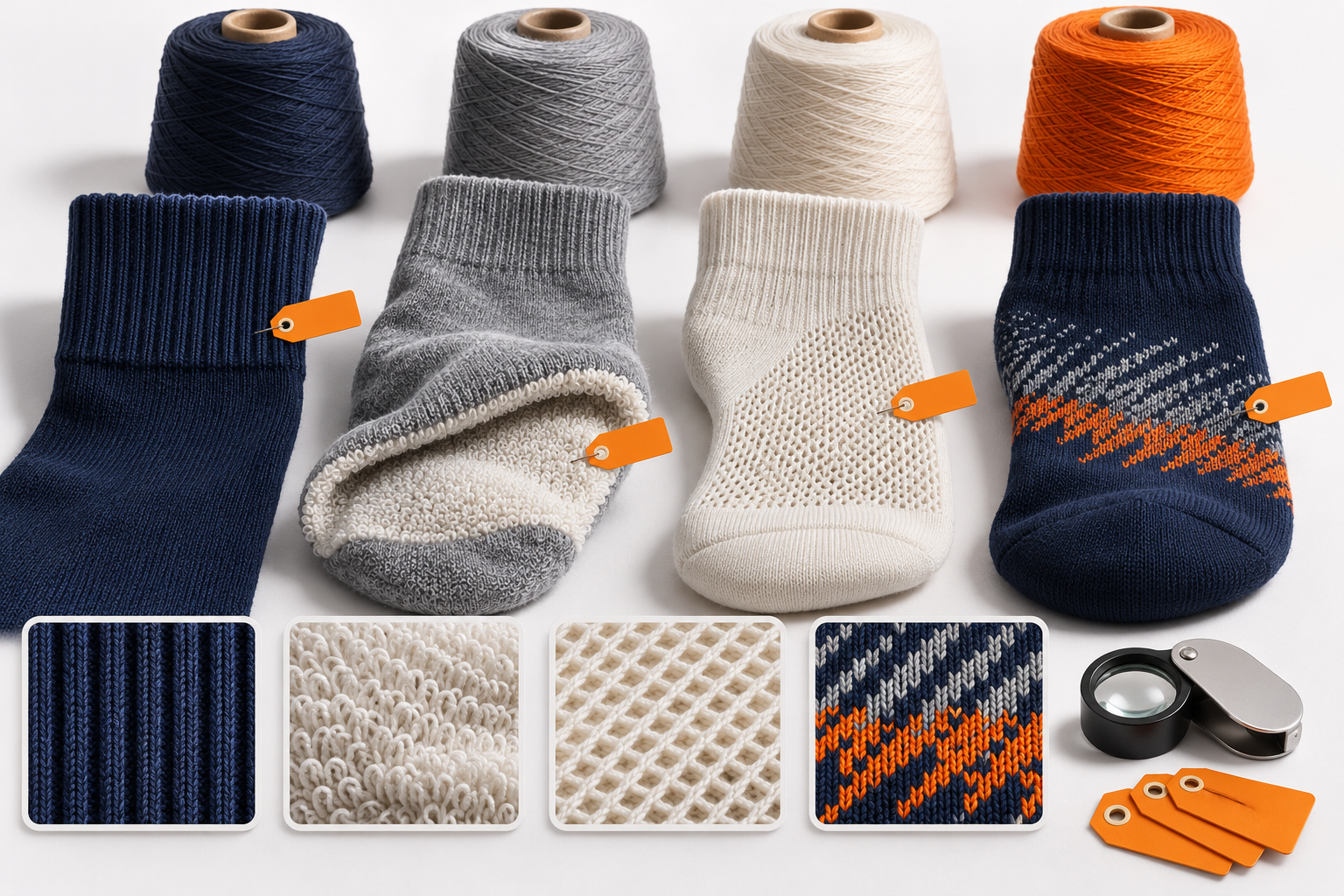
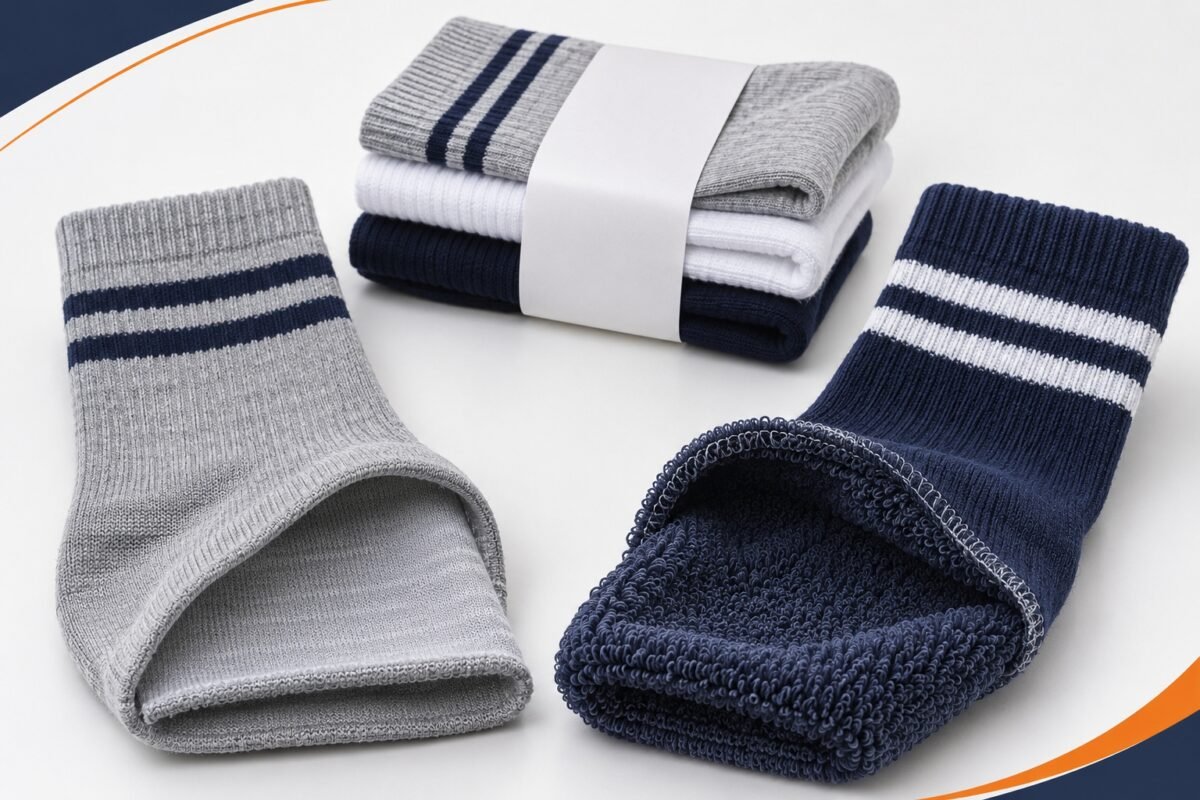
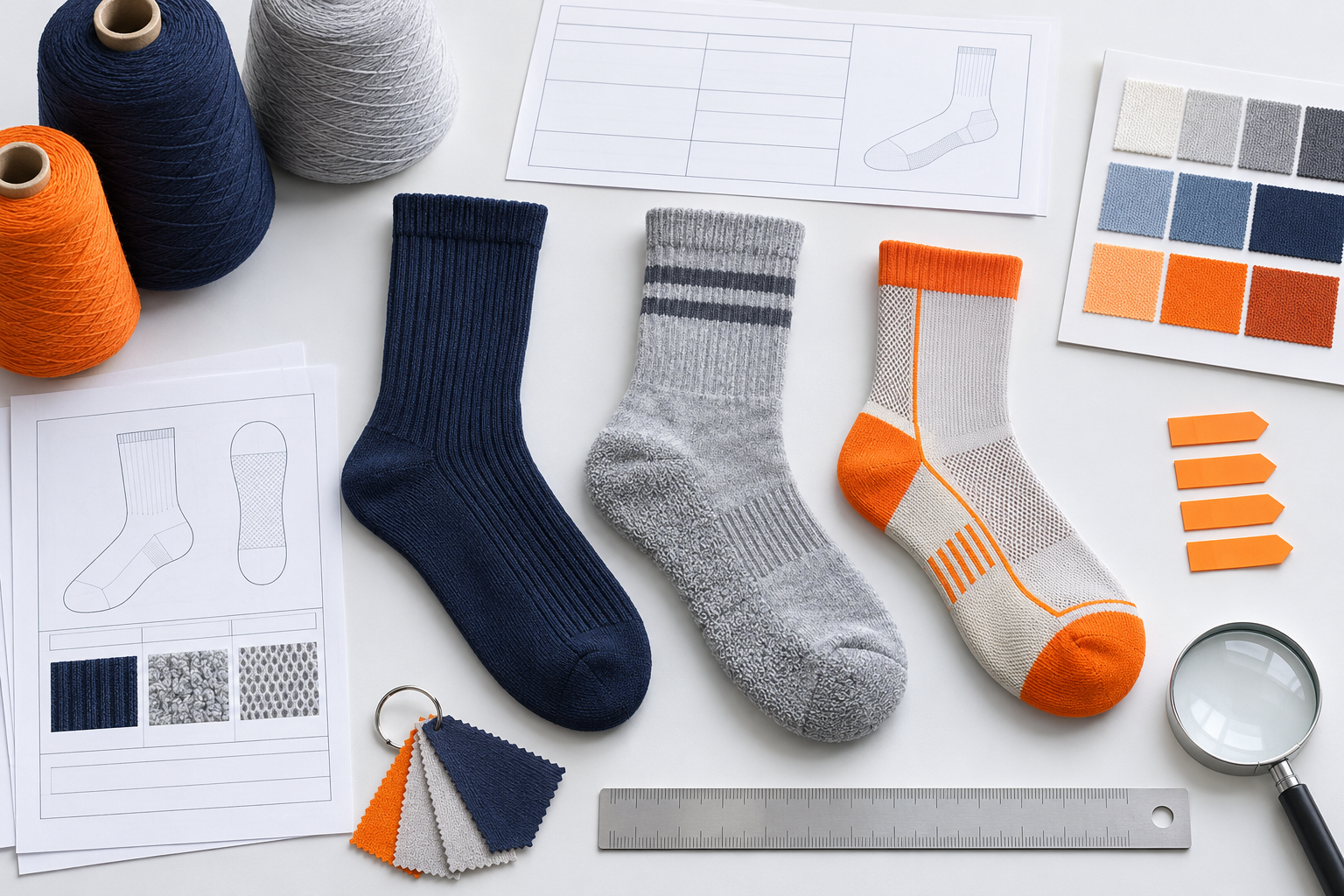
Rib, terry, mesh and jacquard structures may need adjustment to achieve a stable result.
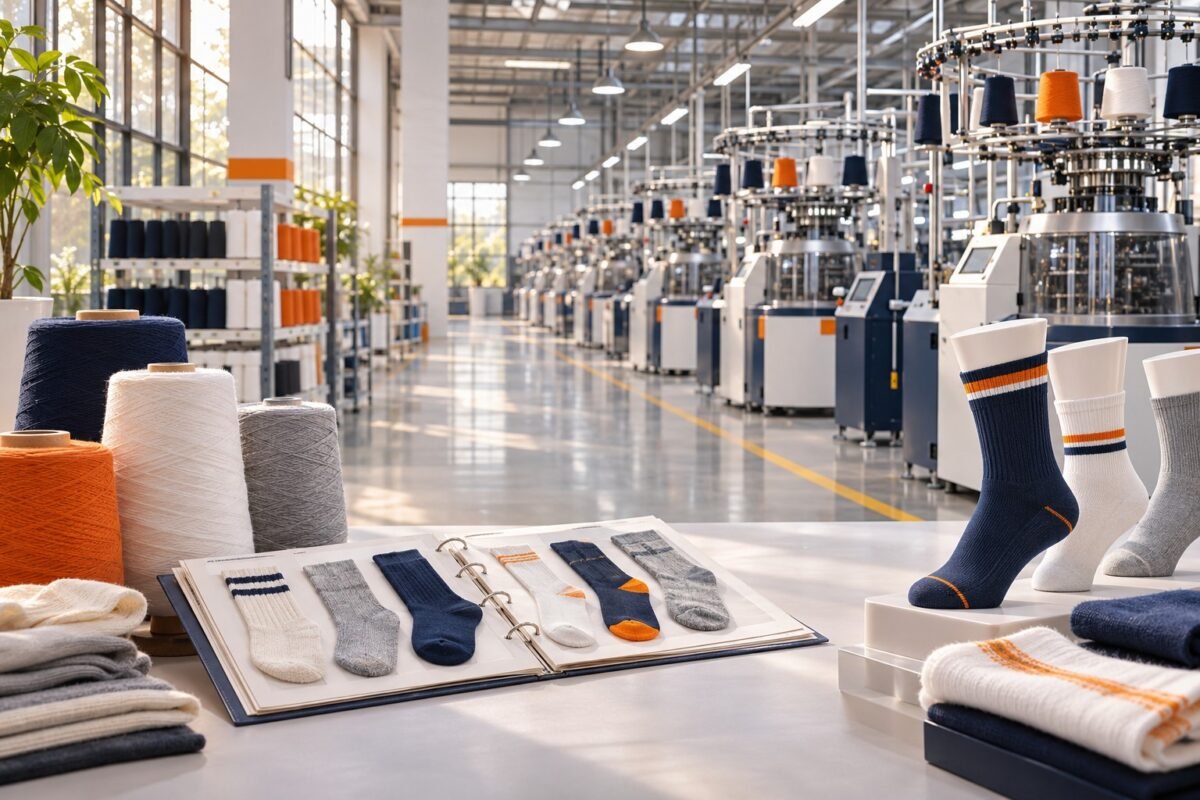
Some design features can be made in several ways. Terry coverage, mesh zones, rib structures, compression areas and cushioning placement must match the available construction route and the required performance.
A sample may need adjustment when a feature creates excessive bulk, uneven tension, distortion or an unstable transition between knitted zones. The supplier may recommend changing yarn, density, placement or the construction method.
The buyer should confirm which features are essential and which can be modified during development. This helps the supplier protect the intended function while finding a practical production route.
4. Evaluate artwork on the actual sock structure
Artwork that looks clear on a screen may change when knitted into a sock. The result depends on stitch count, color changes, yarn thickness, sock size and the position of the design.
Small details may lose definition. Circular logos may stretch. A pattern may cross the heel, toe or rib transition differently from the original artwork. The sample should therefore be reviewed on the intended size and construction.
If the design is not clear or stable, possible changes include simplifying the artwork, changing its scale, moving its position or using a different decoration method. Any revised artwork should receive a new version reference.
5. Inspect the toe, cuff and finishing details
The toe seam, cuff, loose yarns, pair matching and finishing quality affect the final wearing and retail experience. These details should be reviewed before bulk production instructions are released.
For example, a cuff may look correct when flat but feel too tight for the intended use. A toe closure may require a different setting or finishing route. Pair appearance can also change if boarding or pressing is inconsistent.
The relevant checks should be connected to the product specification rather than treated as a general visual inspection.
6. Confirm packaging with the final sample
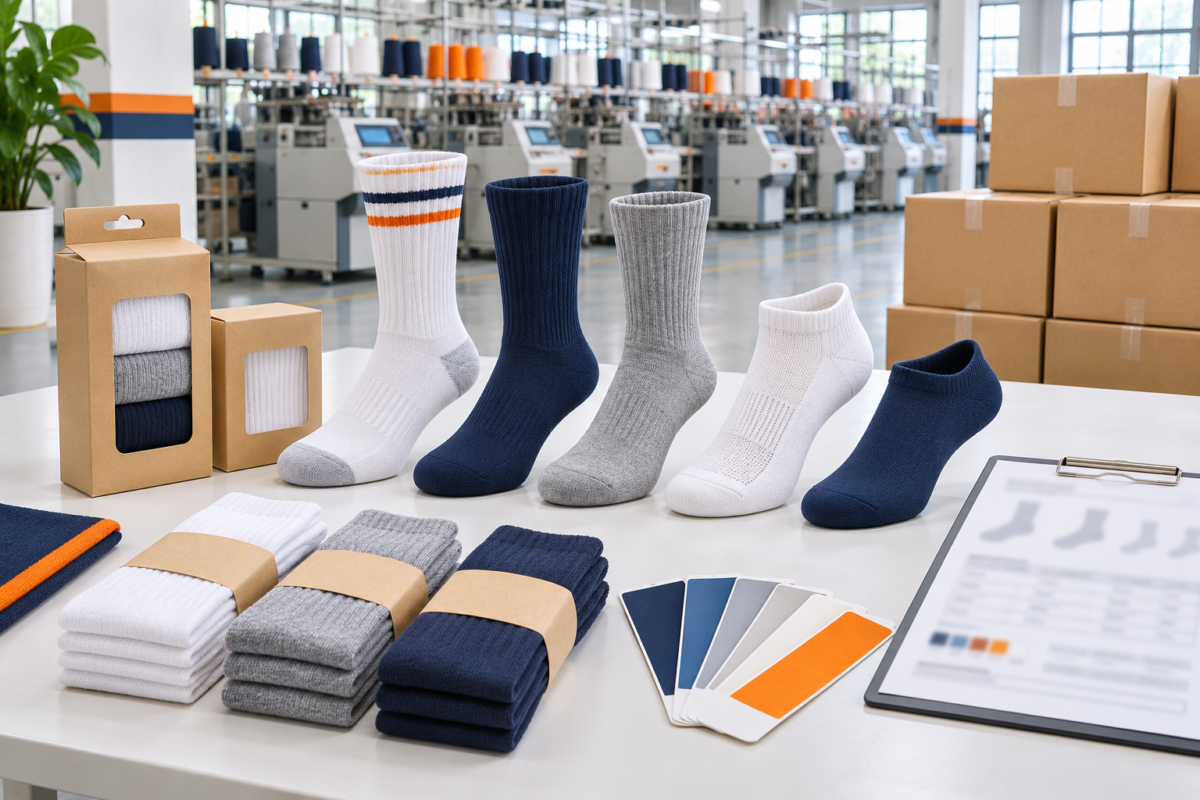
Packaging decisions can reveal problems that are not visible during product-only review. The finished sock must fit the approved folding direction, paper band, header card, hanger, bag or box.
Confirm the pairs per pack, size and color assortment, folding orientation, label position and pack dimensions. A change in sock thickness, cuff length or pack quantity may require a different packaging component or carton calculation.
Printed materials should use the approved artwork version. Confidential brand information, barcodes and market-specific copy should be checked by the responsible buyer before production.
7. Record every approved change

The final sample, current specification and packaging version should be approved together.
The final sample should be linked to the current specification. If the yarn, dimensions, artwork, construction or packaging changes, update the relevant record and identify the approved version.
Messages are useful for discussion, but they should not be the only production instruction. A clear approval record helps development, production, inspection and packing teams work from the same information.
Before bulk production, both sides should know which sample and documents form the approved reference and which points remain open.
How many sample rounds are needed?
There is no single number for every sock project. A simple repeatable style may require fewer development steps than a new performance structure, detailed artwork or complex retail pack.
The useful question is whether the current sample and specification answer the production-critical questions. Extra rounds should have a clear purpose, such as correcting measurements, testing construction, confirming color or approving packaging.
What should a buyer send for development review?
Share the design or physical reference, intended use, target market, size range, material direction, required features, approximate quantity, packaging needs and target delivery window.
Mark which requirements are fixed and which are open to recommendations. If a previous sample exists, identify what should remain unchanged and what needs improvement.
A clear answer
A sock sample may need changes before bulk production because visual approval does not confirm every measurable, structural, functional and packaging requirement. The final sample should support a current specification that production and inspection teams can follow.
Send Canfly your design, intended use, size range, required features, quantity and packaging plan so the development route can be reviewed before bulk production.