
Developing a custom sock collection does not have to begin with a complete technical specification.
A brand can start with a product idea, a reference image or an existing sample. However, the first discussion becomes much more useful when the supplier understands the intended use, customer, design direction, size range, estimated quantity and commercial requirements.
A clear custom sock development brief helps separate confirmed requirements from details that still need to be tested. It also reduces assumptions during sampling and quotation.
01 · Begin With the Product’s Intended Use
Start by explaining how and where the socks will be worn. For example, are they intended for:- Everyday wear
- Running or gym use
- Hiking or outdoor activities
- Workwear
- Children’s or baby collections
- Gifts and promotional programmes
- Fashion retail or subscription boxes
02 · Share a Reference and Explain the Direction
A useful reference can be an artwork file, mood board, product photograph, physical sample or simple sketch. The reference should be accompanied by a short explanation:- Which features should remain?
- Which details need to change?
- Is the reference about colour, construction, fit or overall appearance?
- Which elements are essential to the brand?
- Which parts are still open to supplier recommendations?
03 · Provide the Available Design Details
Share the information already available, even if some items are still undecided. Useful design details may include:- Brand logo and artwork files
- Colour references or Pantone numbers
- Preferred sock height
- Size range and market sizing system
- Logo position and decoration method
- Cushioning, mesh or compression requirements
- Preferred fibre composition
- Labelling and packaging ideas
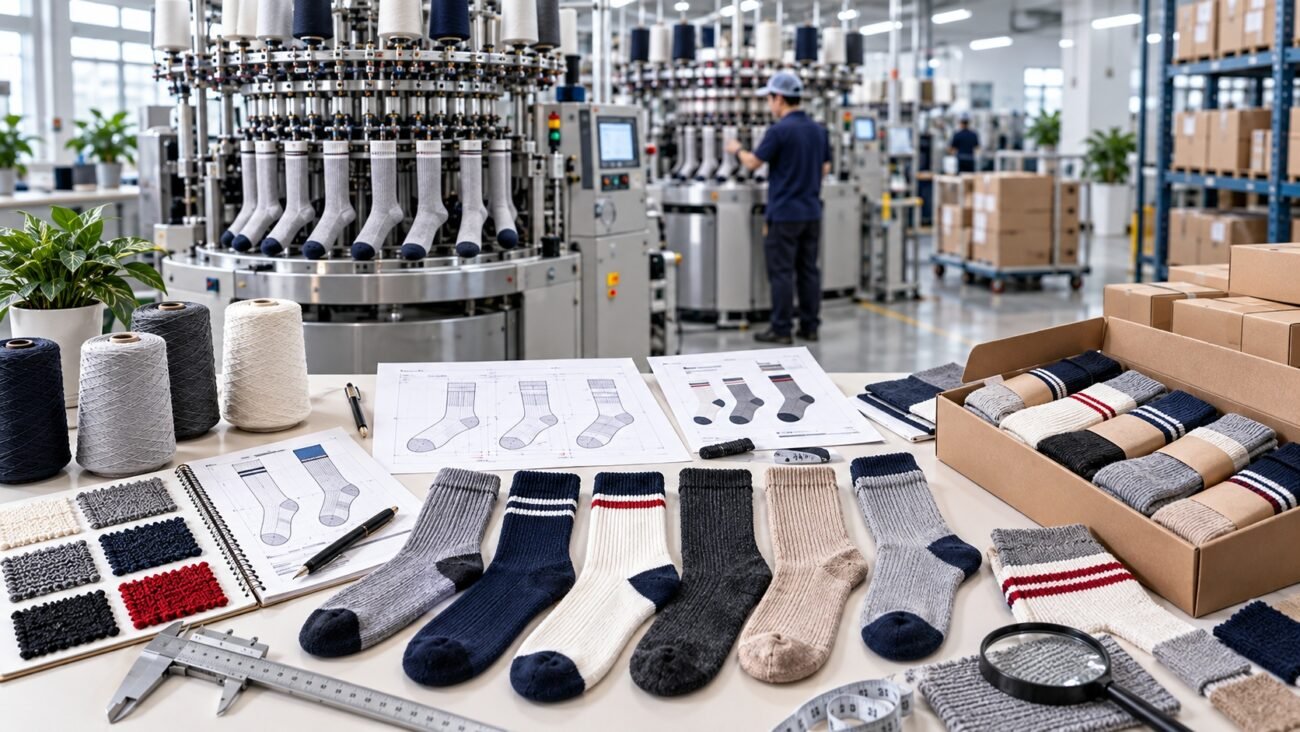
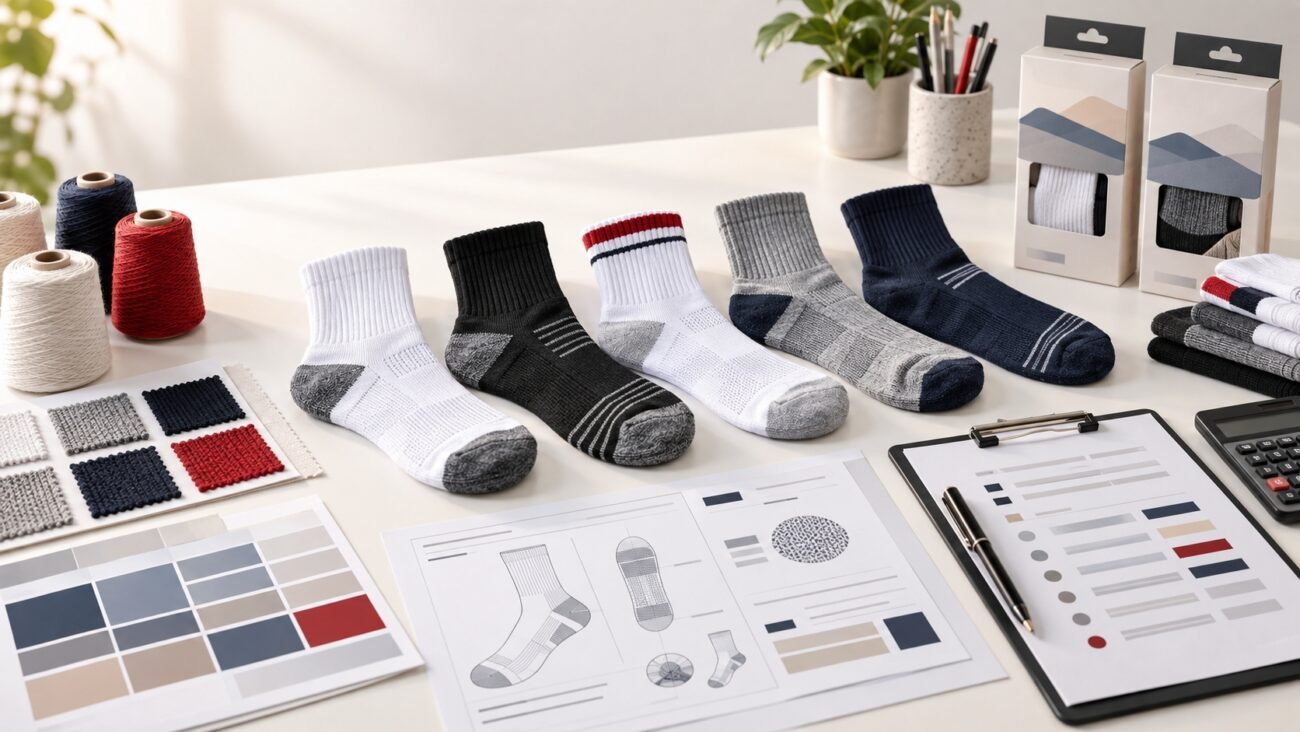
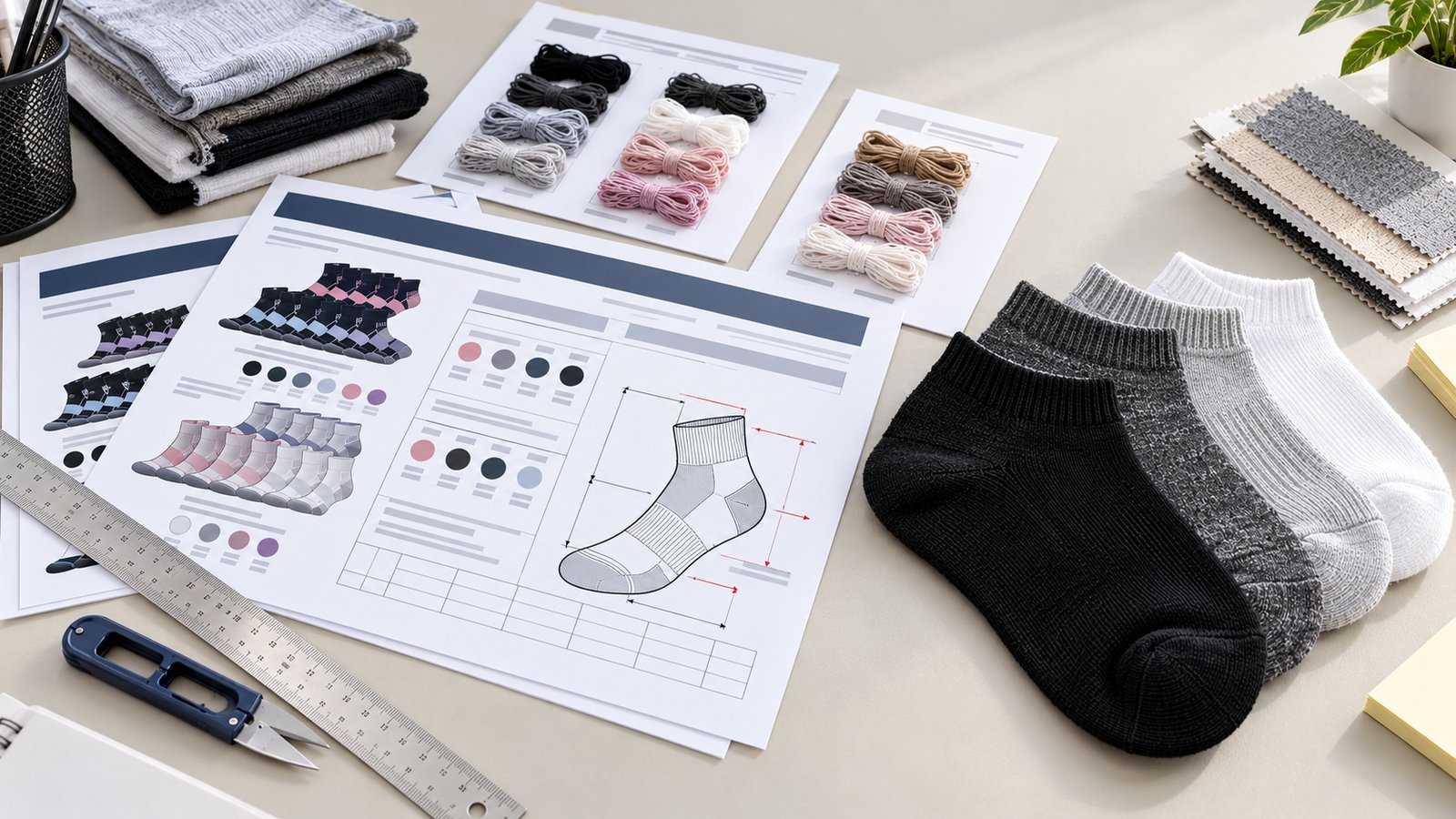
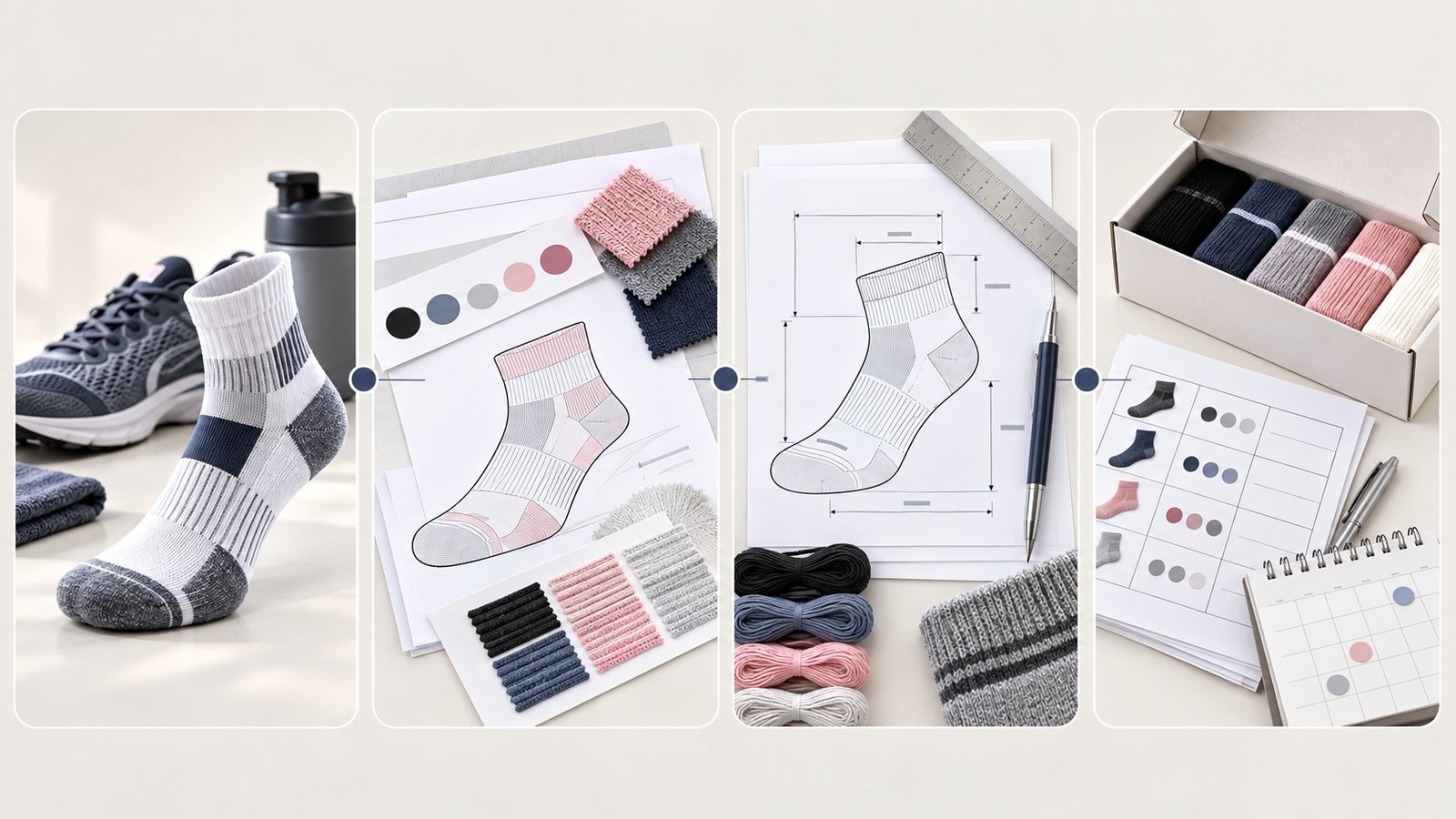
A useful development brief connects intended use, design references, product specifications and commercial requirements.
04 · Explain the Commercial Context
The supplier also needs to understand the commercial framework around the product. Include:- Estimated quantity per style, colour and size
- Number of designs in the collection
- Target market and sales channel
- Packaging format
- Required certifications or testing
- Target launch or delivery period
- Delivery destination
05 · Use Sampling to Confirm Unresolved Details
The first brief is the beginning of product development rather than the final production instruction. Sampling can help verify:- Whether the artwork can be knitted clearly
- Whether the proposed yarn suits the intended use
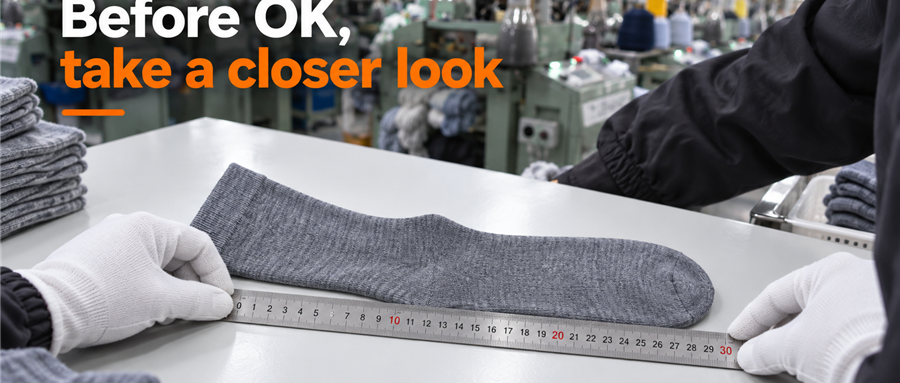
- Whether measurements and stretch provide the required fit
- Whether cushioning or functional zones are positioned correctly
- Whether colours and packaging match the brand direction
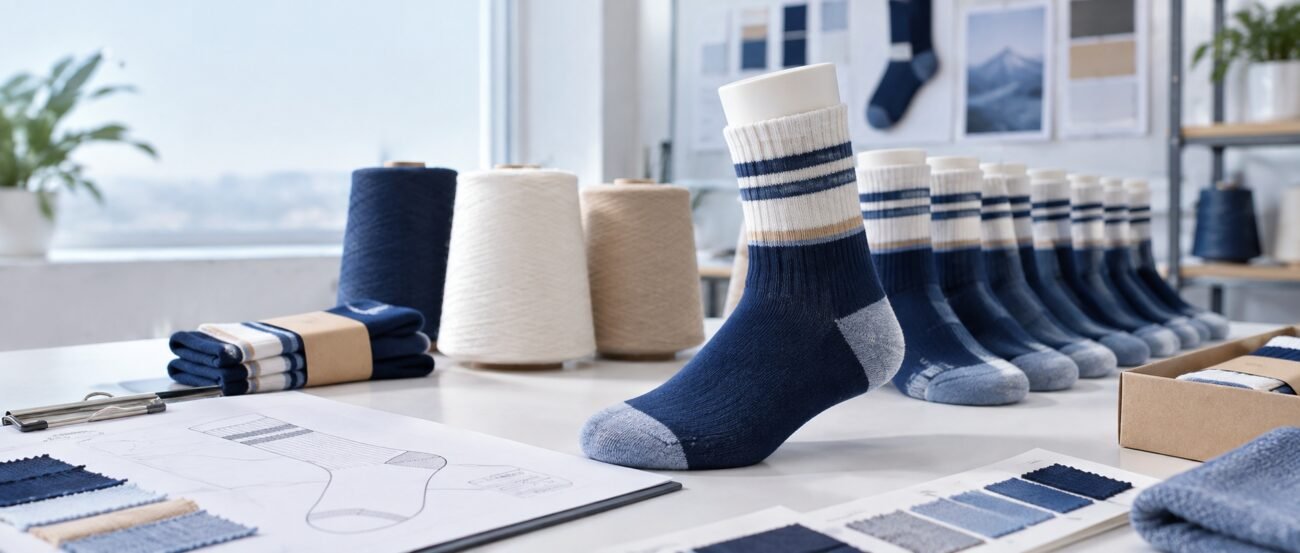
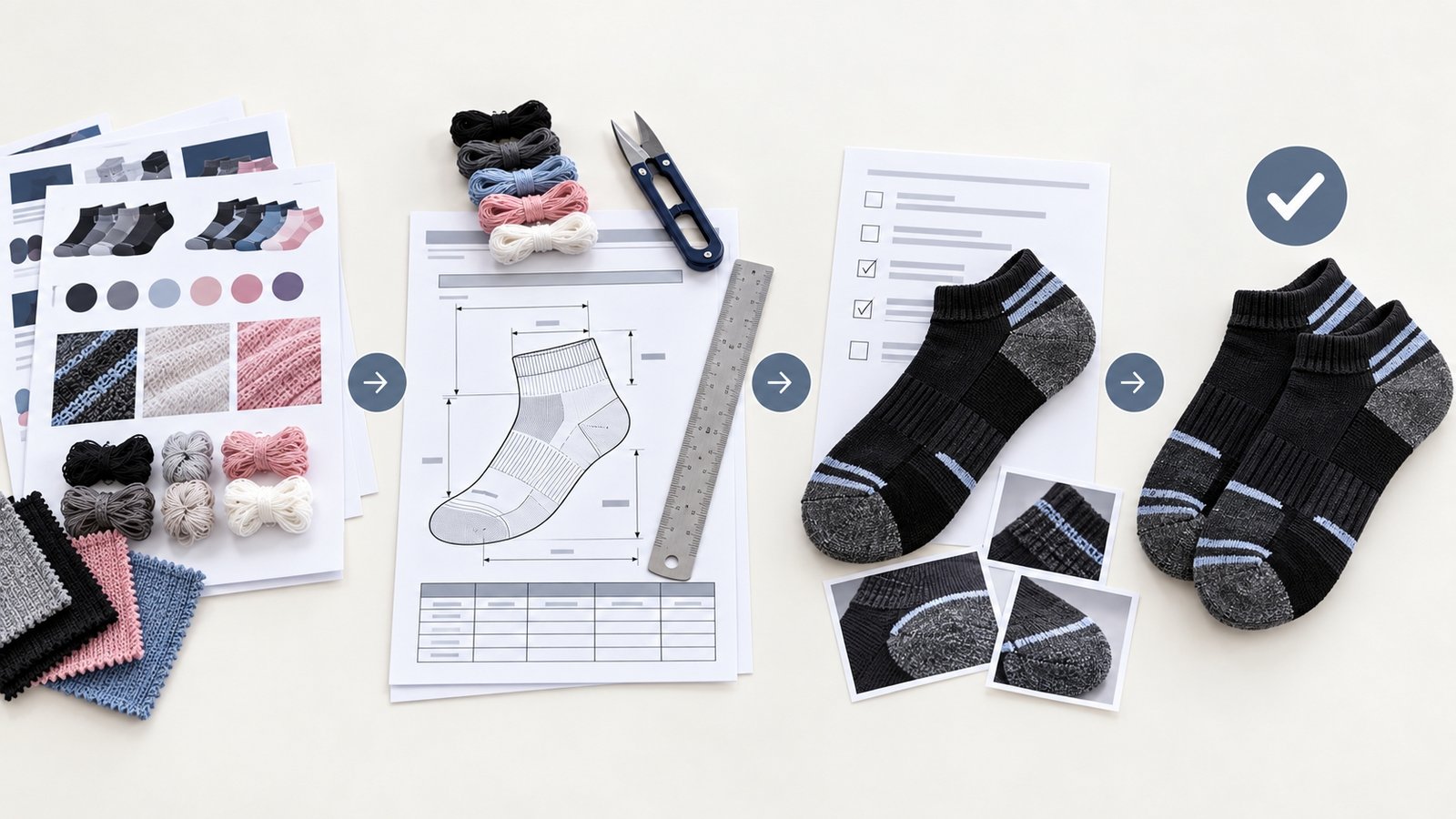
Custom sock development moves from the initial brief through technical review and sampling to an approved production reference.
06 · A Practical First Enquiry Checklist
Before contacting a supplier, prepare these six items:- Product purpose: how the socks will be used.
- Target customer: who will wear or buy them.
- Reference material: artwork, images, samples or sketches.
- Known specifications: size, colours, materials and construction preferences.
- Commercial requirements: estimated quantity, packaging and destination.
- Timing: sampling deadline and expected launch or delivery period.