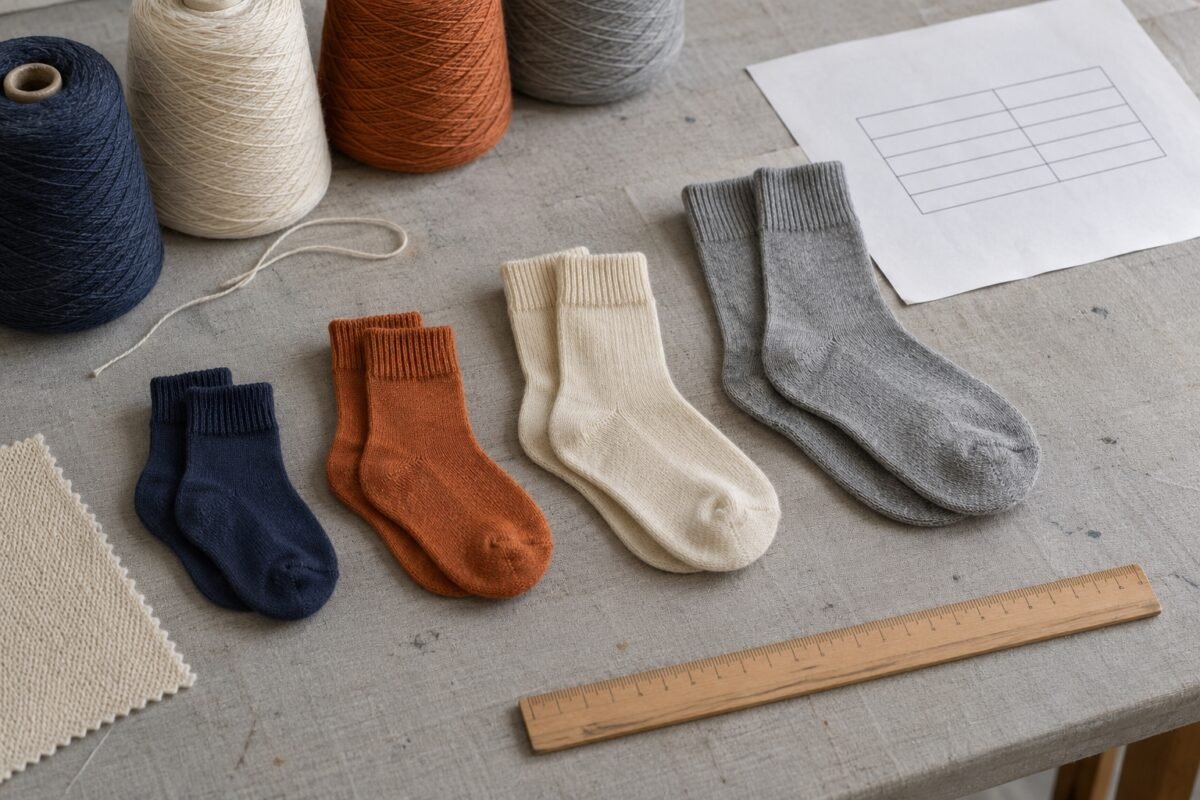


A sock project moves through several stages before finished goods are ready for shipment.
Design ideas become technical requirements. Technical requirements become samples. Approved samples become bulk production instructions. Finished goods then move through inspection, packing and shipment preparation.
Problems do not always begin inside one production process. They can occur when information is not transferred clearly between stages. A colour may be changed during sampling without updating the material record. A barcode may be approved by the buyer but omitted from the final packaging instructions.
Clear handover points help both sides understand what has been confirmed, what is still open and who is responsible for the next action.

 At Canfly Socks, we support brands, retailers and private label customers through product development, sampling, manufacturing, quality control, packaging and shipment coordination.
To discuss a sock project, send us your product brief, reference material, estimated quantity and expected delivery schedule. The relevant milestones and responsibilities can then be confirmed for the specific order.
Email: sales05@zjcanfly.com
WhatsApp: +86 137 3535 0489
01 · What Is a Handover Point?
A handover point is the moment when information, responsibility or an approved reference moves from one stage or person to another. Each handover should identify:- The information or physical reference being transferred
- The current approved version
- The person responsible for confirmation
- The next action and its owner
- The date or condition required before work continues
- The method for recording later changes
02 · From Product Brief to Technical Specification
The first handover turns the buyer’s product idea into practical development requirements. The initial brief may contain artwork, reference samples, intended use, target customer, estimated quantities, size range, packaging ideas and delivery expectations. The supplier then needs to identify which requirements are confirmed and which require recommendations or sampling. Questions about yarn, construction, measurements, logo execution and functional features should be resolved or recorded as open items. The output of this stage should be a development specification that both sides can review before sampling begins.03 · From Sample Development to Sample Approval
Sampling often involves several rounds of feedback. Colours, measurements, artwork placement or construction may change between versions. At sample approval, confirm:- Which physical sample or sample photographs are approved
- The final specification version
- Approved yarn and colour references
- Size measurements and tolerances
- Logo, pattern and functional details
- Packaging decisions already confirmed
- Any remaining conditions before bulk production
Clear handovers connect the product brief, sample approval, bulk production, quality inspection and shipment preparation.
04 · From Approved Sample to Bulk Production
Before production starts, the factory needs a complete and consistent instruction set. This handover should cover materials, colours, construction, size breakdown, order quantities, approved changes, quality requirements and the production schedule. The production team should know which characteristics require special attention and what to do if an approved material, colour or construction cannot be followed. A pre-production review or first-piece confirmation can help verify that the manufacturing instructions match the approved sample.05 · From Production to Quality Inspection
Quality inspection should use the same approved references as production. The inspection team may need:- The approved sample and specification
- Measurement points and tolerances
- Colour and appearance references
- Workmanship requirements
- Size and quantity breakdowns
- Pairing, labelling and packaging instructions
- The agreed method for recording defects and corrective action
06 · From Inspection to Packing and Shipment
Passing product inspection does not complete the order. Packaging and shipment details must also be transferred accurately. Before packing begins, confirm labels, barcodes, hangtags, individual packaging, assortments, carton quantities, shipping marks and required documents. Before shipment, verify the final quantity, packing information, inspection status and shipment instructions. Any approved exception should be recorded so the buyer understands the final delivery condition. This last handover connects the factory’s completed goods with the buyer’s warehouse, retail or distribution requirements.07 · Use a Milestone Record to Keep Decisions Visible
A milestone record does not guarantee that every issue will be avoided. It makes open decisions and responsibilities visible early enough for both sides to act. A practical record can show:- The project stage
- Required input
- Responsible person
- Approval or completion status
- Output passed to the next stage
- Outstanding questions and deadlines
A milestone record keeps approvals, responsibilities, open questions and next actions visible throughout the sock project.