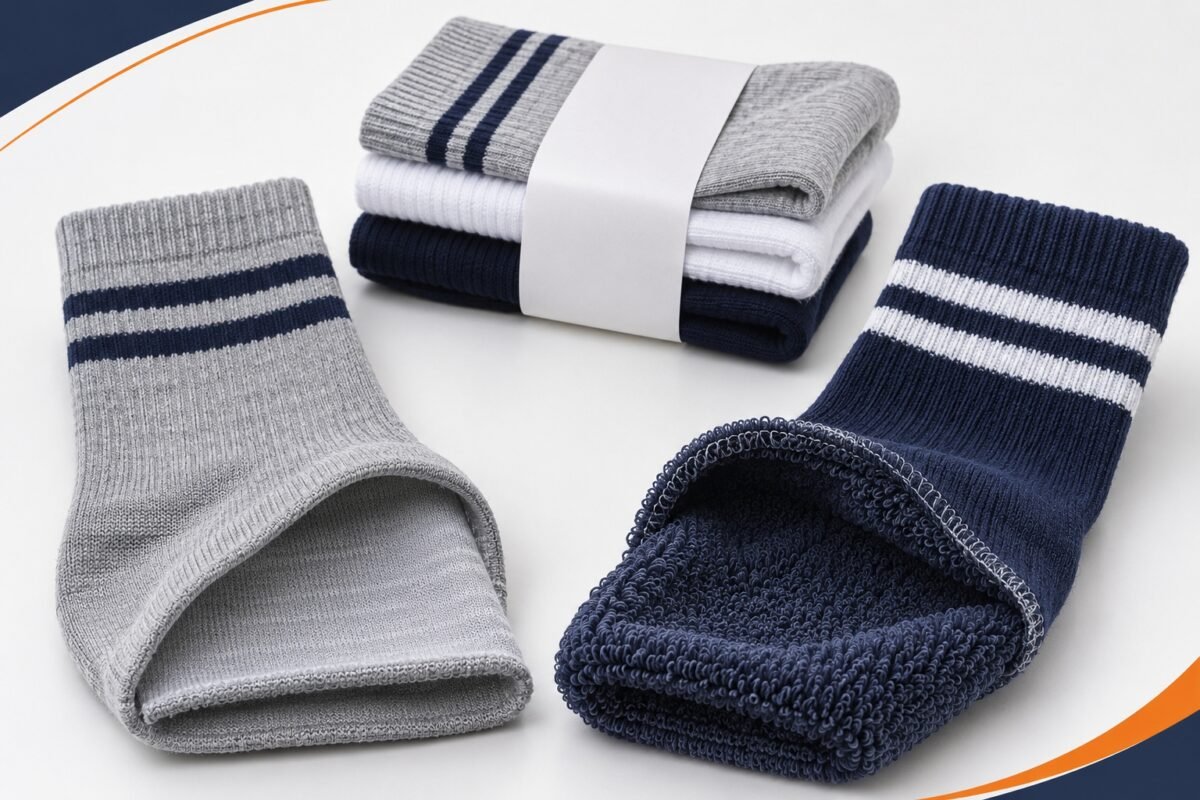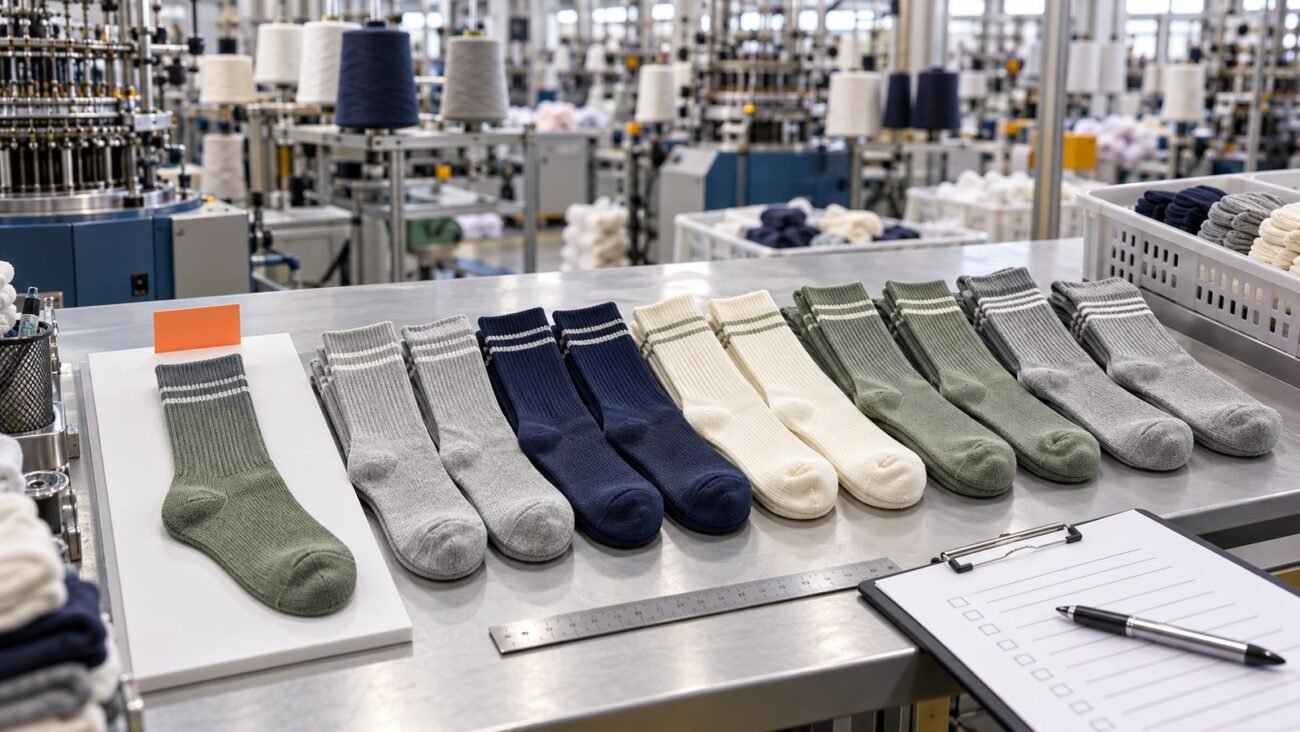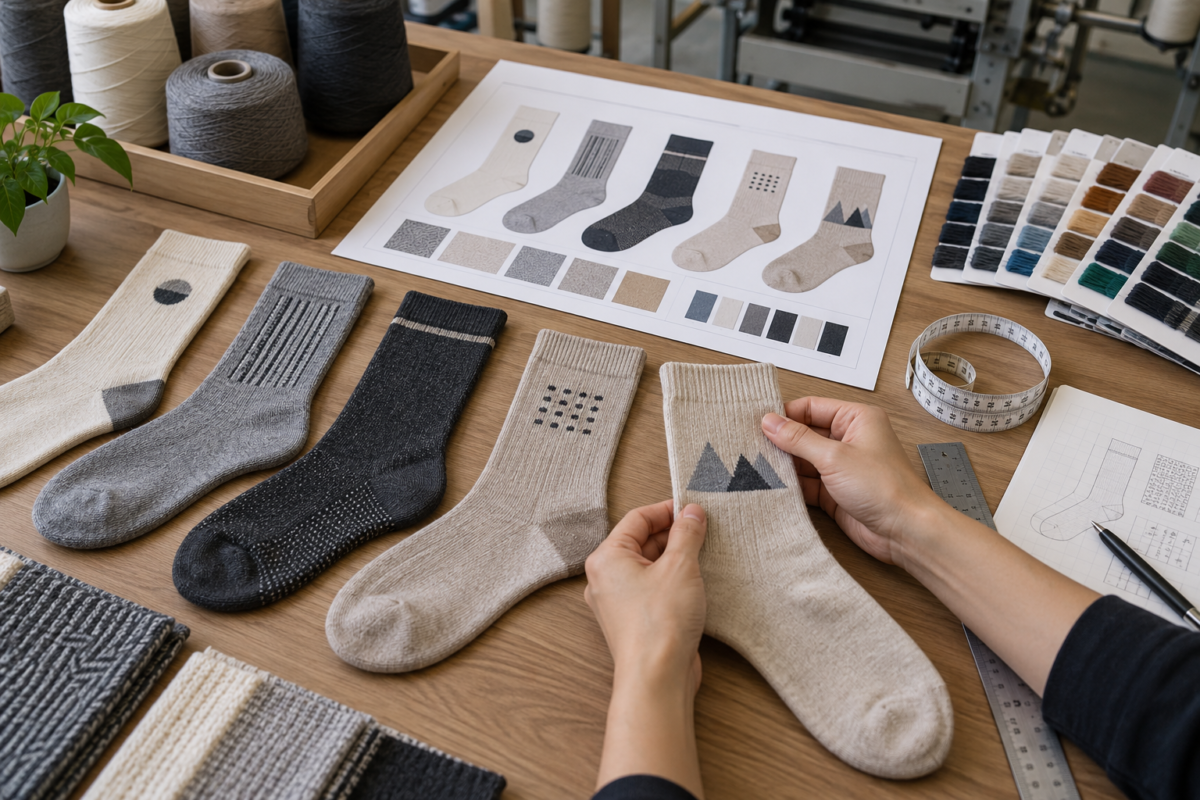

A repeat order should use previous experience to make planning clearer. It should not rely on one total quantity and the instruction “same as last time.”
 A repeat order may already have an approved style, but the total number of pairs does not explain how production should be divided. A 24,000-pair program can use one size, four equal size groups or a retail assortment with a different ratio in every pack.
Those versions may use the same sock design while requiring different machine allocation, labels, packaging materials, packing time and carton quantities. The size ratio and packaging configuration therefore need to be confirmed as production data, not left as a general buying instruction. For a broader review, see how retail and large-volume sock programs are planned.
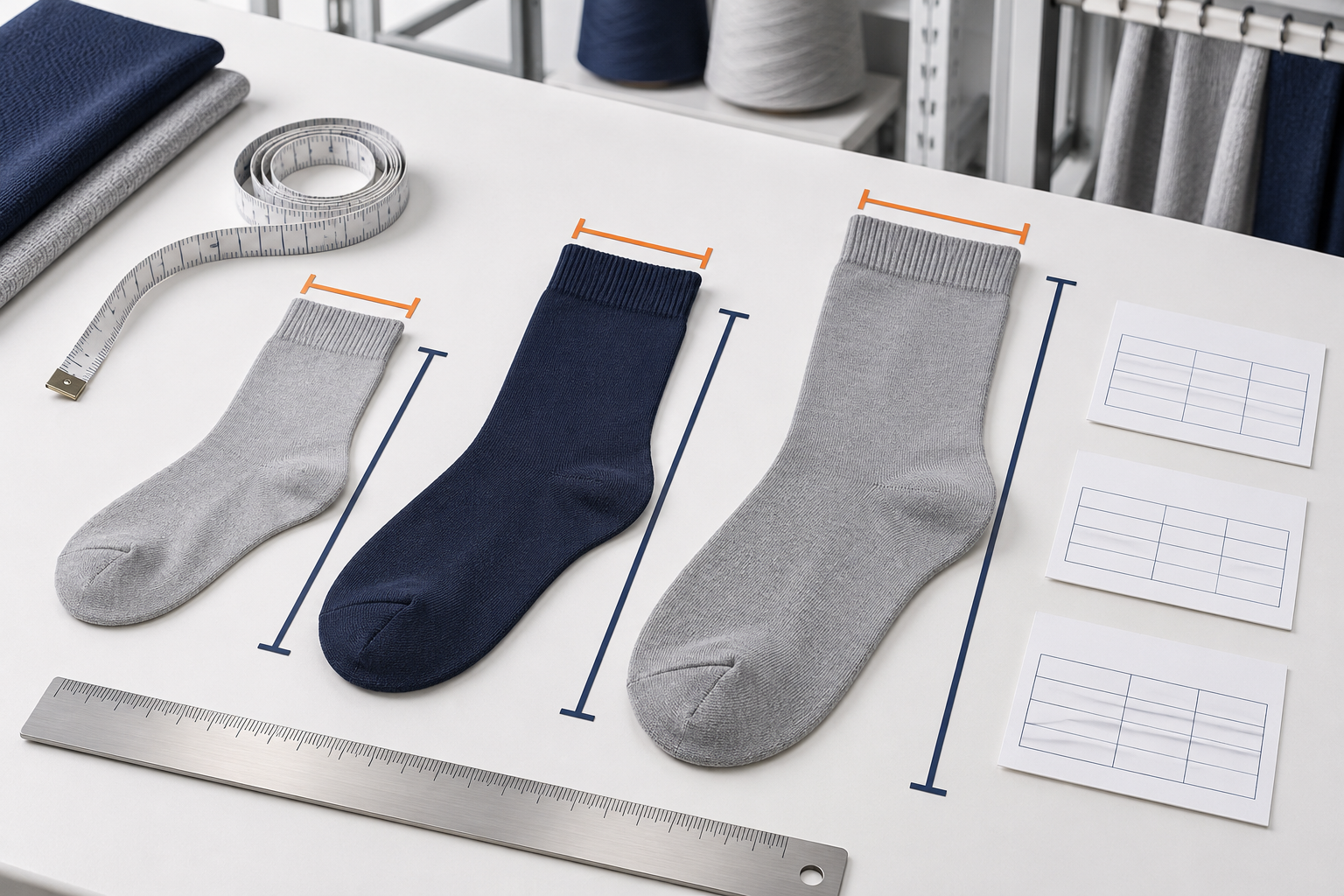 Begin with the size system used for the actual market. A label such as S, M or L may be clear to the retail team, but production still needs measurable references. Depending on the product, the approved specification may include foot length, leg height, cuff width and other construction-related measurements.
If the market label, measurement table or tolerance has changed since the previous order, the repeat order should use the updated approved reference. The supplier should not be expected to reconstruct the size meaning from an old carton label or informal message.
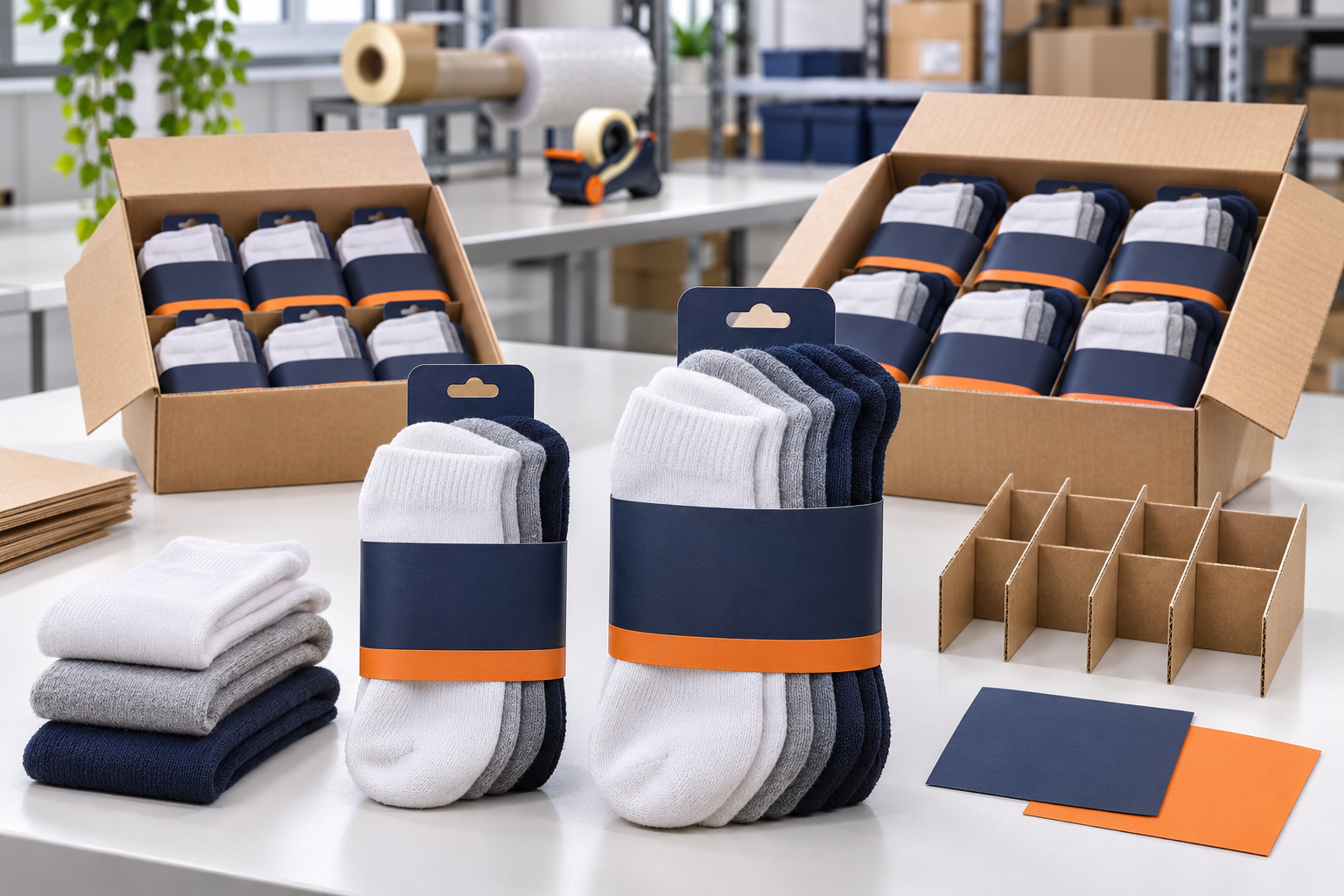 The next step is to define how individual pairs become one sellable retail pack. Confirm the number of pairs per pack and the exact size and color assortment inside it.
For example, a three-pair single-size pack and a three-pair mixed-size pack are different production instructions. A five-pair pack also changes the paper band, folding arrangement, packing time and carton calculation even when the sock itself remains unchanged.
Each retail-pack code should have one approved assortment. If the program uses several assortments, give each one a clear internal reference so packing teams can separate them during production.
 The target shelf month helps the supplier work backward through order confirmation, material preparation, knitting, finishing, inspection, packaging and shipment planning.
A shelf month is more useful when combined with the destination market, expected shipping method and required delivery window. It does not guarantee a production date by itself, but it gives both sides a clear planning reference for reviewing whether the size ratio and packaging materials can be prepared in time.
Why is the total order quantity not enough?
The total pair quantity must be divided into a confirmed quantity for each size.
1. Confirm the size system before confirming quantities
Retail size labels should be supported by approved measurable specifications.
- Retail size label or shoe-size range
- Approved finished measurements
- Measurement tolerance
- Color or artwork differences by size
- Any change from the previous order
2. Build a quantity table for every size
List the required quantity for each size instead of sending only the overall total. This allows the supplier to review machine allocation, yarn preparation, production sequence and packing requirements with the correct ratio. A useful table contains the size name, approved measurement reference, color or artwork variation, quantity in pairs and the retail pack in which that size will appear. If one size uses a different color assortment, label or packaging component, identify it as a separate line.- Size name
- Approved measurement reference
- Quantity in pairs
- Color or artwork assortment
- Retail pack code
3. Convert the size ratio into a retail-pack assortment
Different pack counts require separate packaging materials and carton planning.
- Pairs in each retail pack
- Sizes and colors inside each pack
- Folding and display orientation
- Paper band, header card, hanger or bag
- Label and barcode position
4. Separate pairs, retail packs and cartons
Buyers and suppliers should use the same unit when discussing quantity. Pairs, retail packs, inner boxes and master cartons are not interchangeable. Confirm the number of pairs in one retail pack, retail packs in one inner box where applicable, and inner boxes or retail packs in one master carton. Then check whether the requested quantity can be packed into complete multiples without unexplained remainders. This calculation should be completed before printed packaging and carton labels are prepared. Otherwise, an apparently small quantity change can create unused packaging, partial cartons or a revised shipping volume.- Pairs per retail pack
- Retail packs per inner box
- Inner boxes or retail packs per master carton
- Total number of complete cartons
- Approved treatment of any remainder
5. Check whether the order closes into complete pack multiples
The quantity for each size should support the approved pack configuration. If every retail pack contains three identical pairs, the size quantity normally needs to divide into complete three-pair units. If a mixed pack contains a fixed ratio, each component quantity should support the planned number of packs. Any remainder should be discussed before production. The buyer may adjust the quantity, approve a defined spare-pair allowance or create a separate packing instruction. The solution should be written rather than decided at the packing table.6. Connect the target shelf month to the packing plan
Size quantities, retail packs, cartons and the shelf month should be reviewed as one plan.