

An approved sample shows what a sock should be. Bulk production tests whether the same requirements can be followed consistently across hundreds or thousands of pairs.
Differences can appear when sample details, specifications, materials, production checks and packing instructions are not connected through one clear process. The practical way to reduce this risk is to turn the approved sample into a shared reference for production and inspection.
1. Turn the Approved Sample into a Clear Production Reference
The approved sample should be more than a visual reference. It should be linked to the documents and requirements used by the production and inspection teams.
Before bulk production begins, confirm:
- which sample version has received final approval;
- which specification sheet belongs to that sample;
- whether the yarn, colours and accessories are confirmed;
- whether the packing method has been agreed;
- who must approve and record any later changes.
If the sample and specification sheet refer to different versions, the buyer, production team and inspection team may make decisions using different information.

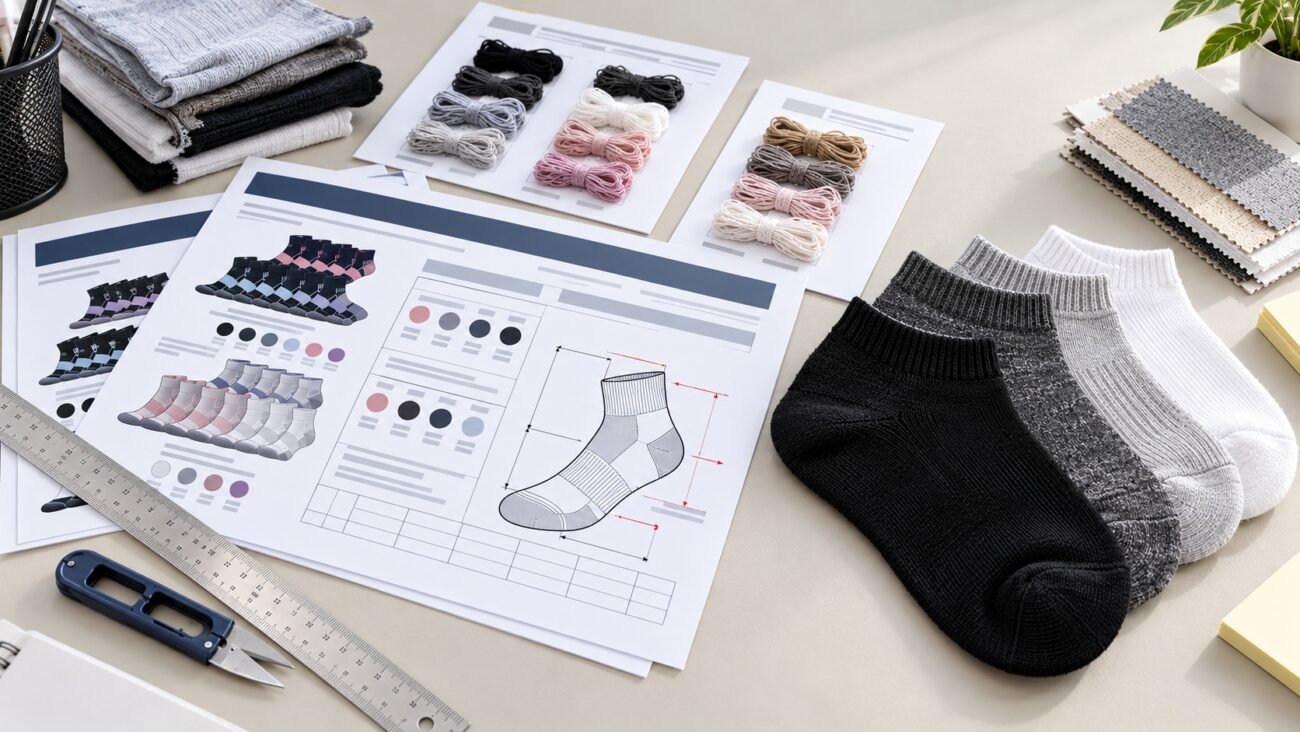
Process illustration showing how the approved sample, specification and bulk production checks should remain aligned.
2. Use One Specification Version for Sampling and Production
Socks may look simple, but many details can affect consistency. These may include:
- leg height and foot length;
- cuff width and elasticity;
- toe, heel and sole construction;
- yarn composition, colour and thickness;
- logo size and artwork position;
- size labels, retail packaging and carton requirements.
After sample approval, these requirements should be recorded in one controlled specification. The document should include a version number or confirmation date.
If the buyer requests a change, the sample record and production documents should be updated together. This helps prevent an earlier version from remaining in circulation.
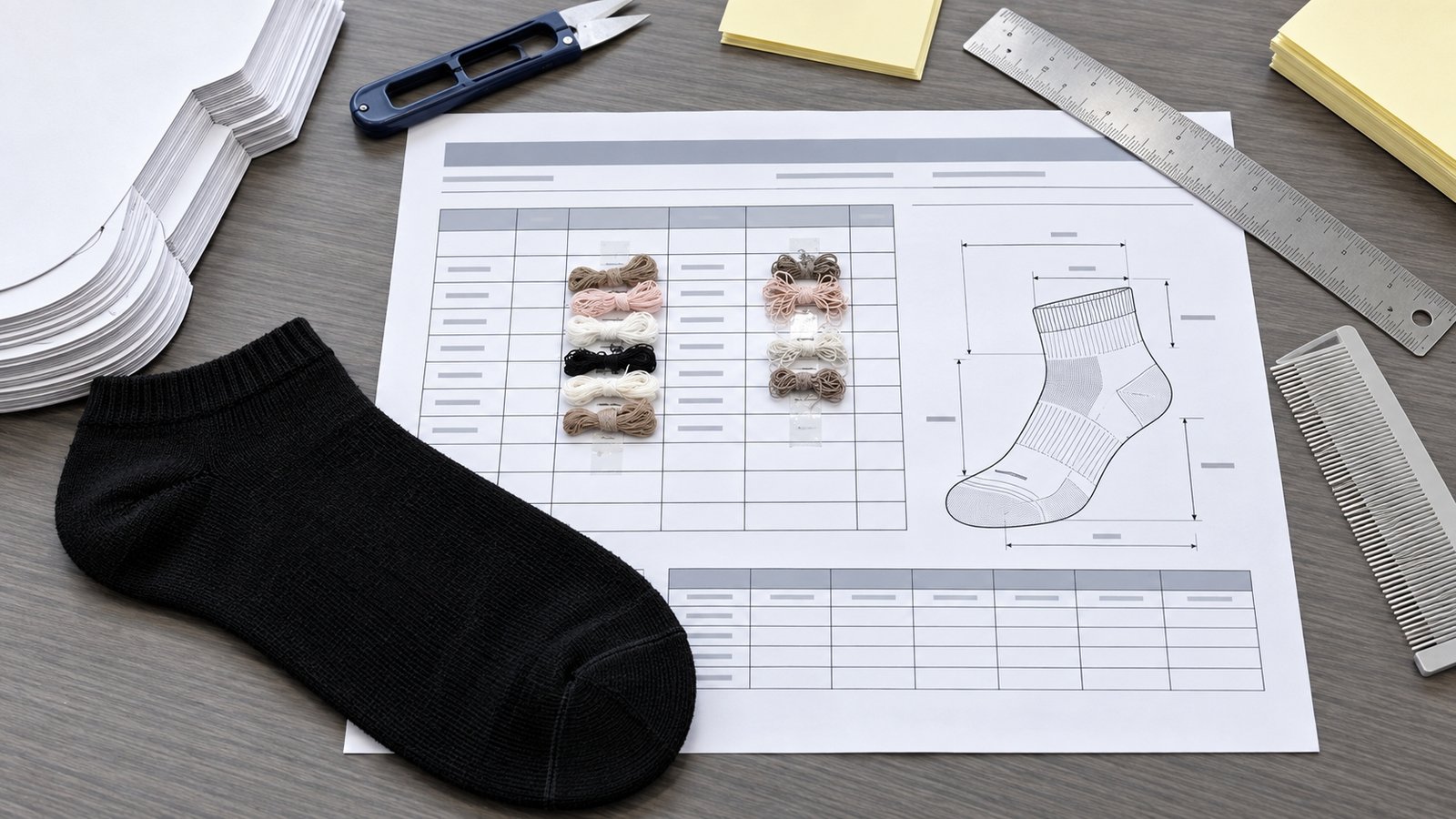
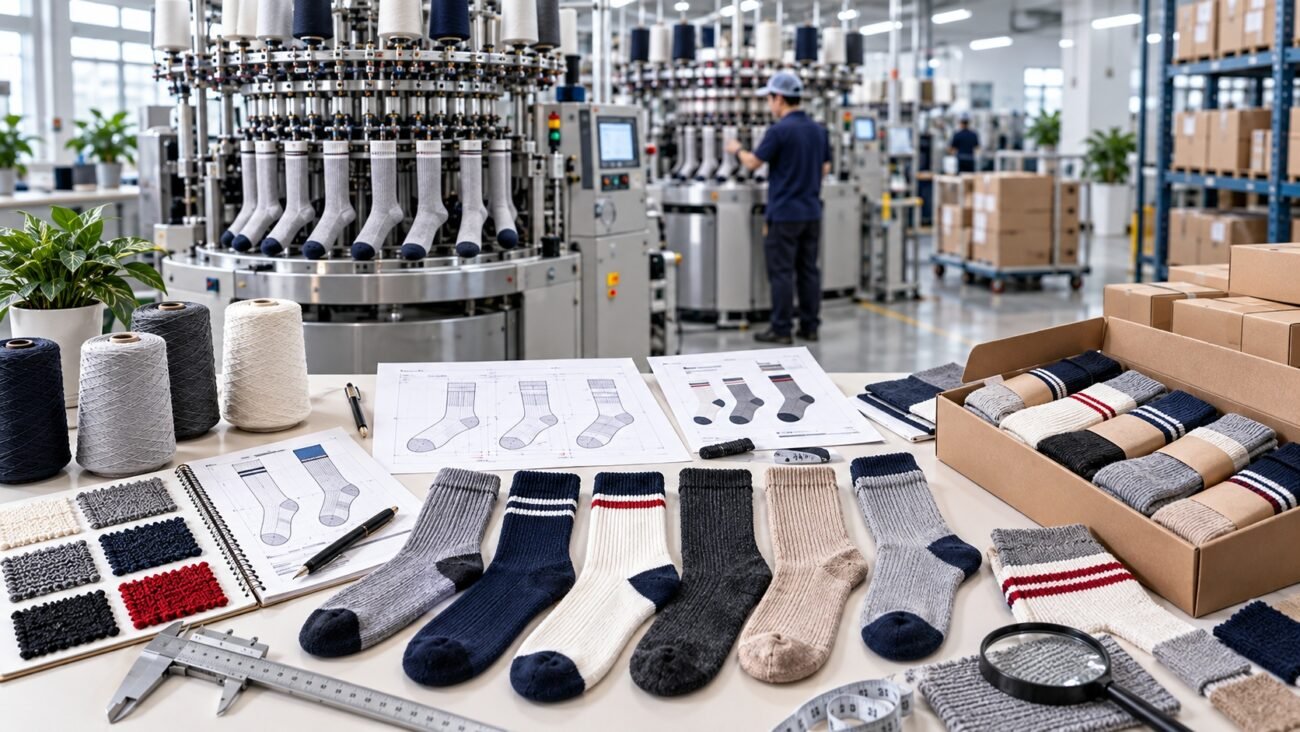
AI-enhanced illustration based on authentic working materials. Customer and commercial information has been anonymised.
3. Identify Differences During Production
Waiting until the entire order is completed can increase rework costs and put pressure on the delivery schedule. It is usually more practical to establish checkpoints during production.
Depending on the product and order requirements, these checkpoints may include:
- checking yarn and colour references before production;
- comparing initial production pieces with the approved sample;
- checking measurements and elasticity;
- reviewing logo, artwork, toe and heel positions;
- confirming packing requirements before packing begins.
The earlier a difference is identified, the fewer products may be affected before an adjustment is made.
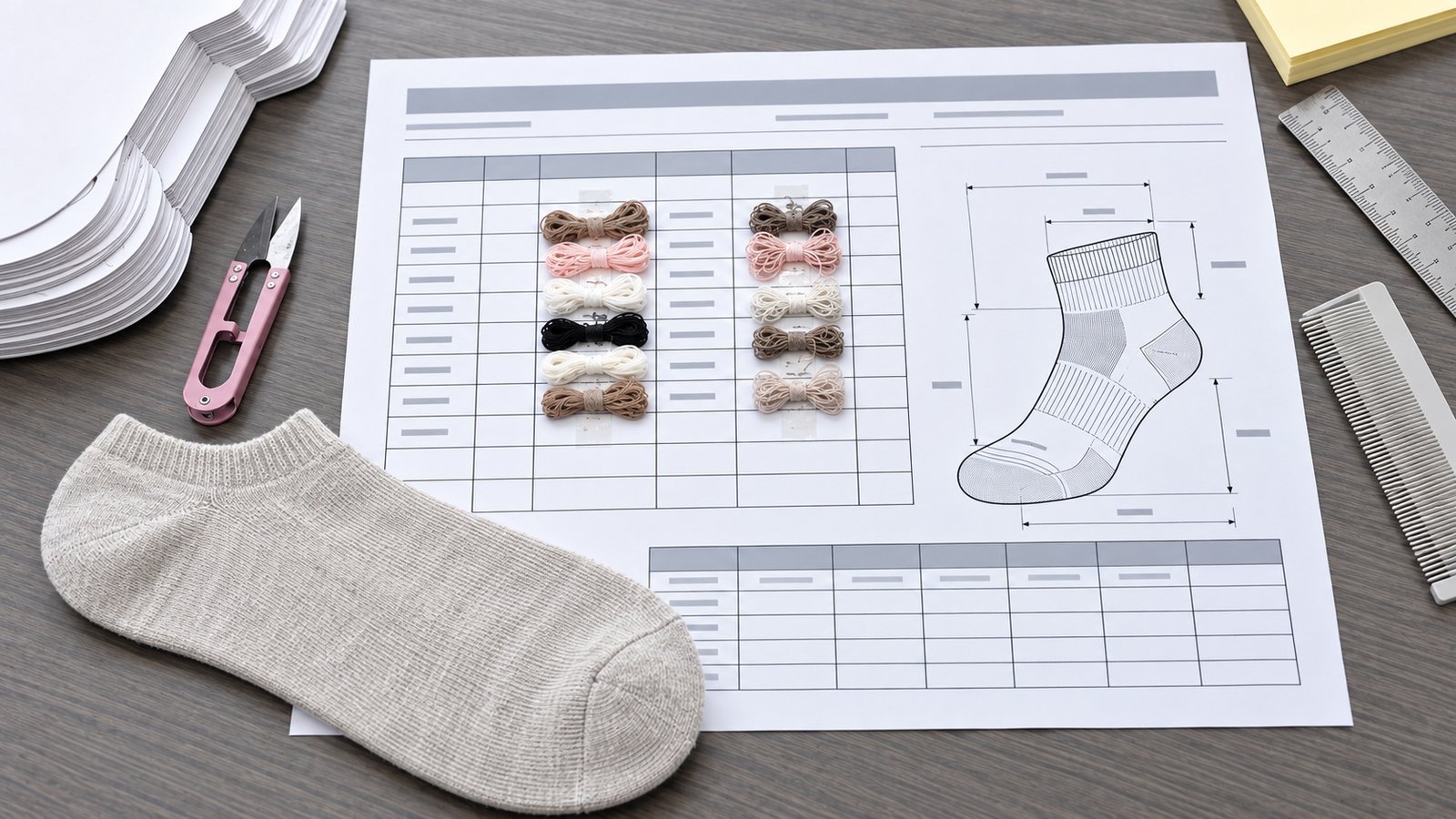
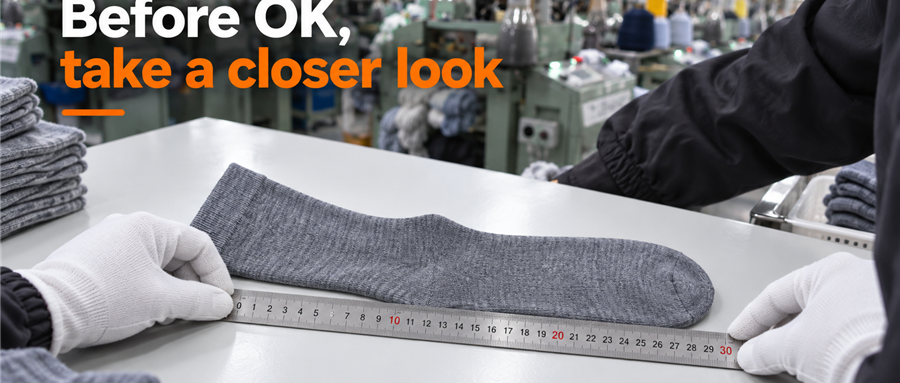
AI-enhanced illustration based on authentic working materials. Customer and commercial information has been anonymised.
4. Check Size, Quantity and Packing Before Shipment
Completing production does not automatically mean that every order requirement has been fulfilled. Before the goods are packed for shipment, the supplier and buyer should confirm:
- the actual quantity for each size;
- individual or multipair packing arrangements;
- labels, stickers and barcode information;
- carton quantities and shipping marks;
- size ratios and other customer-specific requirements.
This final review can reduce the risk of discovering quantity or packing problems after the goods arrive at the buyer’s warehouse.
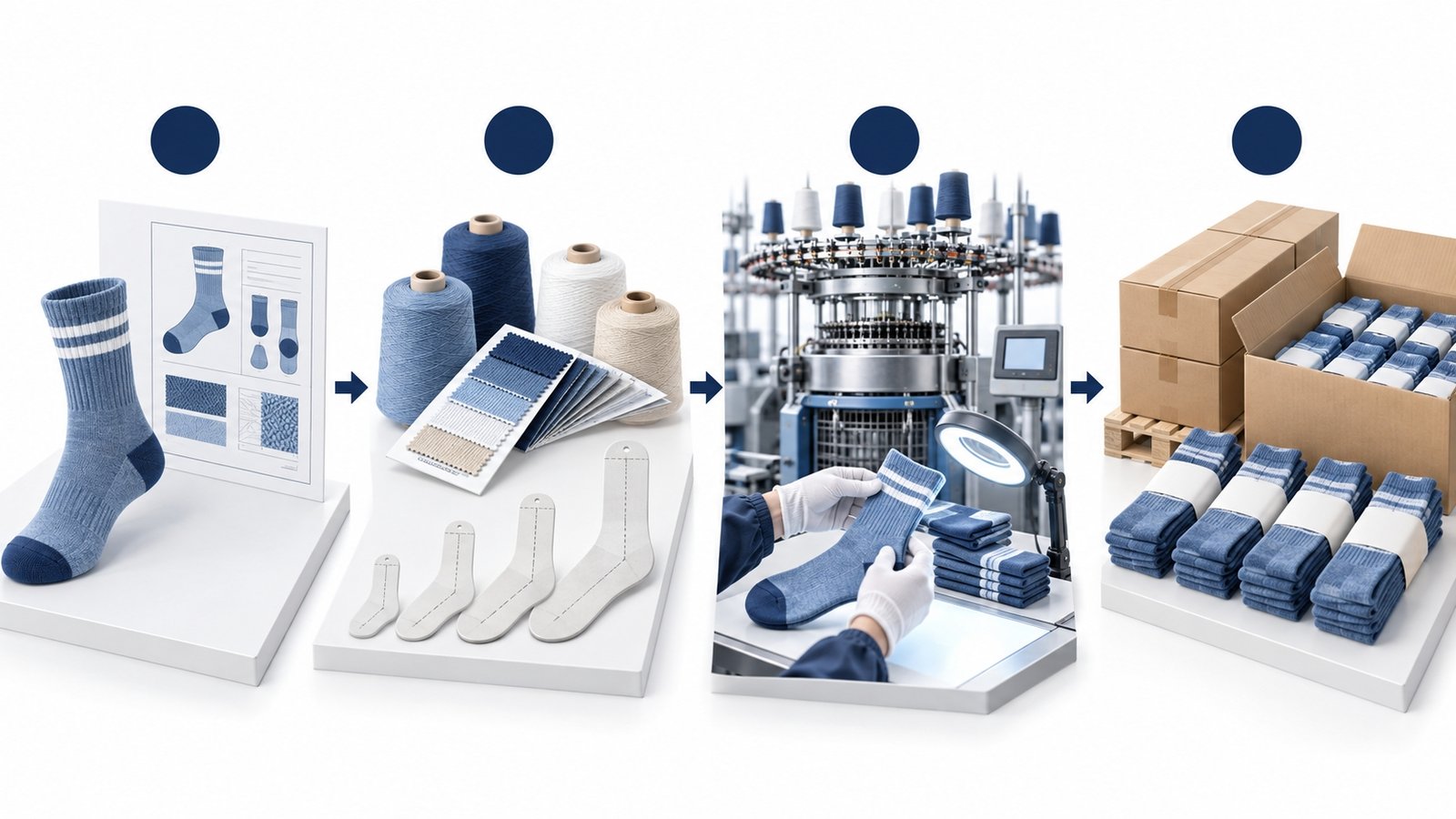
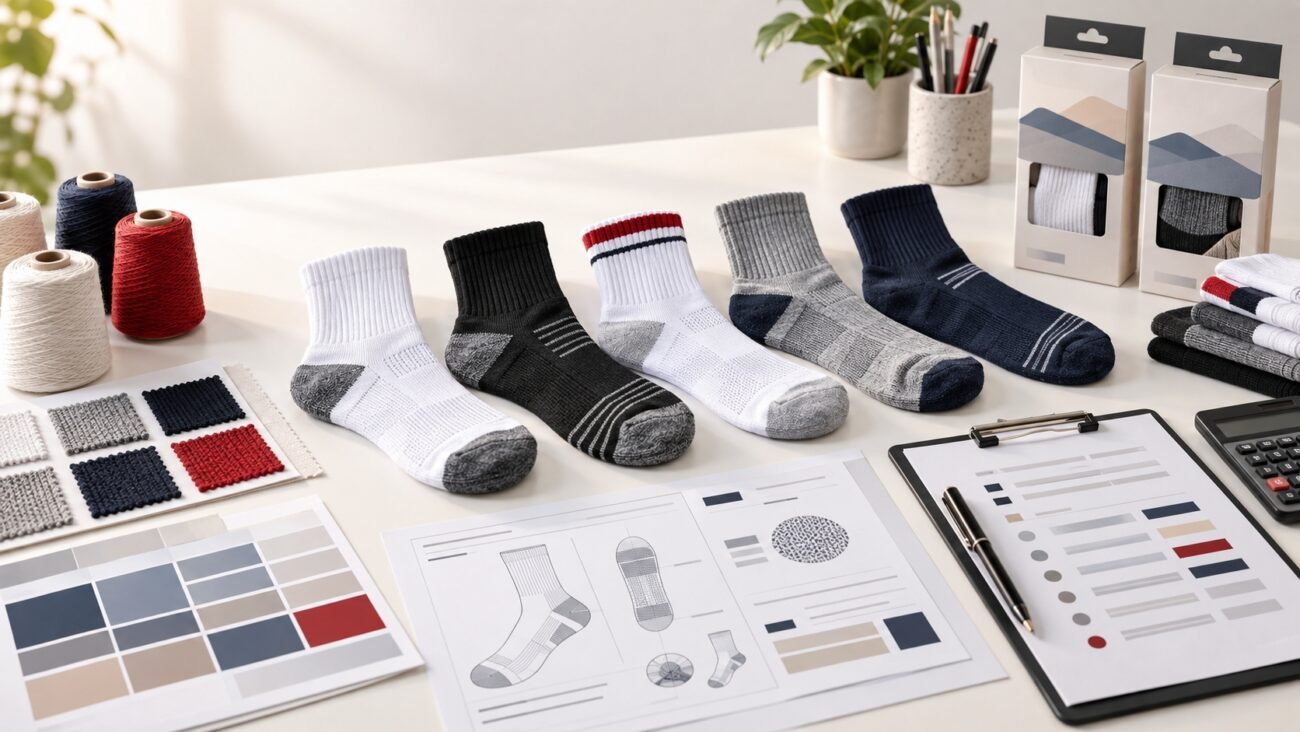
Process illustration covering approved sample control, specification confirmation, production checks and pre-shipment review.
Keep the Same Requirements Throughout the Order
Reducing the difference between an approved sample and bulk production depends on using the same requirements throughout sample approval, specification control, production inspection and packing confirmation.
Clear version records and planned checkpoints help buyers and suppliers identify issues earlier. They can also reduce avoidable rework, delivery delays and disputes after arrival.
When preparing a custom sock enquiry, it is useful to provide:
- the product type and intended use;
- the target market;
- yarn composition or performance requirements;
- the required size range;
- colour and artwork files;
- packing requirements;
- the estimated order quantity.
The clearer the brief, the easier it is for a supplier to review the product structure, sampling requirements and production conditions.
Discuss Your Custom Sock Project
If you are developing a sock collection or reviewing a private label sock supplier, send us your reference sample, artwork or product brief. We can discuss which details should be confirmed before sampling and production planning.
Email:
sales05@zjcanfly.com
WhatsApp:
+86 137 3535 0489
Product specifications, materials, minimum order quantity, sampling time and production schedule are confirmed according to the requirements of each project.