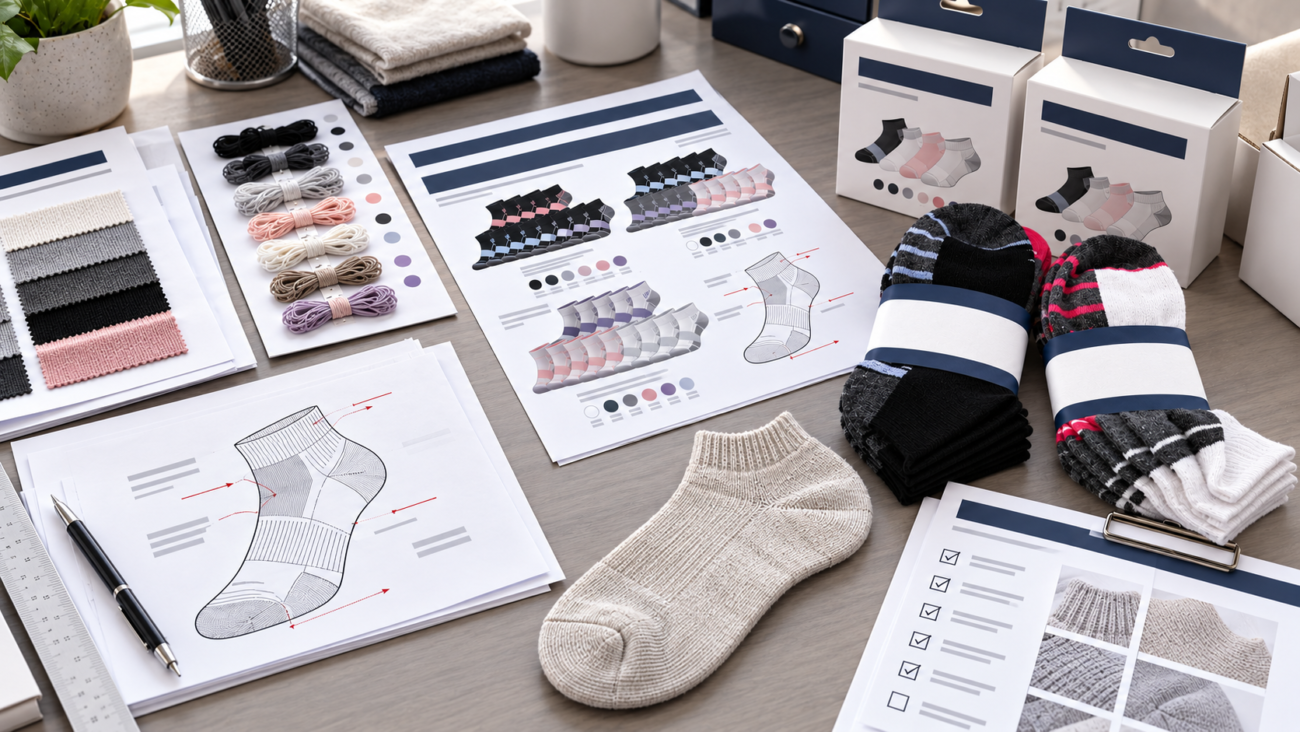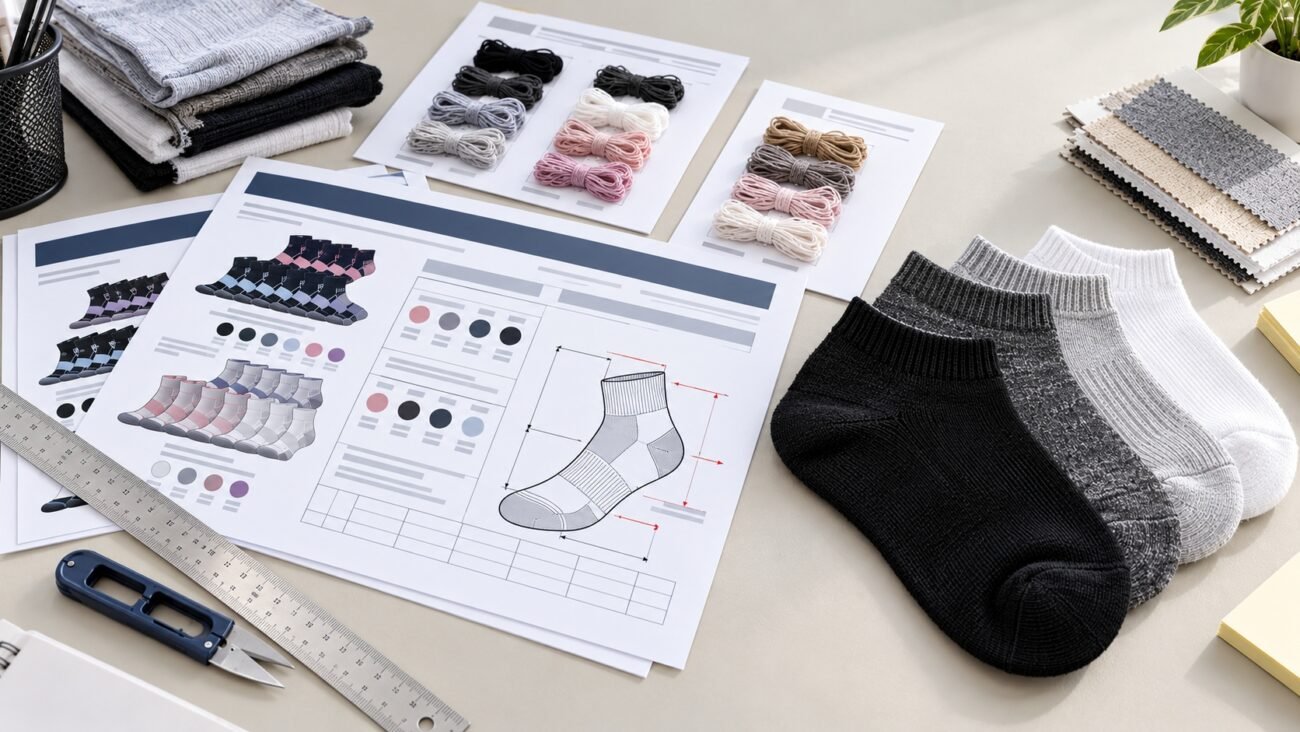

A custom sock tech pack turns a product idea into information that a supplier can review, sample and confirm. It should identify the intended product, record the requirements that have already been decided and separate them from details that still need development.
A clear document does not need to predict every production answer at the beginning. Its main purpose is to create one controlled reference for the buyer, developer and supplier. When materials, measurements, artwork and packaging decisions are scattered across emails and messages, sample revisions become harder to track.

01. Start With Product Identity and Commercial Use
Begin with the information that identifies the product and its intended sales format. A supplier needs to understand whether the project is a single pair, multipack, seasonal collection, promotional item or part of a wider private label programme. Record the style name, product category, intended wearer, size range, target market and selling unit. If the project includes several related designs, give every style and colourway a unique reference instead of describing them only by appearance.- Style name and internal reference number
- Target customer and intended use
- Sock length or product category
- Size range
- Pairs in each selling unit
- Required colourways
- Target timing and expected quantity for discussion
02. Define Materials and Construction
The tech pack should describe the required material direction and the performance expected from the sock. A fibre percentage copied from another product may not explain the yarn type, hand feel, weight, stretch or construction needed for the new design. Identify confirmed requirements such as cotton content, recycled material preference, cushioning, mesh zones, rib structure or terry areas. Mark options that require supplier advice or sampling. This allows the supplier to propose a workable construction without treating every early idea as a fixed specification. Material and colour decisions should be reviewed together. The guide to confirming sock materials and colours before sampling explains why physical references are useful when screen colours are not enough.- Fibre or yarn direction
- Required feel, thickness and stretch
- Cushioning or terry placement
- Rib, mesh or compression zones
- Toe seam and cuff requirements
- Any agreed testing or performance conditions
Physical yarn and colour references should be identified in the project specification.
03. Add a Clear Measurement Specification
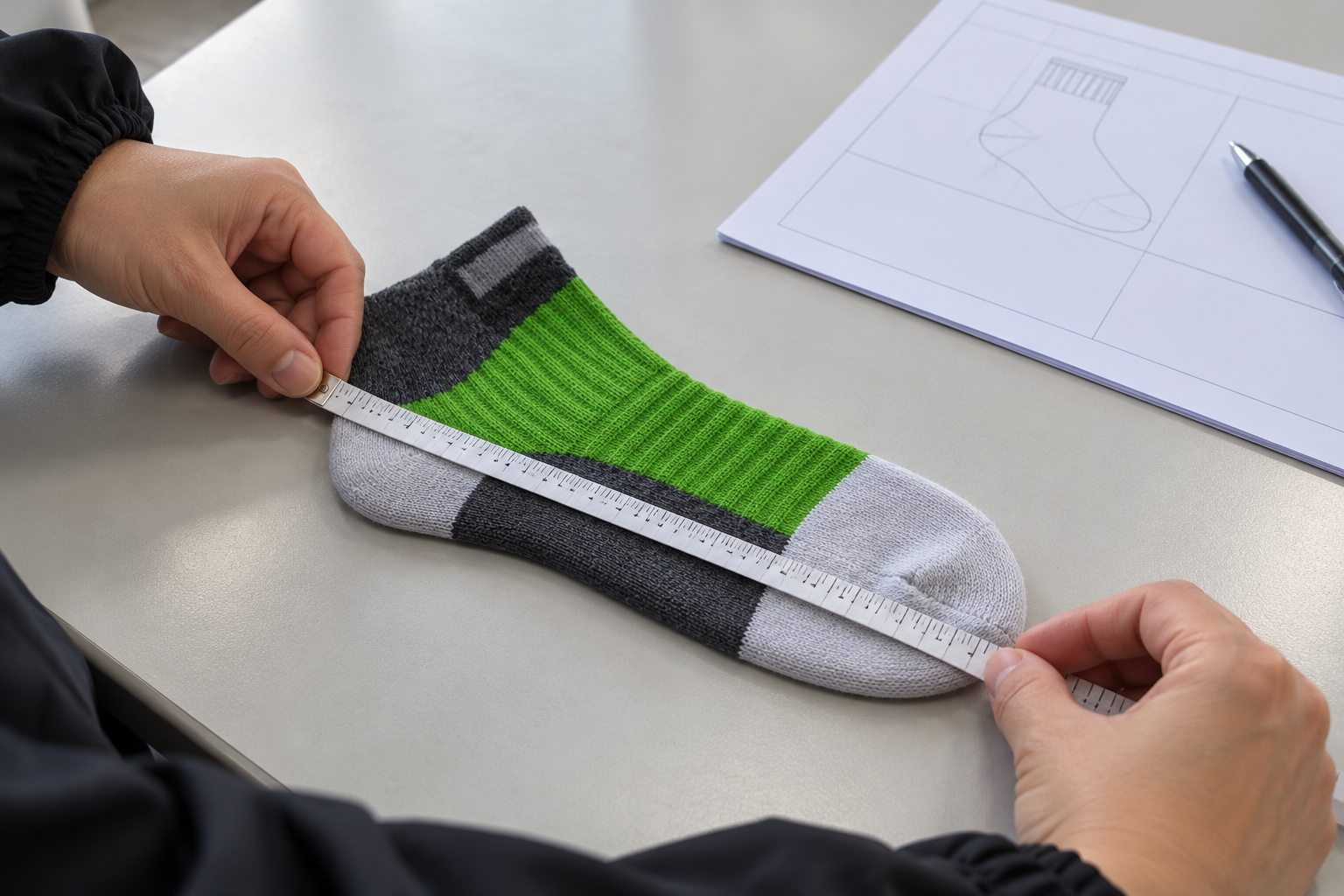
A size label alone does not provide a complete physical specification. Include the measurements that matter for the selected sock style, together with the measuring method and permitted tolerance where these have been agreed. Useful points may include foot length, leg length, cuff width, heel position and other construction-specific dimensions. The exact list depends on the style. Use a diagram so that the buyer and supplier measure from the same reference points. Record whether dimensions are measured relaxed, stretched or after an agreed conditioning process. When a sample is approved, enter the actual confirmed measurements rather than leaving the original target figures unchanged. Confirmation at this stage: the approved sample, measurement table and measuring method should describe the same physical result.Record measurable sample results and connect them to the approved specification.
04. Control Artwork, Colours and Logo Placement
Place all artwork references in the tech pack or link them through a controlled file list. Each design should show the viewing direction, repeat, placement and colour reference. Identify which parts may be adjusted for knitting and which brand elements must remain recognisable. Logo dimensions should be connected to a position on the sock as worn. Stretch, ribbing and size changes can alter the appearance. A physical sample remains necessary even when the digital artwork has already been approved.- Attach vector artwork or the best available source file
- List colour references and the approved physical reference
- Mark logo size and distance from a reference point
- Specify whether artwork appears on one side or both sides
- Record any accepted simplification after sampling
05. Include Packaging, Labels and Barcode Requirements
Packaging is part of the product specification. Add the artwork version, material, dimensions, attachment method and selling-unit arrangement. If barcodes, price tickets, size stickers or carton marks are required, identify who supplies the data and who approves the final files. Do not allow a packaging file to circulate without a revision reference. A correct sock packed with an outdated label can still create a shipment problem. The product specification and packaging specification should share the same style, colour and size references.- Pairs per selling unit
- Header card, belly band, hook or box requirements
- Label and sticker positions
- Barcode and price-ticket data
- Size and colour assortment
- Inner-pack and master-carton arrangement
- Carton marks and destination information
06. Record Sample Revisions and Approval Status
A useful tech pack shows which information is proposed, sampled, revised or approved. Add a revision table with the date, change, responsible person and approval status. When a new sample replaces an earlier one, make the active reference unmistakable. Photographs can support communication, but they should not become the only approval record. Keep the approved physical sample, specification, artwork and packaging version aligned. If approval includes a condition, record the required correction and how it will be checked. Confirmation at this stage: production should use one identified specification and one identified approved sample.07. Buyer Checklist Before Sending the Tech Pack
Before sending the document, check whether another person could understand the project without reading the complete email history.- Every style and colourway has a unique reference
- Confirmed requirements and open questions are clearly separated
- Artwork files match the references in the document
- Measurements use defined points and units
- Materials and colours have usable references
- Packaging and barcode responsibilities are assigned
- The latest revision and approval status are visible
- Quantity and target timing are marked for supplier confirmation