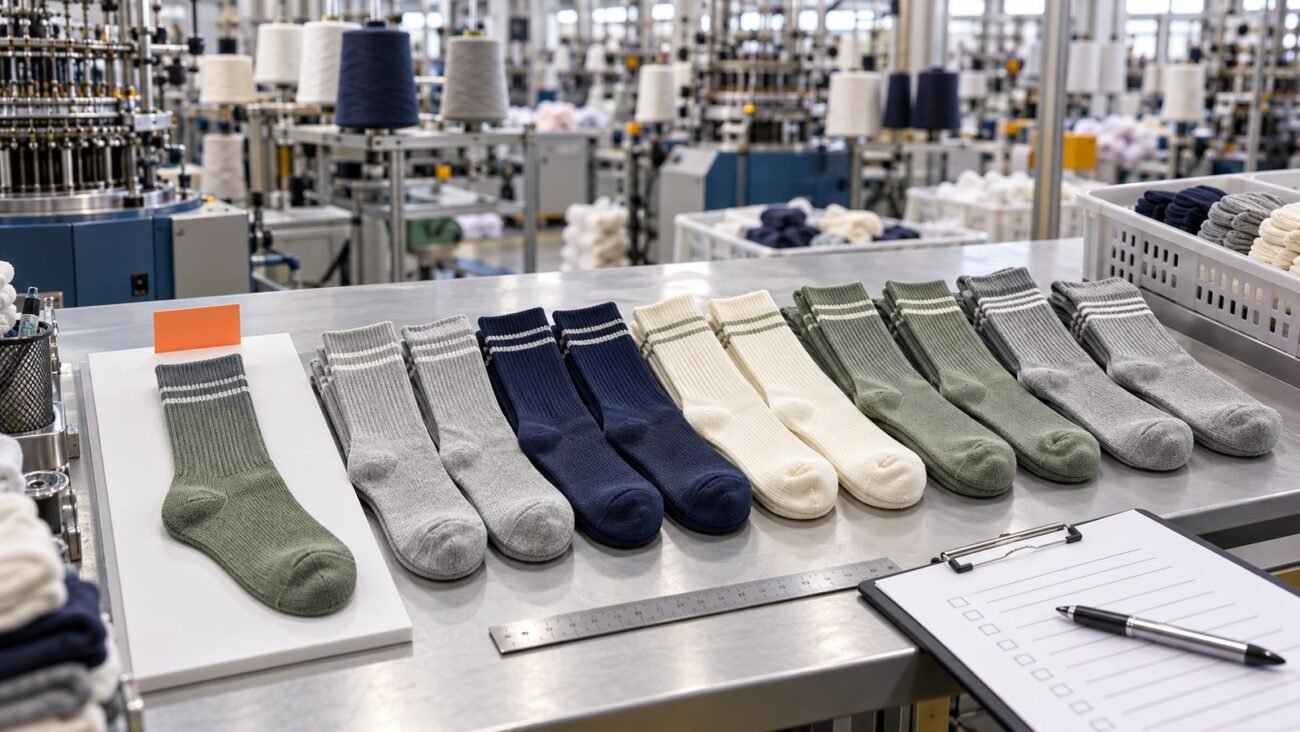

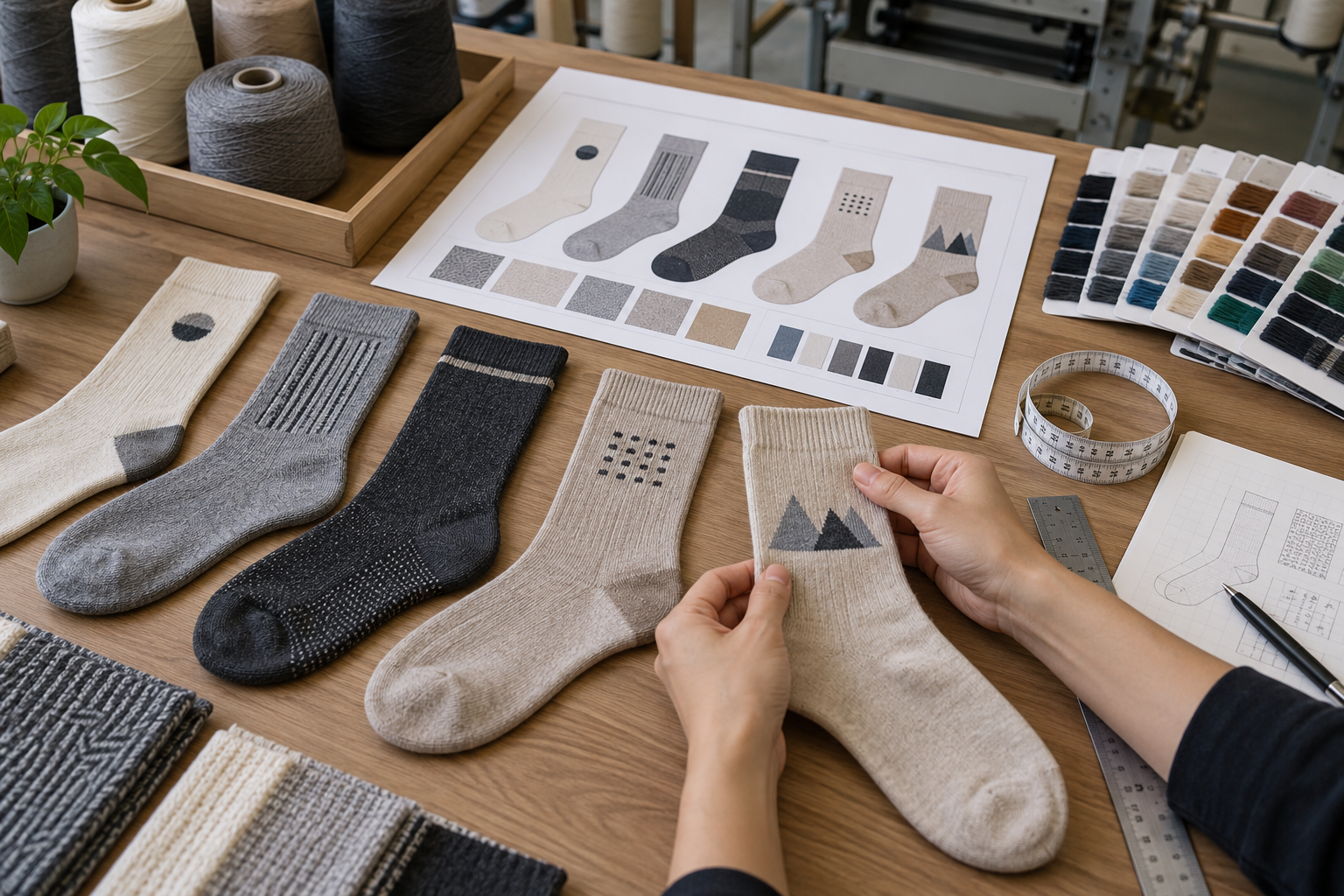
A logo can look clear on a computer screen and still change when it is translated into a sock. Yarn, stitch structure, stretch and placement all affect the final result. Buyers can reduce avoidable revisions by selecting the logo method according to the artwork and confirming it on a physical sample.
01 · Start With the Artwork, Not the Technique
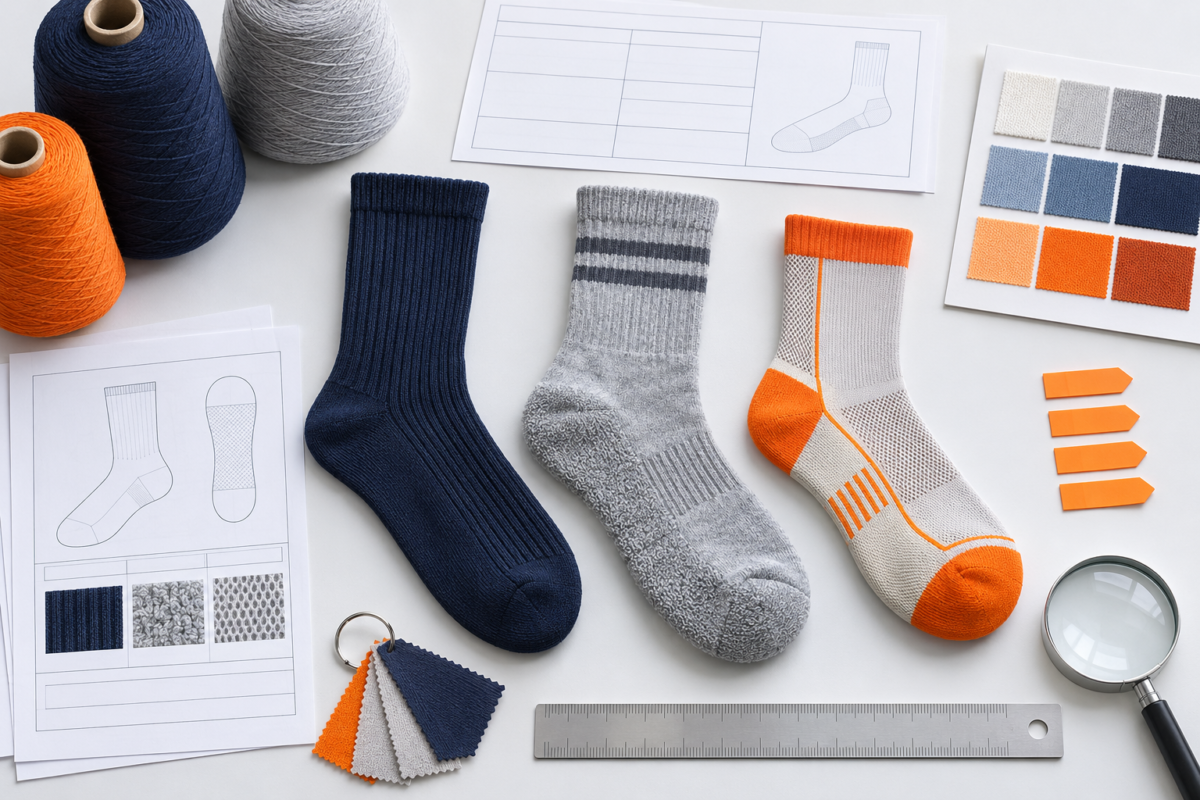
Before choosing a production method, review what the logo actually contains. A bold symbol with simple shapes behaves differently from small text, thin lines or a design with several close colours. Send the supplier a vector file when available, together with the required colours and any brand rules. Also identify which details must remain recognisable and which may be simplified for the sock construction. Useful information includes:- Vector artwork or the highest-resolution file available
- Colour references
- Minimum acceptable logo size
- Preferred position and viewing direction
- Details that must not be removed
02 · Understand a Knitted-In Logo
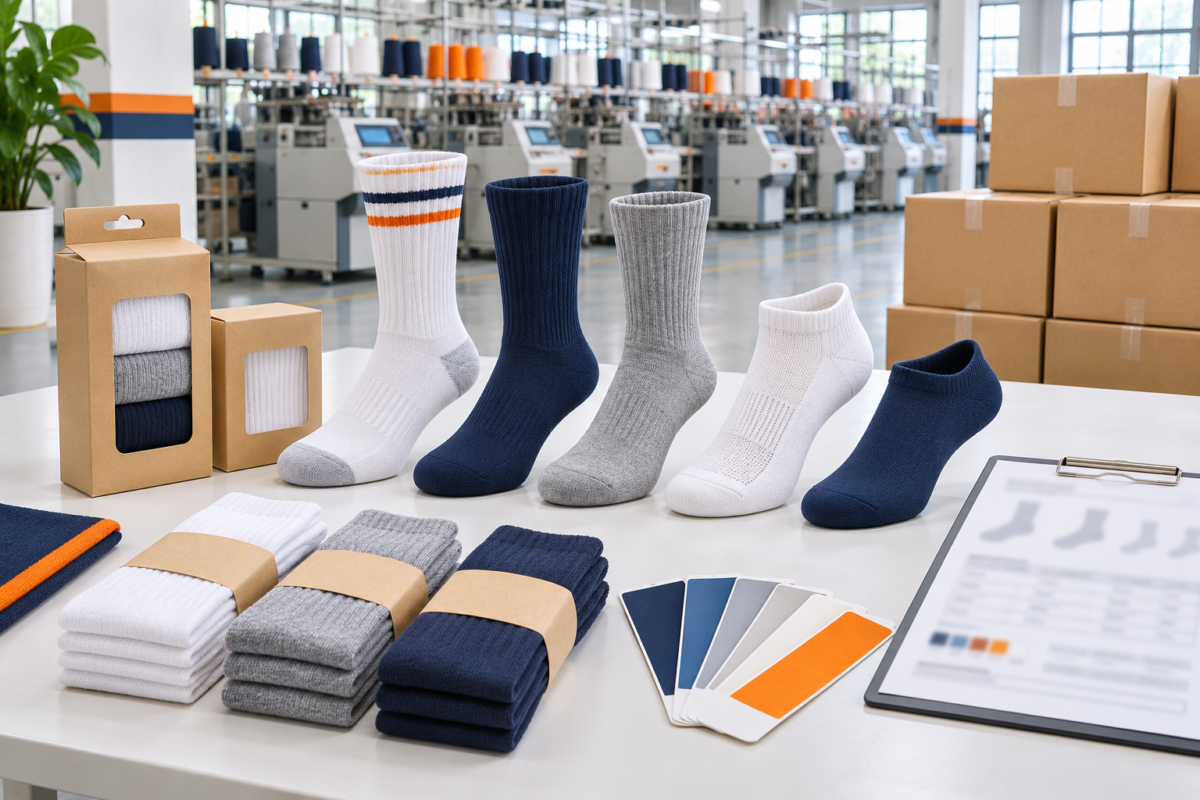
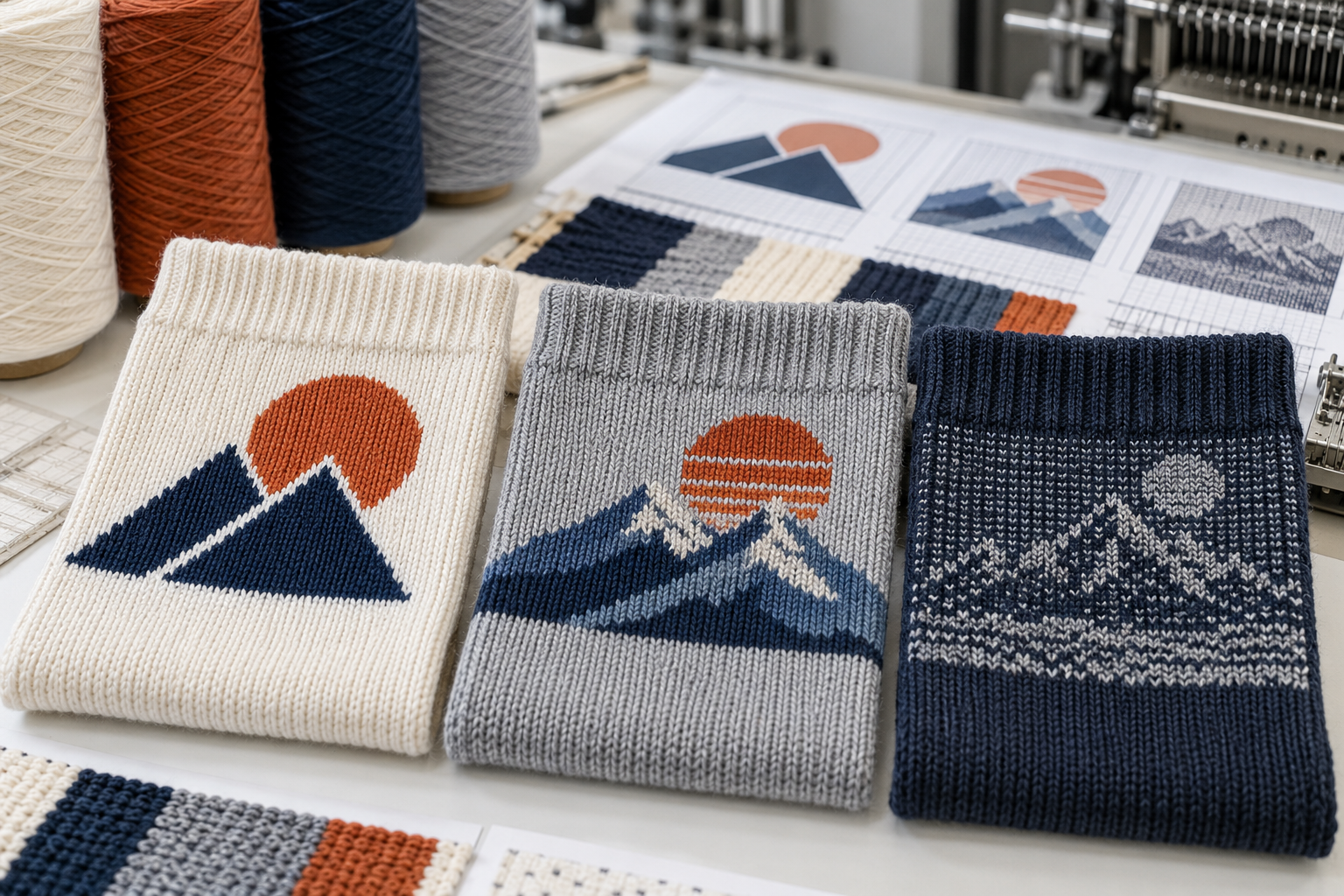
A knitted-in logo becomes part of the sock structure. It can suit repeated motifs, stripes and simplified brand marks, but the available detail depends on the knitting construction, yarn, machine capability and logo size. Very thin lines, small letters and closely spaced elements may lose clarity. Enlarging the artwork, reducing detail or adjusting the colour arrangement may improve the result. These changes should be shown to the buyer before the sample is produced. The material choice can also influence appearance. Review sock materials and colours together with the artwork instead of treating them as separate decisions.Logo size, stitch structure and artwork complexity affect how clearly a knitted design appears.
03 · Consider Embroidery for Raised Detail
Embroidery can create a raised logo on selected sock constructions. It may be useful when a brand mark needs a distinct surface appearance, but the result depends on logo size, stitch density, backing, placement and the comfort requirements of the product. Ask where the embroidered area will sit against the foot and whether the inside finish could affect wear. A method that looks attractive on a presentation sample still needs to be suitable for the intended use of the sock. Confirmation at this stage: approve the embroidery size, position, colours and inside finish on a physical sample.04 · Review Applied Print or Transfer Options Carefully
Some designs may use an applied print, transfer or another surface technique. Suitability depends on the material, stretch area, design, expected use and agreed performance requirements. The buyer should ask what the supplier proposes to test. Relevant checks may include appearance after stretching, adhesion, surface feel and the agreed care-test conditions. Avoid assuming that one application method will behave the same on every yarn or sock construction.05 · Confirm Placement on the Sock as Worn
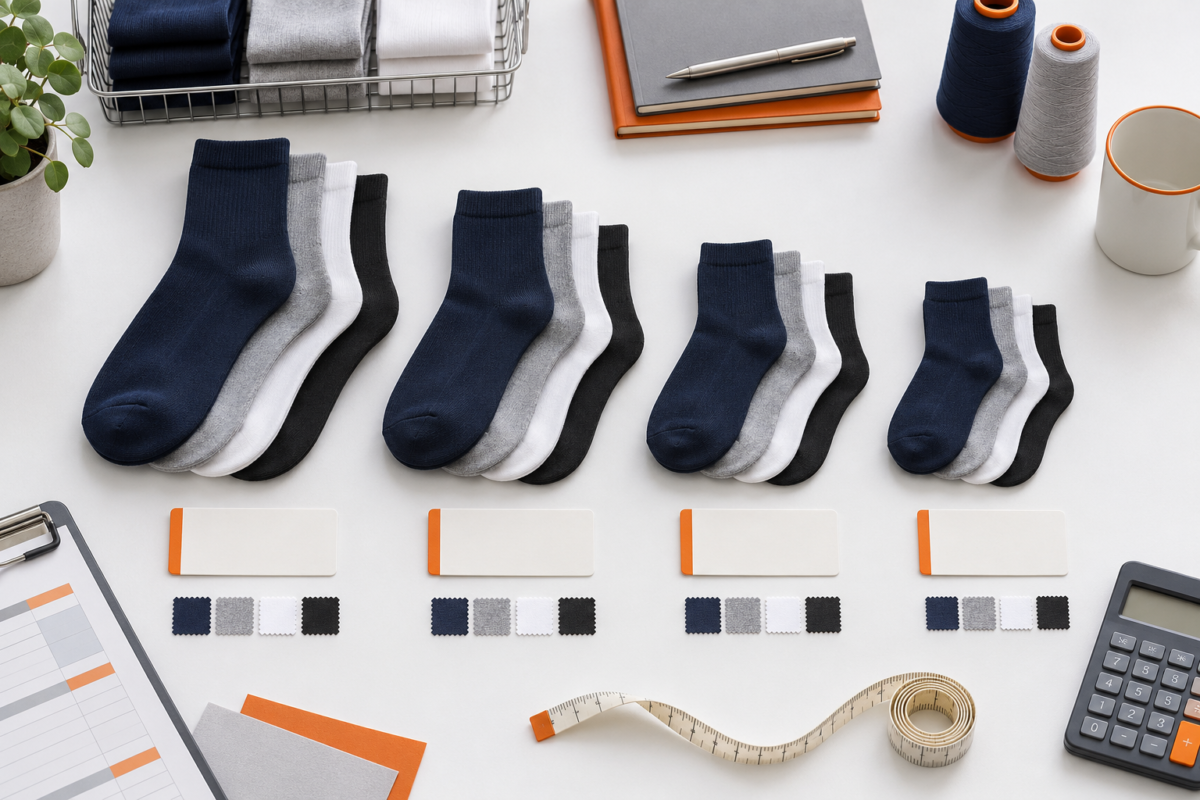
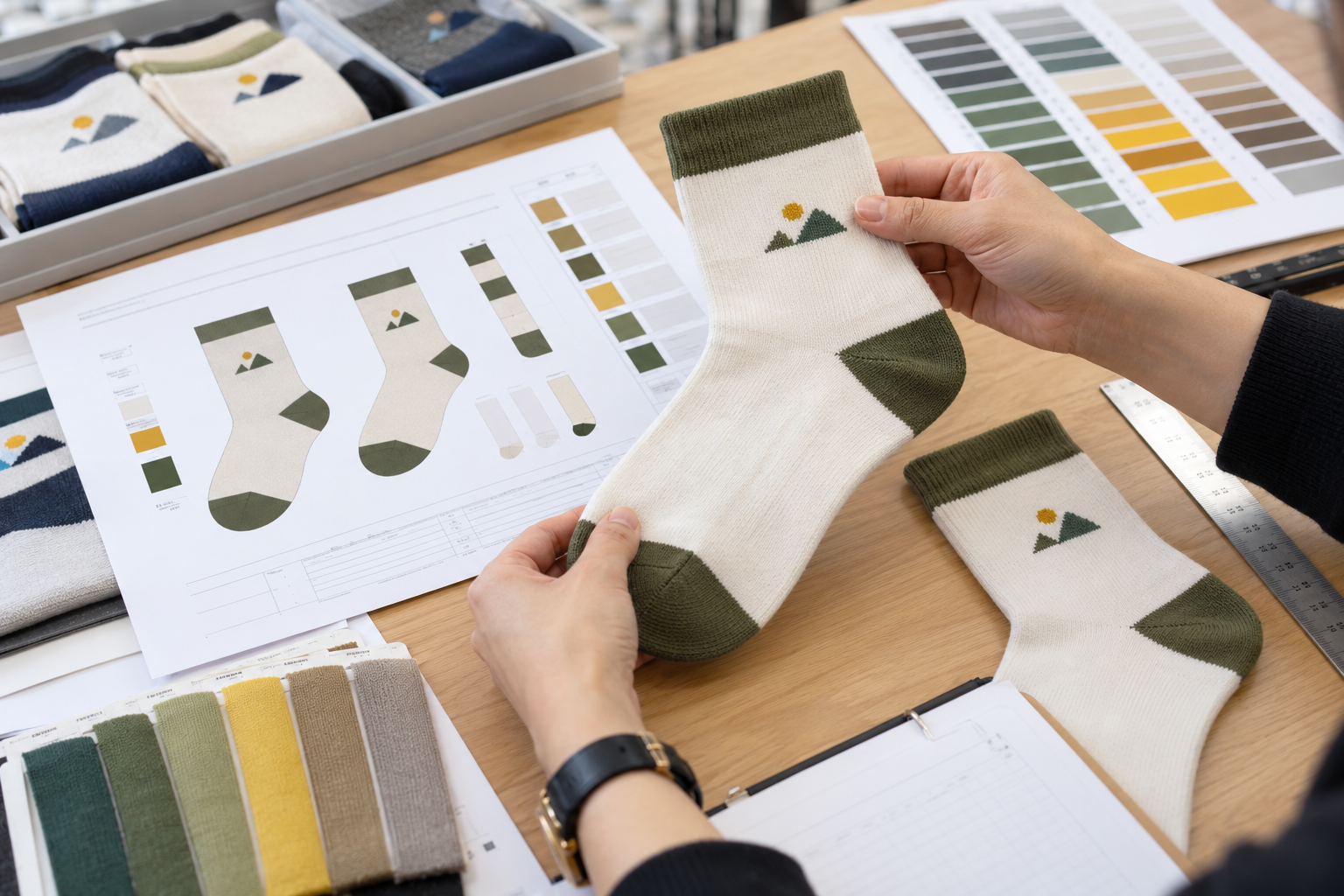
Logo placement should be reviewed on the sock, not only on a flat artwork template. Stretch can change the width of a mark, while ribbing or a seam can interrupt its shape. The same position may also look different across sizes. Confirm:- Distance from the cuff, heel, toe or another reference point
- Direction of the logo when the sock is worn
- Whether the logo appears on one side or both sides
- How placement will be handled across the size range
- Whether the logo remains clear at normal viewing distance
06 · Approve the Physical Result Before Bulk Production
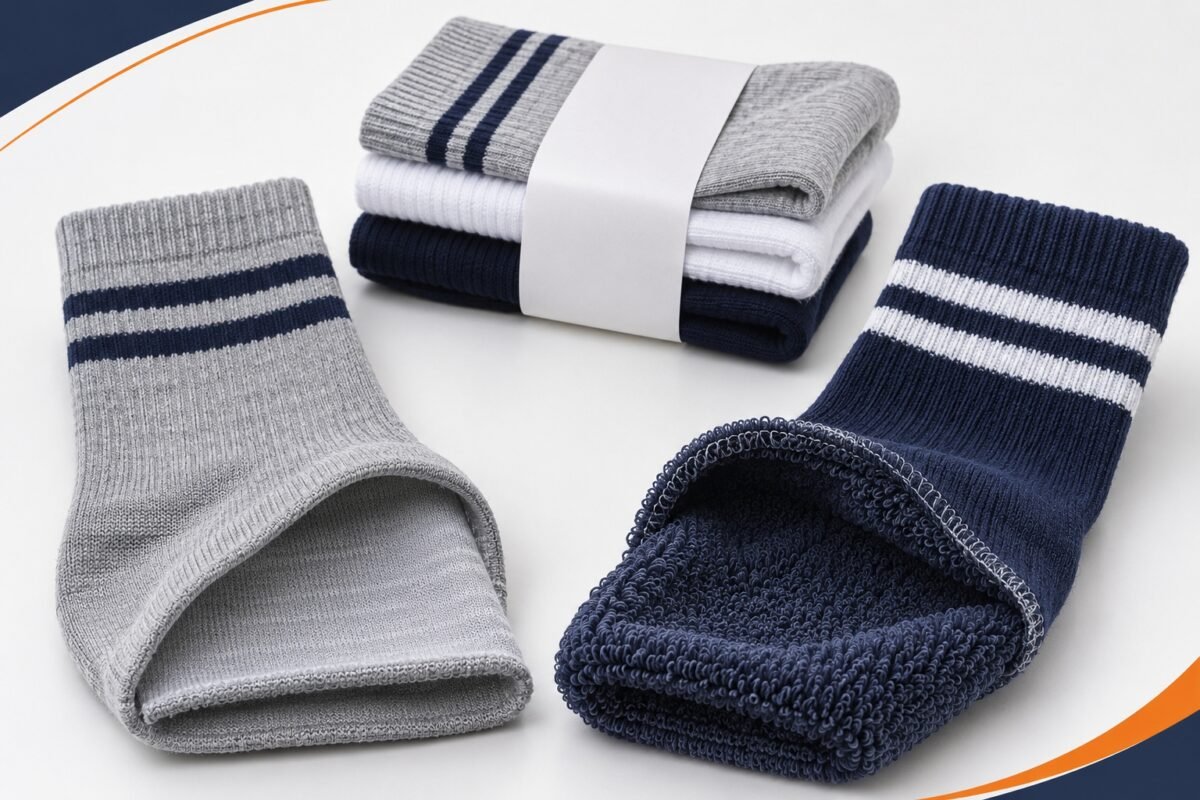
Digital artwork confirms the intended design, but it cannot show every physical result. Approve the relevant sample with the selected material, construction, colours, logo method and placement. Record any accepted simplification or size adjustment. If the logo changes after sample approval, update the artwork, specification and approval record so that production does not rely on an earlier version. Photographing the approved sample can support communication, but the physical sample and the agreed specification should remain clearly identified as the production reference.Approve the logo method, placement, colours and physical appearance on an identified sample.
07 · Information to Send Your Sock Supplier
To discuss a custom sock logo, prepare:- Intended use and target customer
- Sock style, material direction and size range
- Vector logo or best available artwork
- Colour references
- Preferred logo size and placement
- Required logo method, if already decided
- Reference products or finish examples
- Expected quantity and packaging requirements
- Target timing