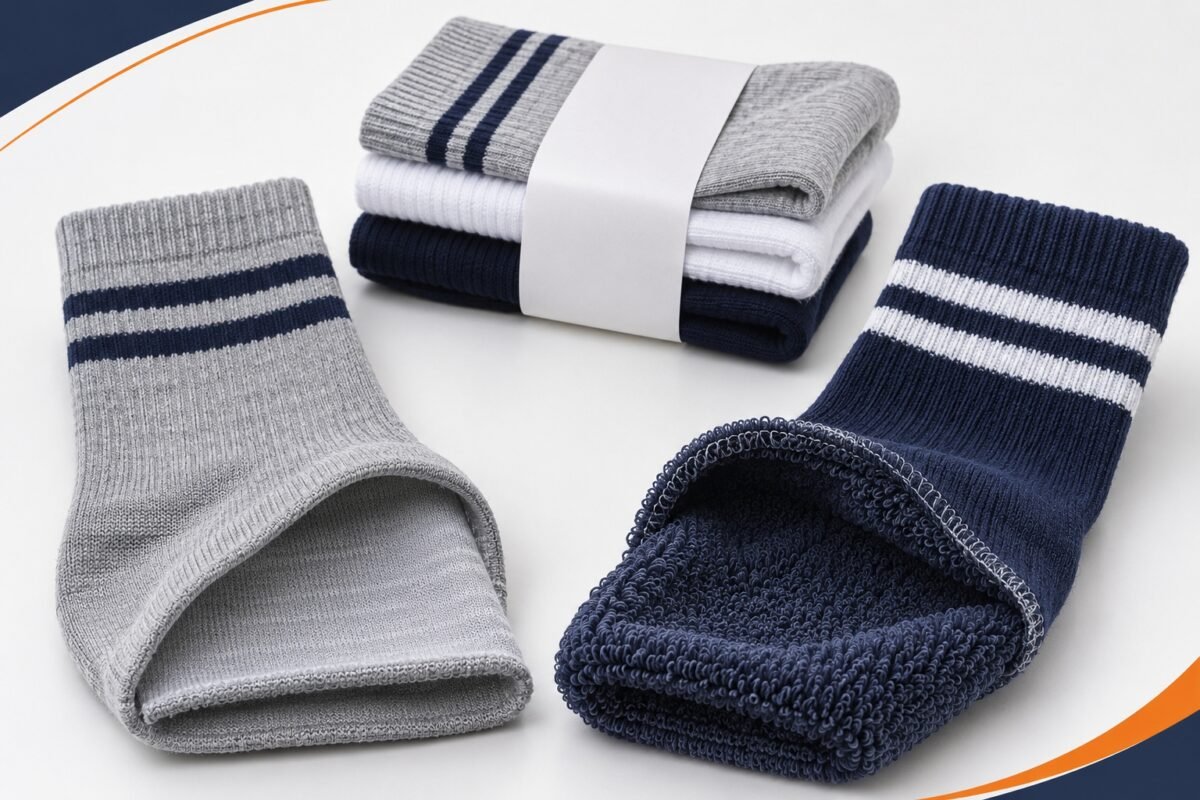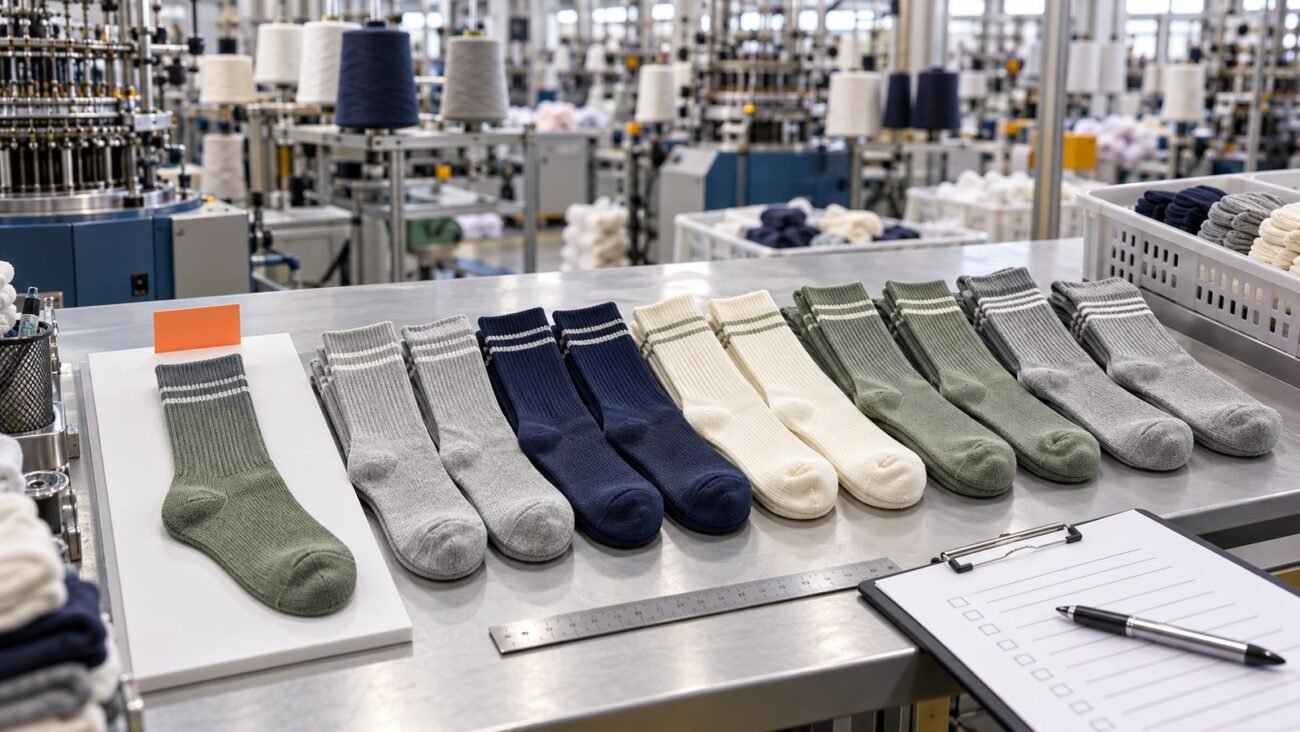

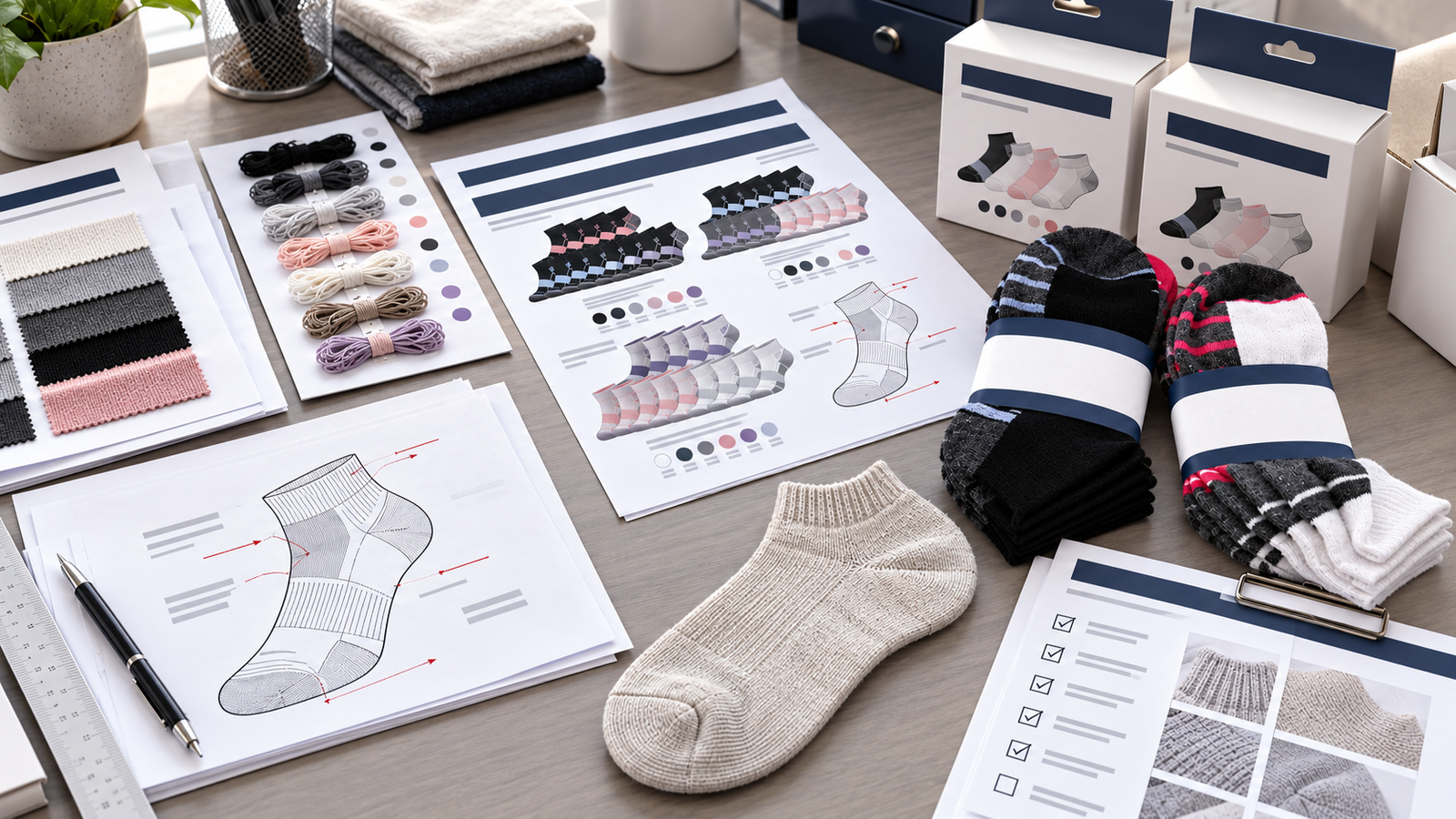
A private label sock project moves from an initial idea and material choices to an approved product, packaging and production records.
A sock collection may begin with a sketch, a reference product or a clear idea of the customer it should serve.
That is enough to start a discussion, but it is not yet a production instruction.
The brand and supplier still need to turn the idea into a series of confirmed requirements. Buyers can also use four practical supplier questions to understand how those decisions will be managed. A practical development process can be viewed in four stages: defining the product, approving the sample, confirming bulk production and preparing the product for sale and shipment.
01 Define the Product Direction
Begin with the commercial purpose of the product. The supplier needs to understand more than its appearance.
Useful starting information includes:
-
- Intended customer and use case
-
- Sales channel and target market
-
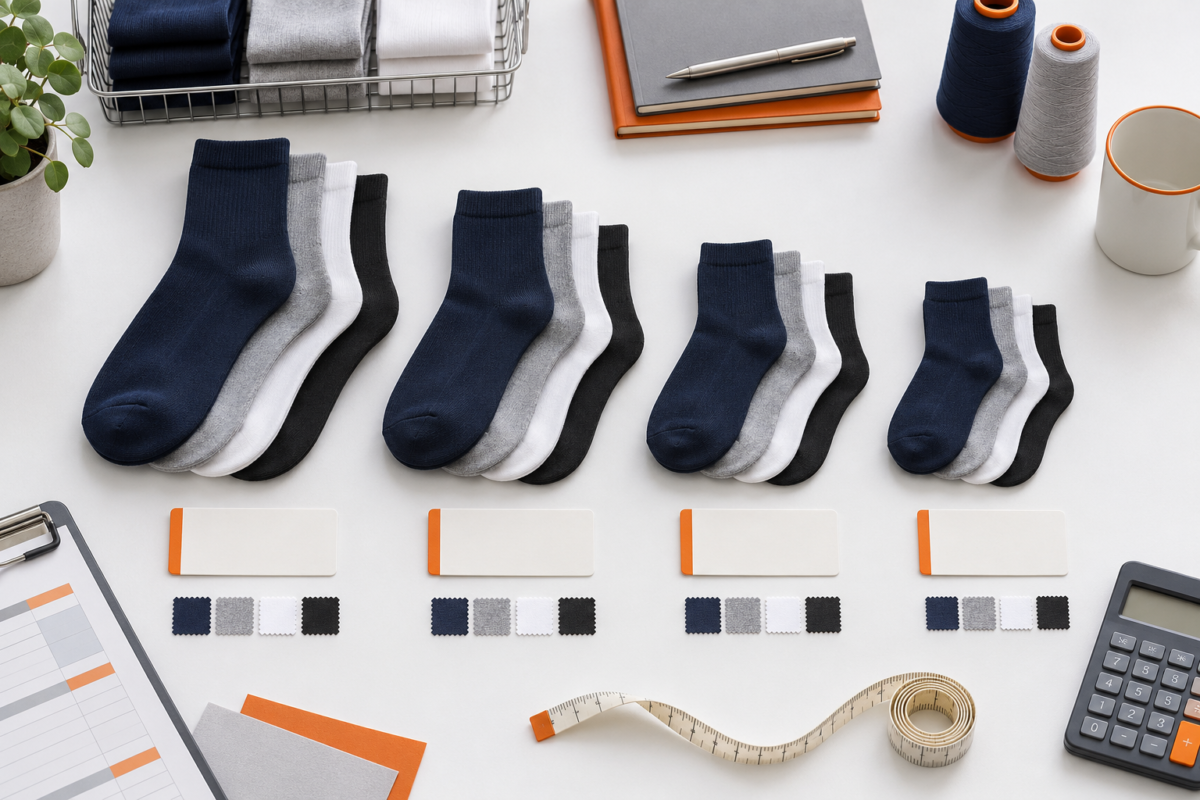
- Sock height, size range and fit expectations
-
- Design references, colours and branding
-
- Preferred materials or performance features
-
- Estimated quantity and number of variations
-
- Target price position and delivery period
Some details may still be open. Record them as questions rather than allowing an assumption to become an unofficial specification.
The supplier can then explain which construction, yarn and design options appear suitable for sampling. Our guide to preparing a custom sock development brief explains the information that supports this first discussion. Final choices should remain subject to feasibility checks and sample evaluation.
Confirmation at this stage: a development brief that separates agreed requirements, proposed options and open decisions.
02 Develop and Approve the Sample
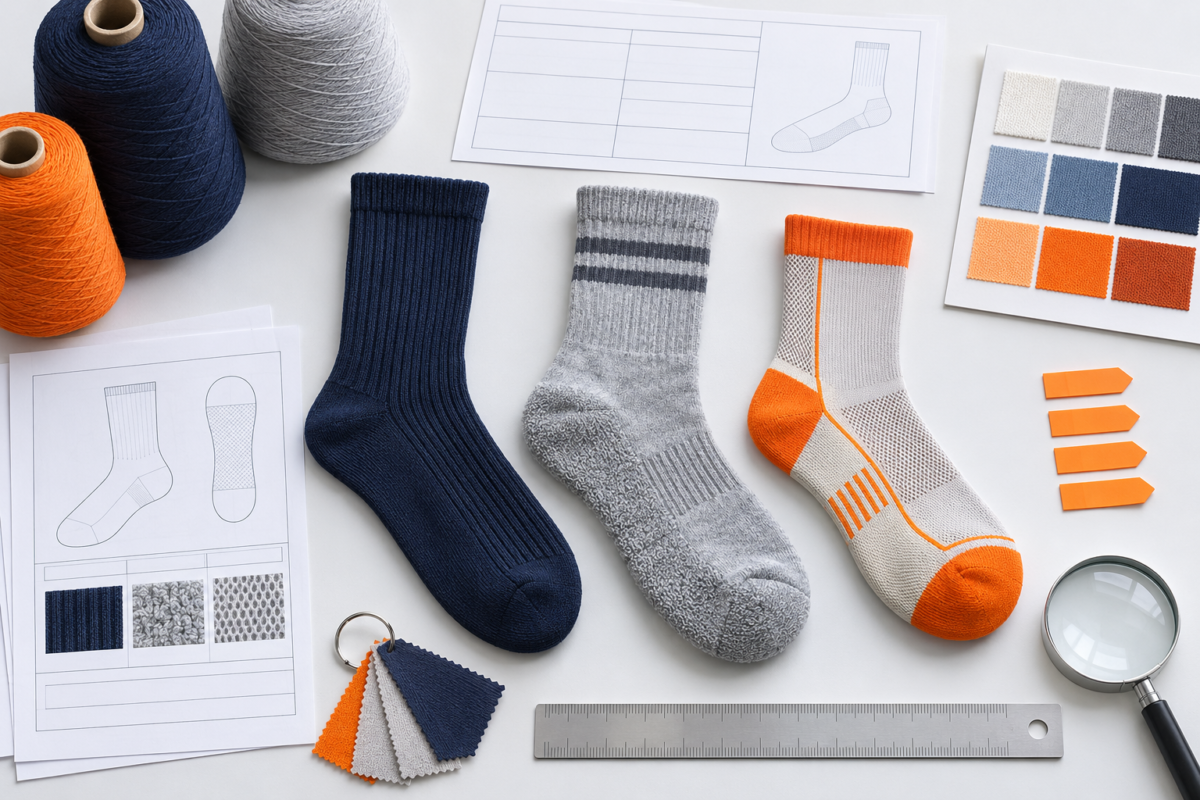
The purpose of a sample is to test whether the proposed product direction can be translated into a physical sock.
The review may cover:
-
- Overall appearance and colour
-
- Size, fit and measurements
-
- Yarn feel and construction
-
- Logo execution and placement
-
- Functional or reinforced areas
-
- Workmanship and finishing
-
- Proposed labels and packaging
Comments should identify the exact sample version and the change required. When a revised sample is approved, both sides should record which version becomes the reference for the next stage.
Approval should also state whether any items remain open. For example, the sock may be approved while final packaging artwork is still pending.
Confirmation at this stage: an approved sample reference, the corresponding specification and a record of unresolved items.
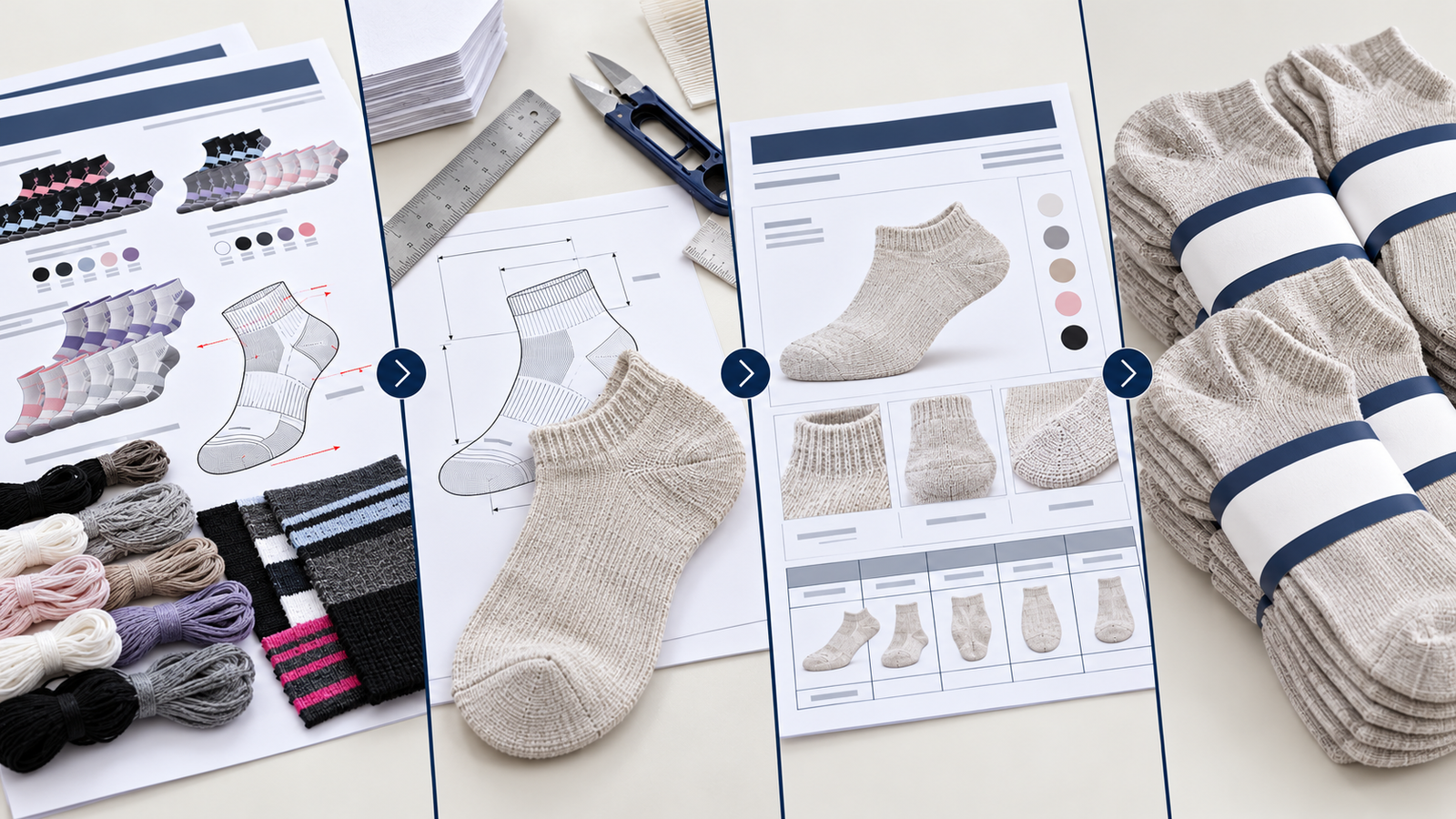
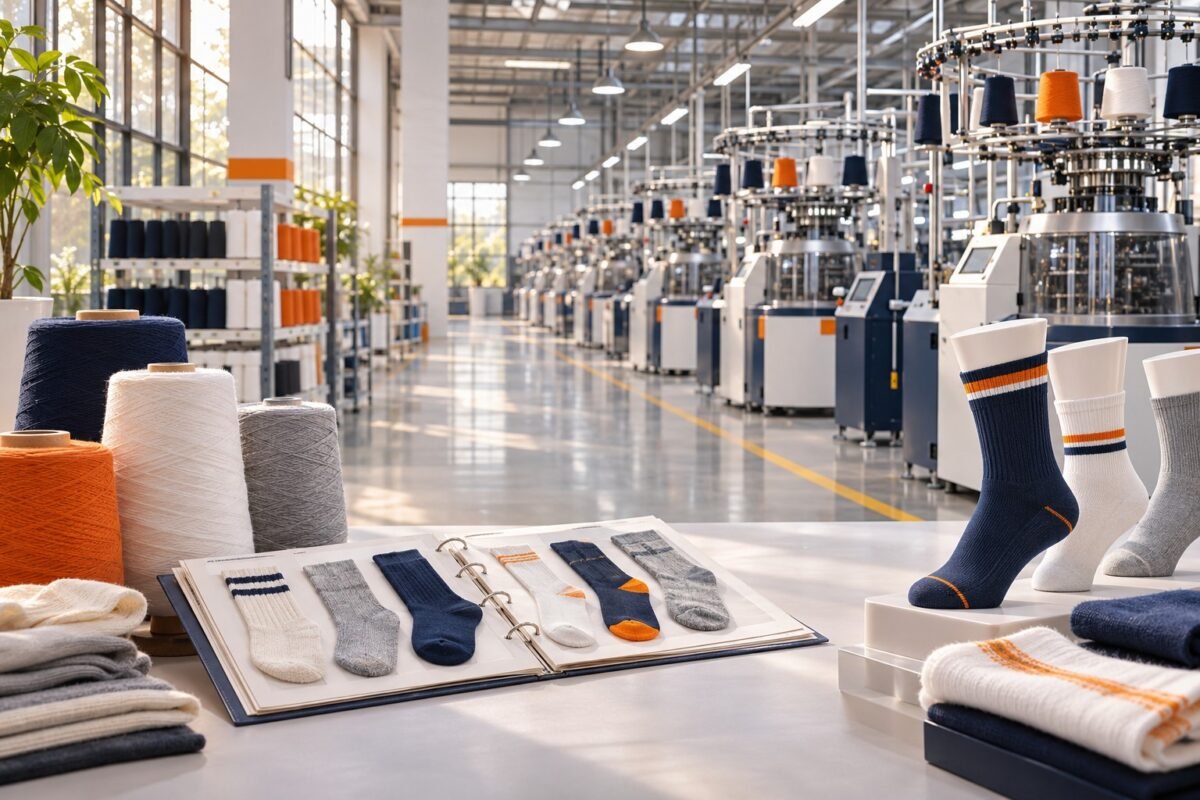
Private label sock development progresses through product definition, sampling, approval and production preparation.
03 Confirm Bulk Production Conditions
Sample approval allows production planning to move forward, but it does not settle every commercial and operational detail.
Before bulk production, confirm:
-
- Total quantity and size breakdown
-
- Final materials and colour references
-
- Approved construction and measurements
-
- Labelling and packaging requirements
-
- Quality requirements and relevant tolerances
-
- Production and review milestones
-
- Method for recording and approving changes
-
- Delivery destination and agreed trade conditions
Production, purchasing, quality and packaging teams should work from the same approved information. Clear handover points in a sock project help prevent an updated requirement from remaining only in an email or chat message.
Depending on the product and order, relevant controls may include material confirmation, a pre-production review, first-piece confirmation and in-process inspection.
Confirmation at this stage: a production-ready specification and an agreed plan for checks, changes and responsibilities.
04 Prepare the Product for Sale and Shipment
A finished sock must also be ready for the channel in which it will be sold.
Retail, ecommerce, promotional and gift projects may have different requirements. Check the relevant details before packaging production begins:
-
- Brand labels and care information
-
- Barcodes, price labels or product identifiers
-
- Individual packs, sets or display packaging
-
- Assortment and size ratios
-
- Inner packs and carton quantities
-
- Carton marks and destination information
-
- Required inspection or shipment documents
Late packaging changes can affect artwork, materials, packing work and delivery timing. The buyer should know which information is required, when it must be approved and who will receive the final files.
Before shipment, compare the finished goods and packing information with the agreed references and project requirements.
Confirmation at this stage: approved packaging and shipment information that matches the product, destination and sales channel.

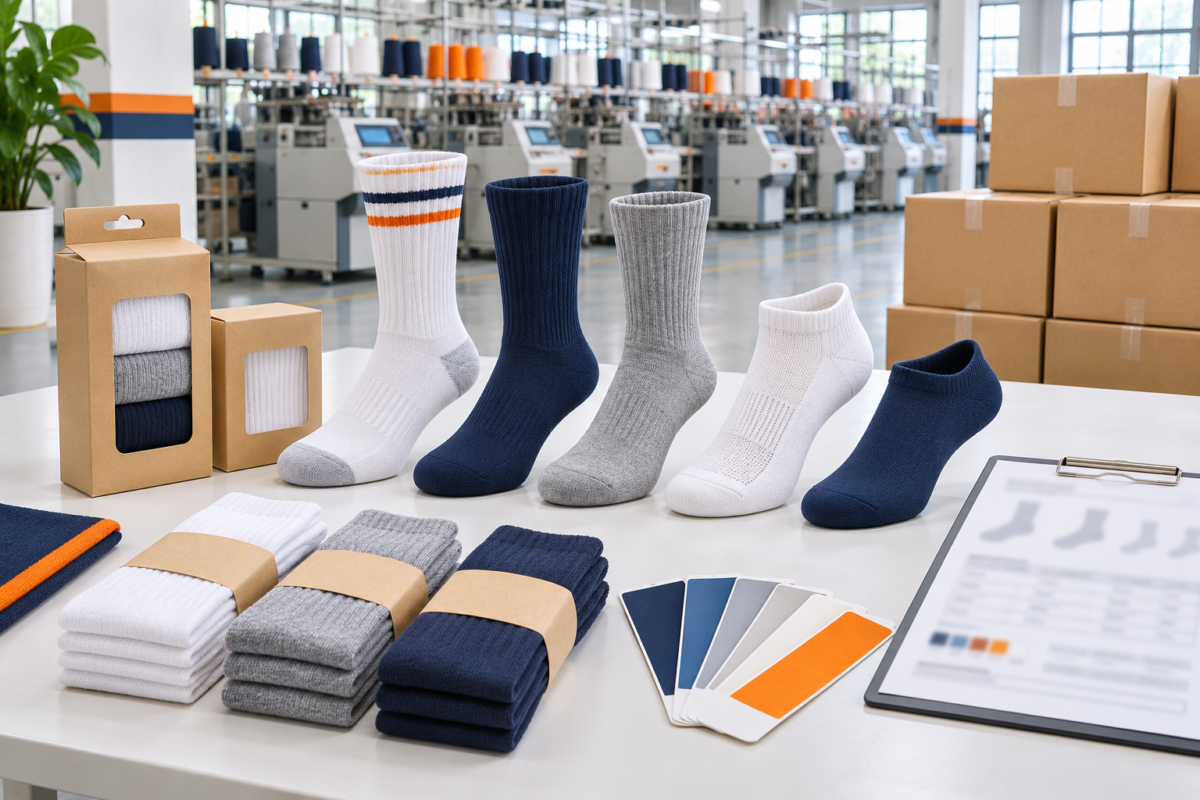
Production approval, quality checks, retail packaging and carton information should be confirmed before shipment.
05 Keep One Decision Record
The project should not depend on one person remembering every conversation.
A practical record may connect:
-
- The latest product brief
-
- Approved artwork and colour references
-
- Sample comments and approval
-
- Final production specification
-
- Approved change records
-
- Packaging files and carton requirements
-
- Inspection and shipment information
The format can be simple. What matters is that the relevant people can identify the current version and see which decisions remain open.
If a requirement changes, update the shared record and confirm the effect on cost, timing, materials or production before work continues.
06 Start with the Information You Already Have
Brands do not need every technical answer before contacting a supplier.
A useful first enquiry can include:
-
- Intended use and target customer
-
- Design reference or existing sample
-
- Estimated quantity and number of styles
-
- Size range and packaging expectations
-
- Target delivery period
The supplier can use this information to identify missing decisions and propose a practical next step. Materials, minimum order quantity, sampling cost, quotation and timing should then be confirmed for the specific project.
At Canfly Socks, we support brands, retailers and private label customers through product development, sampling, manufacturing, quality control, packaging and shipment coordination.
To discuss a project, send us your intended use, reference design, estimated quantity and packaging requirements.
Email: sales05@zjcanfly.com
WhatsApp: +86 137 3535 0489