

A request such as “soft cotton socks in our brand colours” sounds clear, but it still leaves several production decisions open.
Softness can come from fibre choice, yarn structure, knitting density and finishing. A colour viewed on a screen may also look different when it is knitted into a specific yarn and construction.
Before sampling begins, buyers and suppliers should turn general preferences into practical material and colour references that can be reviewed, recorded and approved.
01 Define the Product Use Before Choosing Materials
The right material depends on how and where the sock will be worn.
Begin by confirming:
- Target customer and market
- Everyday, athletic, outdoor or specialist use
- Climate and season
- Desired warmth, breathability or moisture management
- Cushioning level
- Stretch and recovery expectations
- Care and durability requirements
- Relevant market or testing requirements
A soft indoor sock and a running sock may require different yarns, structures and performance priorities. Defining the use first helps the supplier recommend realistic options and supports a clearer custom sock development brief.
Confirmation at this stage: a short description of the wearer, use case and required performance.
02 Describe the Required Feel in Measurable Terms
Words such as soft, thick, light or premium can mean different things to different people.
Support the description with references such as:
- A physical sock with the preferred hand feel
- A competitor or market sample
- A target weight or thickness range
- A preferred surface appearance
- The amount and position of cushioning
- A stretch or compression expectation
- A list of features that must be avoided
The reference does not need to be copied. Its purpose is to show which characteristics matter and which parts should be changed.
Confirmation at this stage: an agreed description supported by a physical or measurable reference.
03 Confirm Fibre Content and Yarn Direction
Fibre content is one part of the material decision, but the complete construction also matters.
The discussion may include:
- Main fibre or blend direction
- Yarn count or thickness where relevant
- Spun, filament or textured yarn characteristics
- Elastic yarn and stretch requirements
- Reinforcement in the heel or toe
- Cushioning yarn and placement
- Special finishes or performance treatments
The final blend should match the intended product and any applicable labelling or testing requirements. If a specific fibre percentage is critical, record the target and the acceptable verification method before production.
Confirmation at this stage: a documented yarn and fibre direction for the first sample.

Material choices should be connected to a clear product specification and an identifiable sample version.
04 Use Clear Colour References
Colour names alone are not reliable production standards. “Navy”, “beige” or “forest green” can describe many different shades.
Use one or more of the following:
- A recognised colour-system reference
- A physical colour swatch
- An approved yarn colour card
- A fabric or product sample
- A sealed reference from an earlier order
Screenshots and digital artwork are useful for communication, but screen settings and file profiles can change the appearance. Where colour is important, confirm the physical yarn or knitted result under agreed viewing conditions.
Also record which component each colour applies to, including the body, cuff, heel, toe, logo and grip print.
Confirmation at this stage: named colour references connected to each part of the sock.
05 Review Colour in the Actual Construction
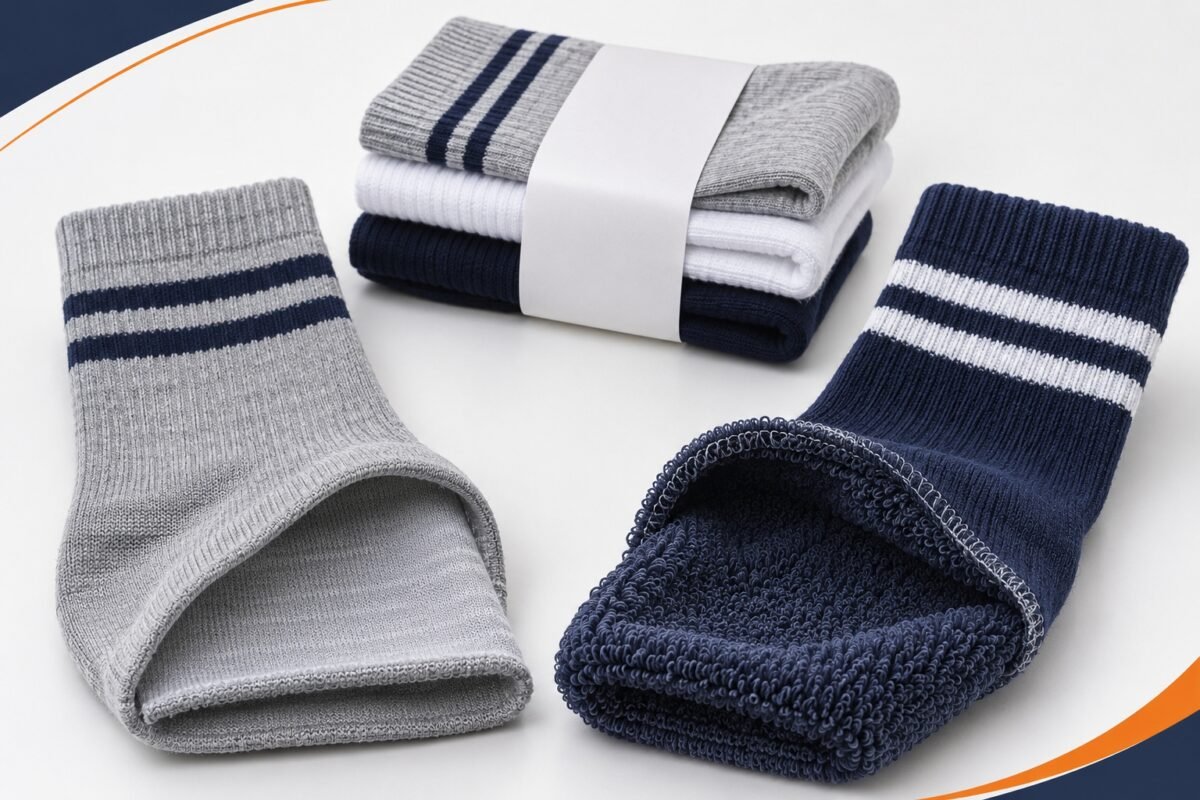
The same yarn colour may appear different in ribbing, mesh, terry cushioning or a flat knit area. Surrounding colours and knitting density can also affect the visual result. Confirming these details early can help reduce differences between a sample and bulk production.
During sampling, review:
- Colour appearance in each knitted area
- Contrast between the body and design details
- Logo clarity
- Colour coverage and show-through
- Alignment with packaging or other collection items
- Appearance under suitable lighting
If an exact colour match is commercially critical, agree on how it will be evaluated and what level of variation is acceptable for the yarn and process.
Confirmation at this stage: an approved physical sample or colour component linked to the sample version.
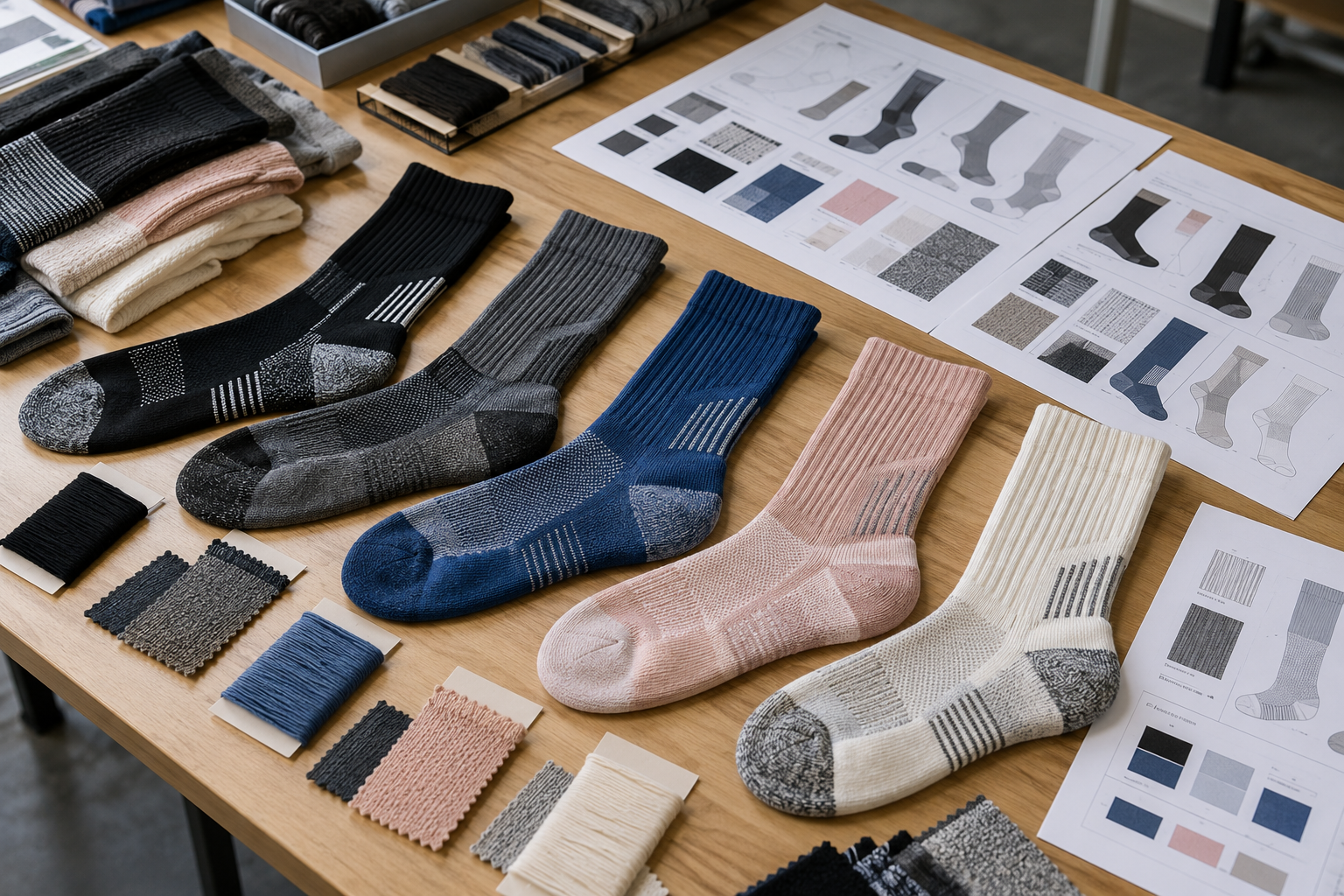
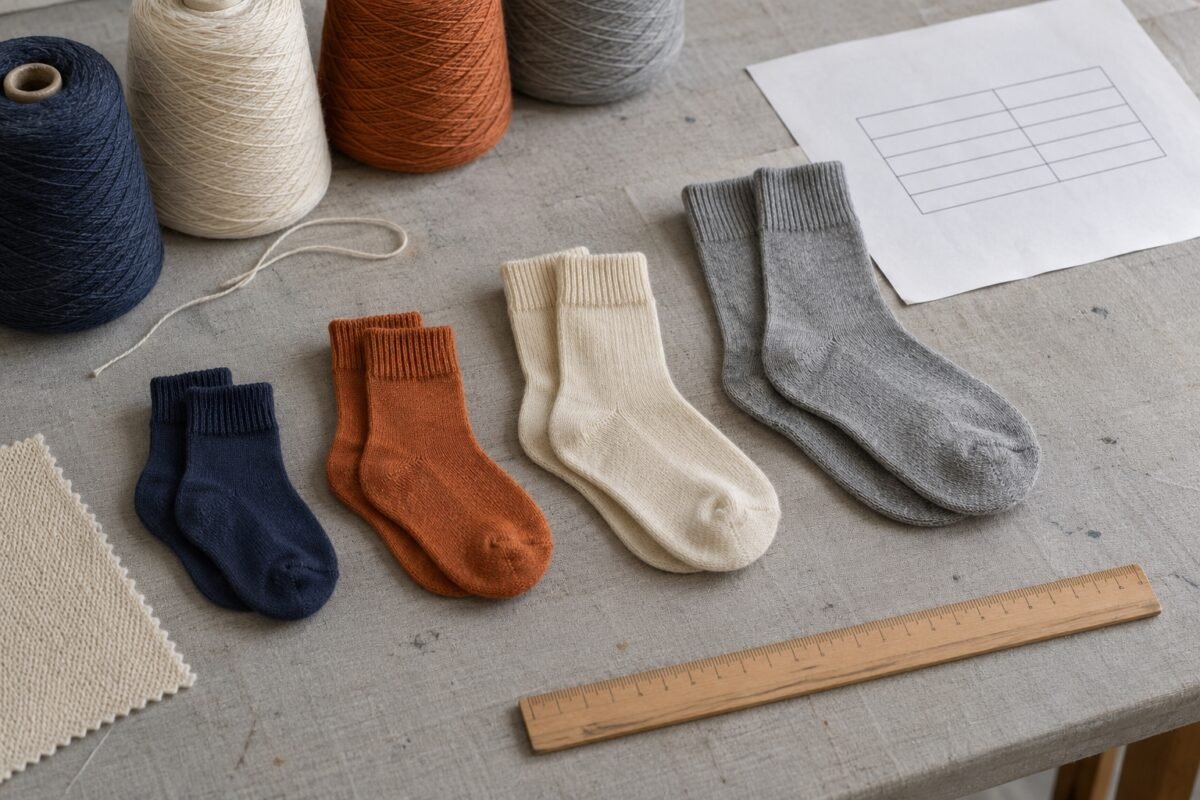
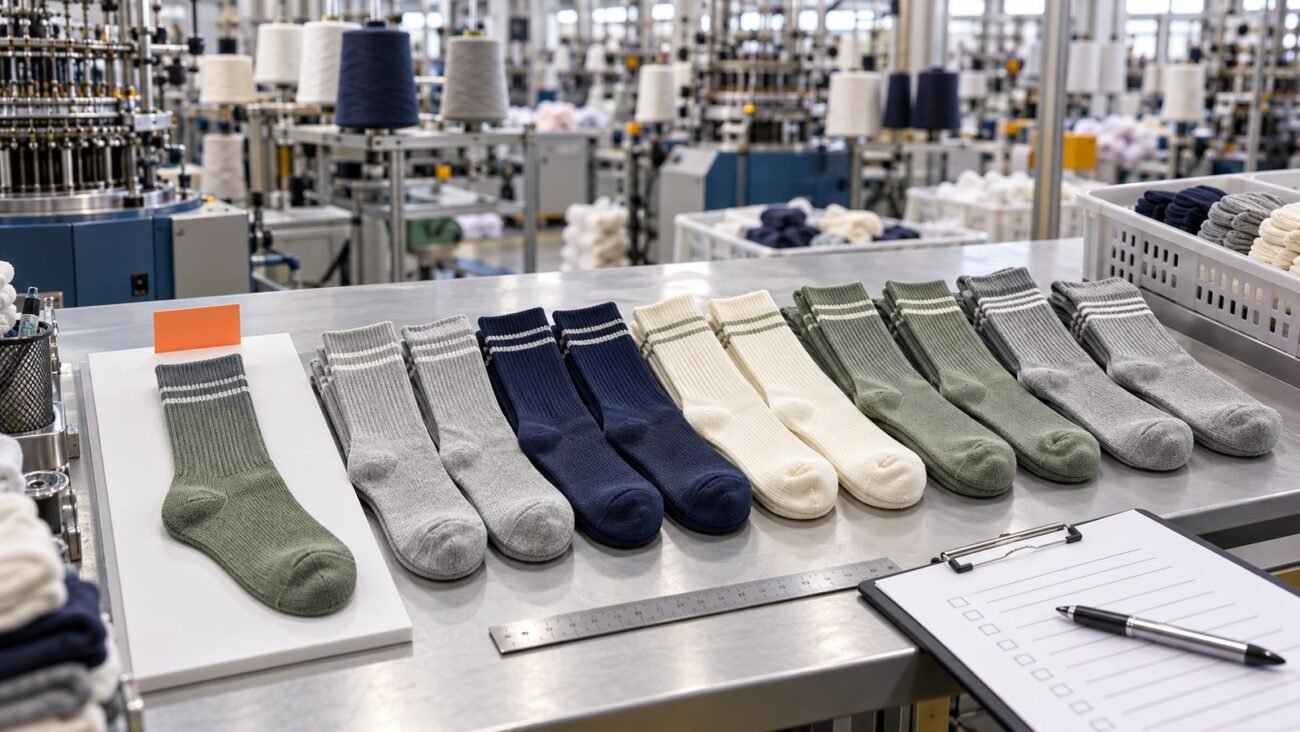
Design sheets, yarn references and physical samples help buyers compare colour placement, construction and the final knitted result.
06 Record Approved Materials and Changes
An approved sample is useful only when the production team can identify what was used.
The approval record may include:
- Supplier yarn code
- Fibre content or blend
- Colour code and colour name
- Knitting construction
- Elastic or reinforcement reference
- Sample version and approval date
- Approved physical swatch or sample
- Notes on permitted variation
If a yarn, colour or construction changes after approval, record the reason and assess whether another sample or confirmation is required.
Clear records help reduce confusion when the project moves from development to bulk production and support clearer project handover points.
07 Information to Send Your Sock Supplier
To begin a material and colour discussion, send:
- Product type and intended use
- Target market and customer group
- Preferred fibre or material direction
- Required feel, thickness and performance
- Colour codes or physical references
- Artwork and colour placement
- Reference sample if available
- Estimated quantity and target timing
The supplier can then identify missing information, recommend suitable yarn options and prepare a clearer sampling plan.
At Canfly Socks, we support brands, retailers and private label customers through product development, sampling, manufacturing, quality control, packaging and shipment coordination.
To discuss a project, send us your product reference, material preferences, colour information, estimated quantity and target schedule.
Email: sales05@zjcanfly.com
WhatsApp: +86 137 3535 0489