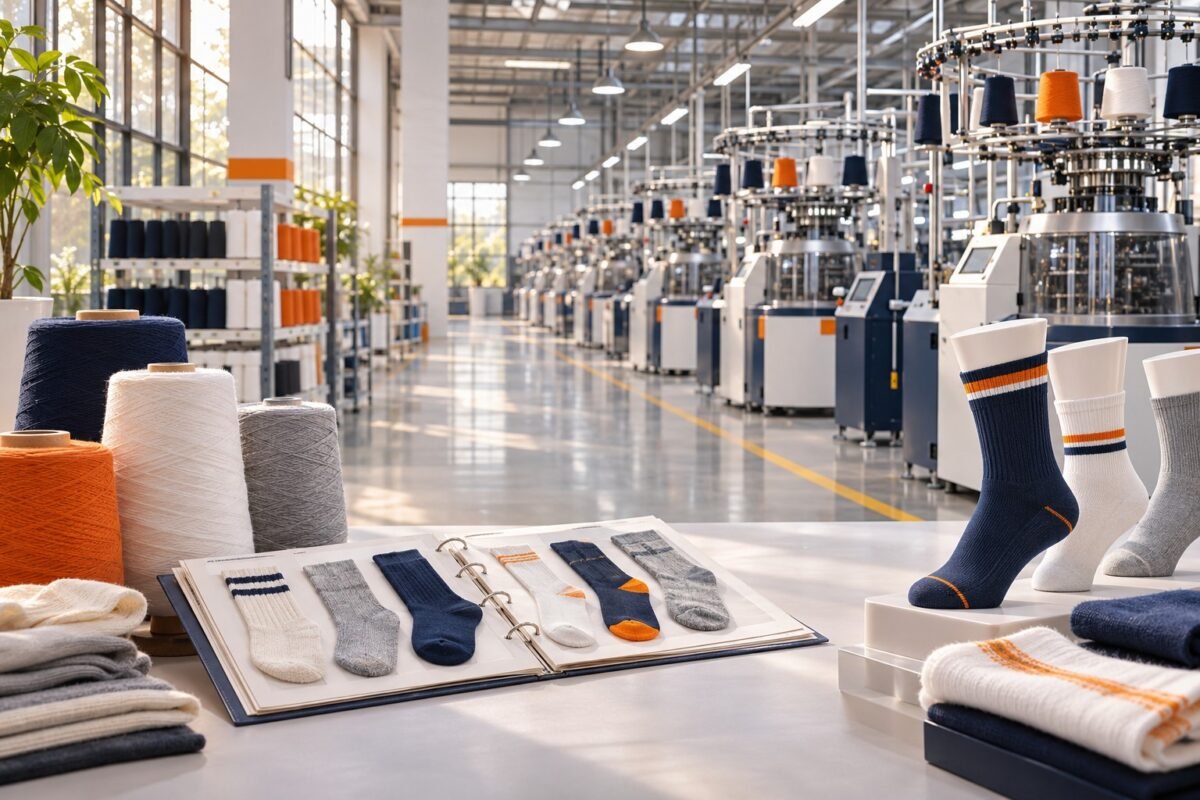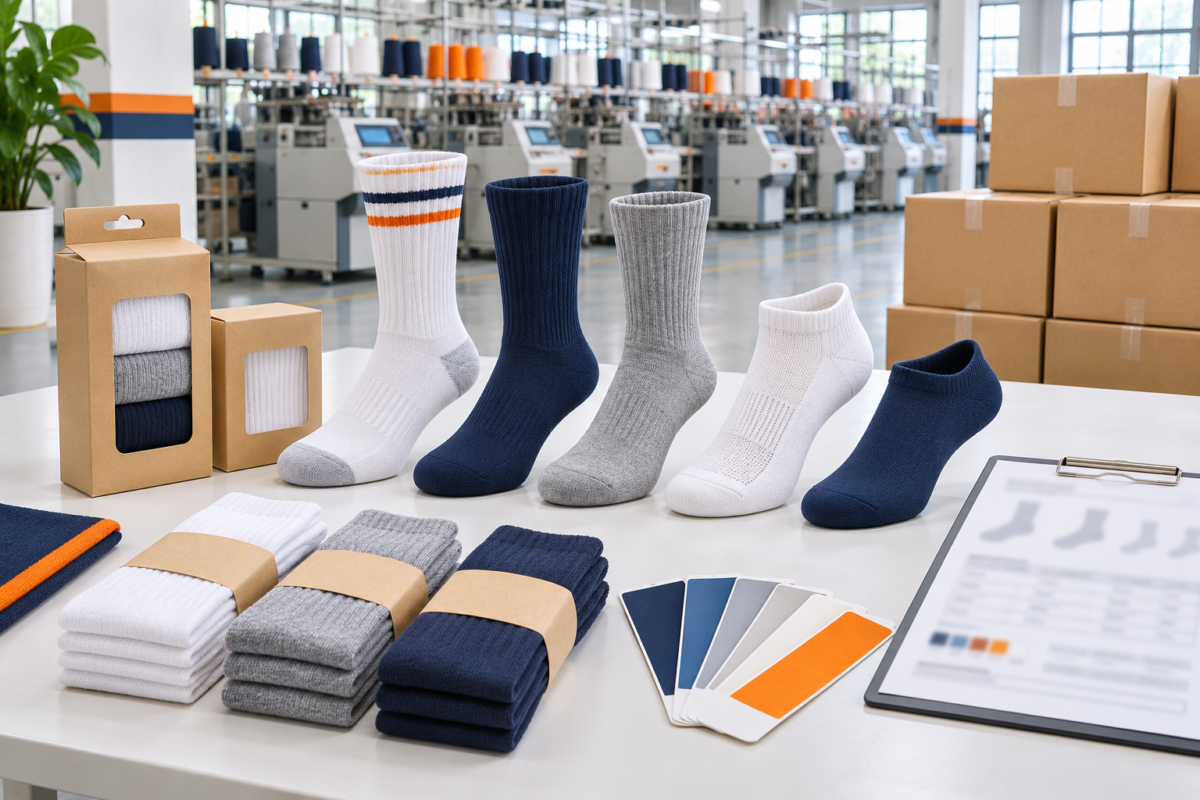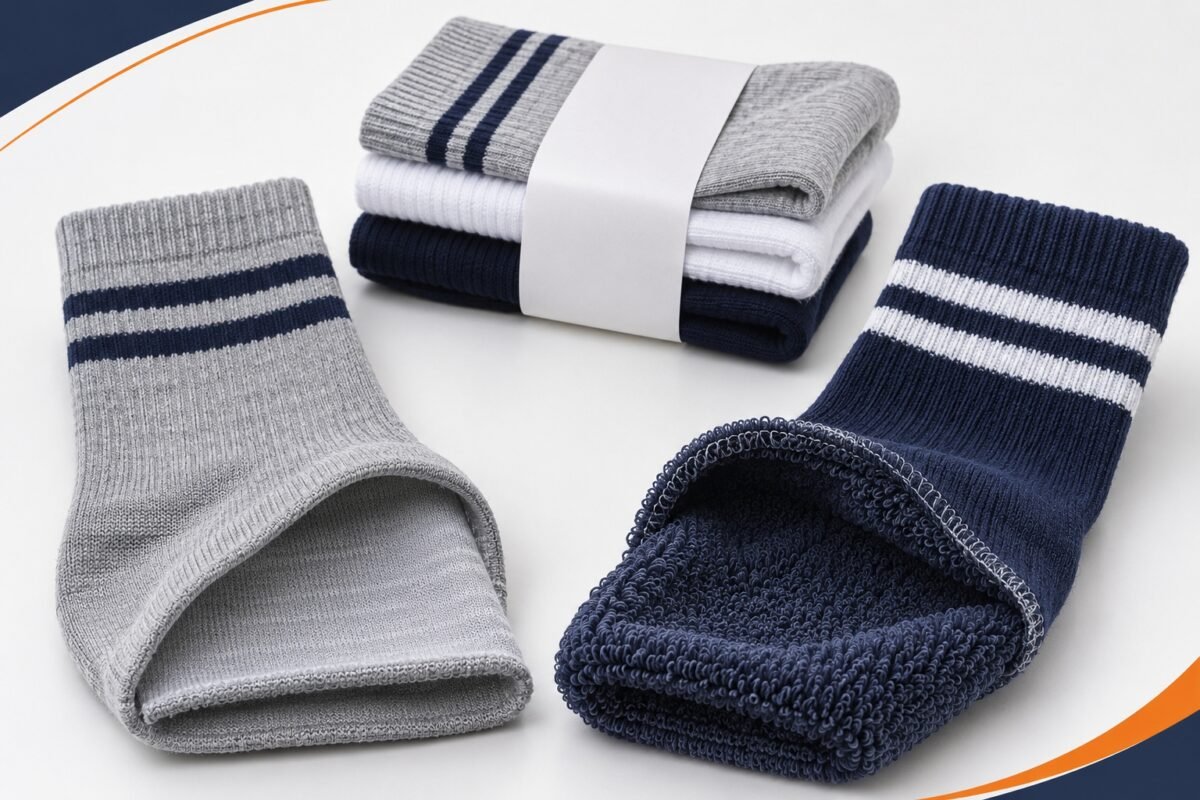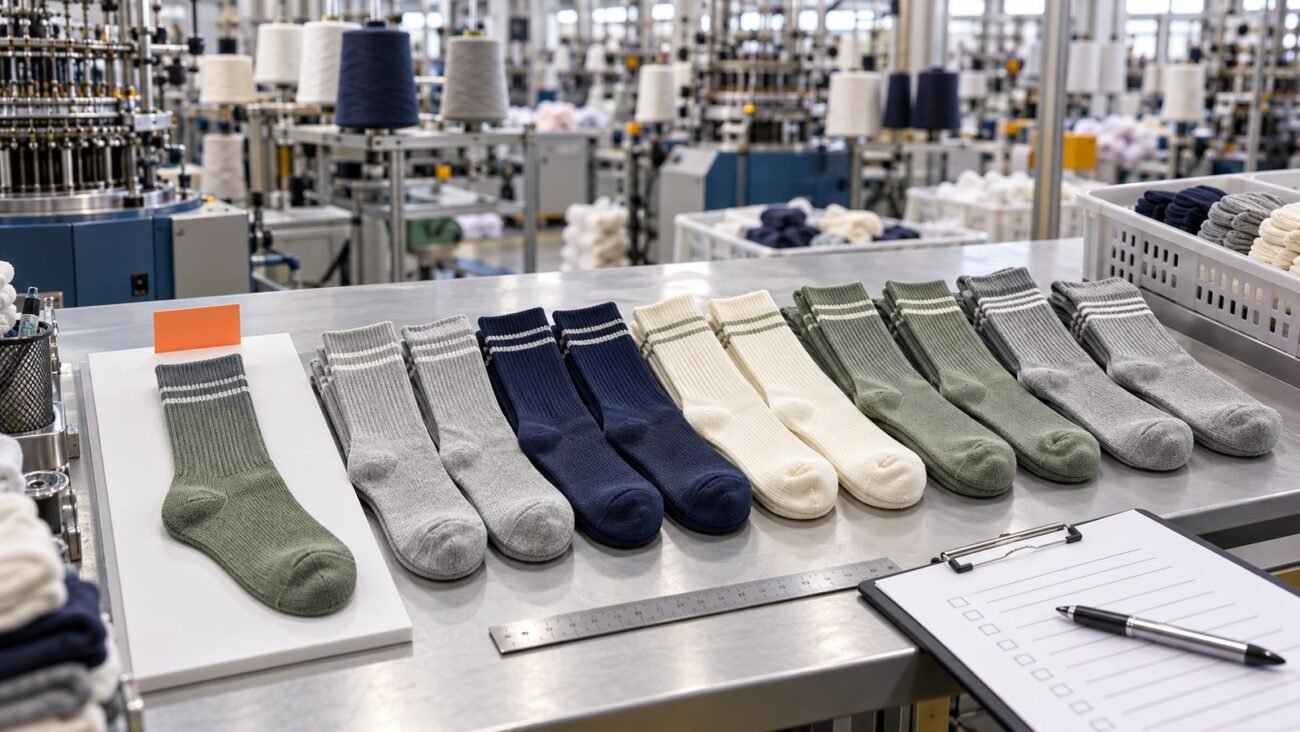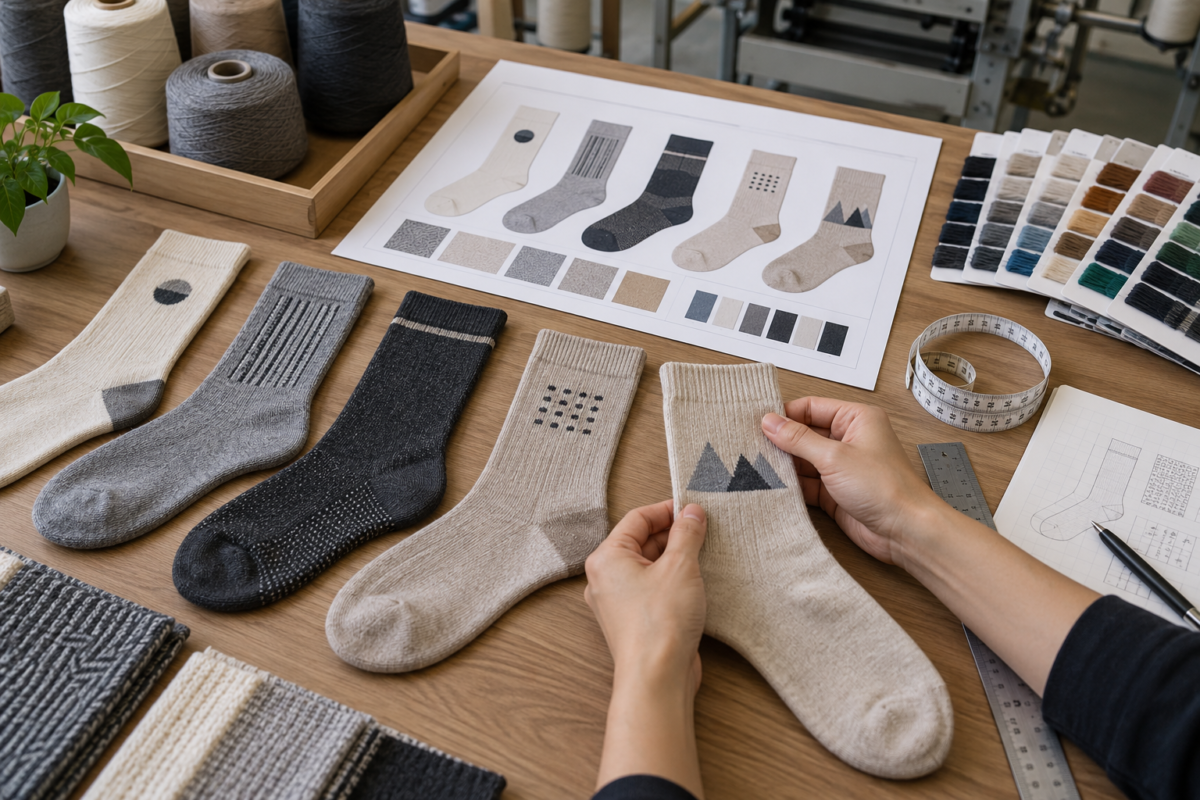


Not every sock product should be forced through exactly the same production route. Canfly coordinates core sock development, knitting, production control and quality verification through its manufacturing base. Depending on the product construction, decoration, finishing, testing or packaging requirement, a qualified specialist process or component supplier may also be involved.
The important question for a buyer is not whether every operation happens under one roof. The important questions are who is responsible for each process, how the approved specification is transferred, how quality is checked and whether any change is disclosed before bulk production.
What does “completely in-house” mean for a sock order?

Core production is coordinated through a controlled route from materials to inspection.
In-house manufacturing usually means that a supplier directly operates the core equipment and manages the main production workflow. For socks, that may cover product review, sample development, knitting, boarding, inspection and packing coordination.
However, one definition cannot be applied to every product. A basic cotton sock, an embroidered fashion sock, a grip Pilates sock and a performance sock with laboratory testing may require different machines and specialist processes. A supplier should describe the actual route for the product being quoted rather than give a general answer that may not apply to every style.
Buyers should also distinguish between the manufacturing site, a specialist processing site and a material or packaging supplier. Each party can affect quality, lead time, traceability and compliance.
Which operations are part of the core production route?
The exact route is confirmed from the approved specification, but the coordinated core workflow can include:
- Product, construction and material review
- Artwork and technical specification preparation
- Sample knitting and measurement confirmation
- Yarn, color and machine-route planning
- Bulk knitting and in-process checks
- Boarding, finishing and appearance review
- Final inspection against the approved reference
- Private-label packaging and carton verification
These steps need one controlled reference. Measurements, yarn details, colors, structure, artwork, packaging and inspection requirements should match the approved sample and written specification.
When might a specialist process be involved?
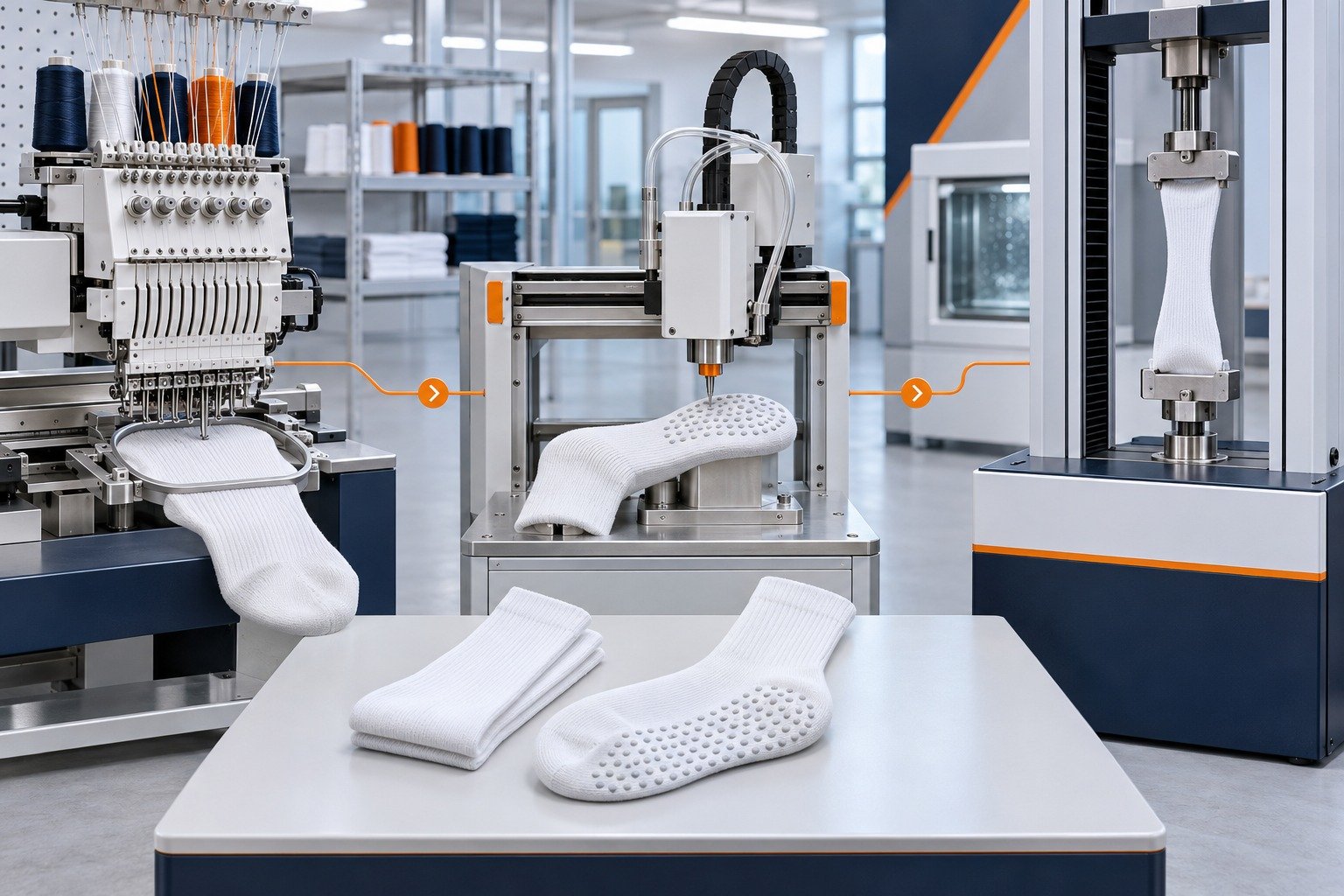
Some specifications may require qualified specialist equipment or technical support.
Some product requirements use equipment or expertise that is not installed for every production line. Depending on the project, specialist support may be considered for embroidery, grip application, printing, unusual finishing, laboratory testing or a particular packaging component.
This does not mean that every order uses an outside process, and it does not mean that a specialist process is automatically a quality risk. The route should be selected according to the product requirement, available equipment, technical capability and applicable compliance needs.
Before sampling, the supplier should identify the relevant process, the responsible party and the approval point. A buyer should not discover a material production change only after the order has started.
How are partner-supported processes controlled?
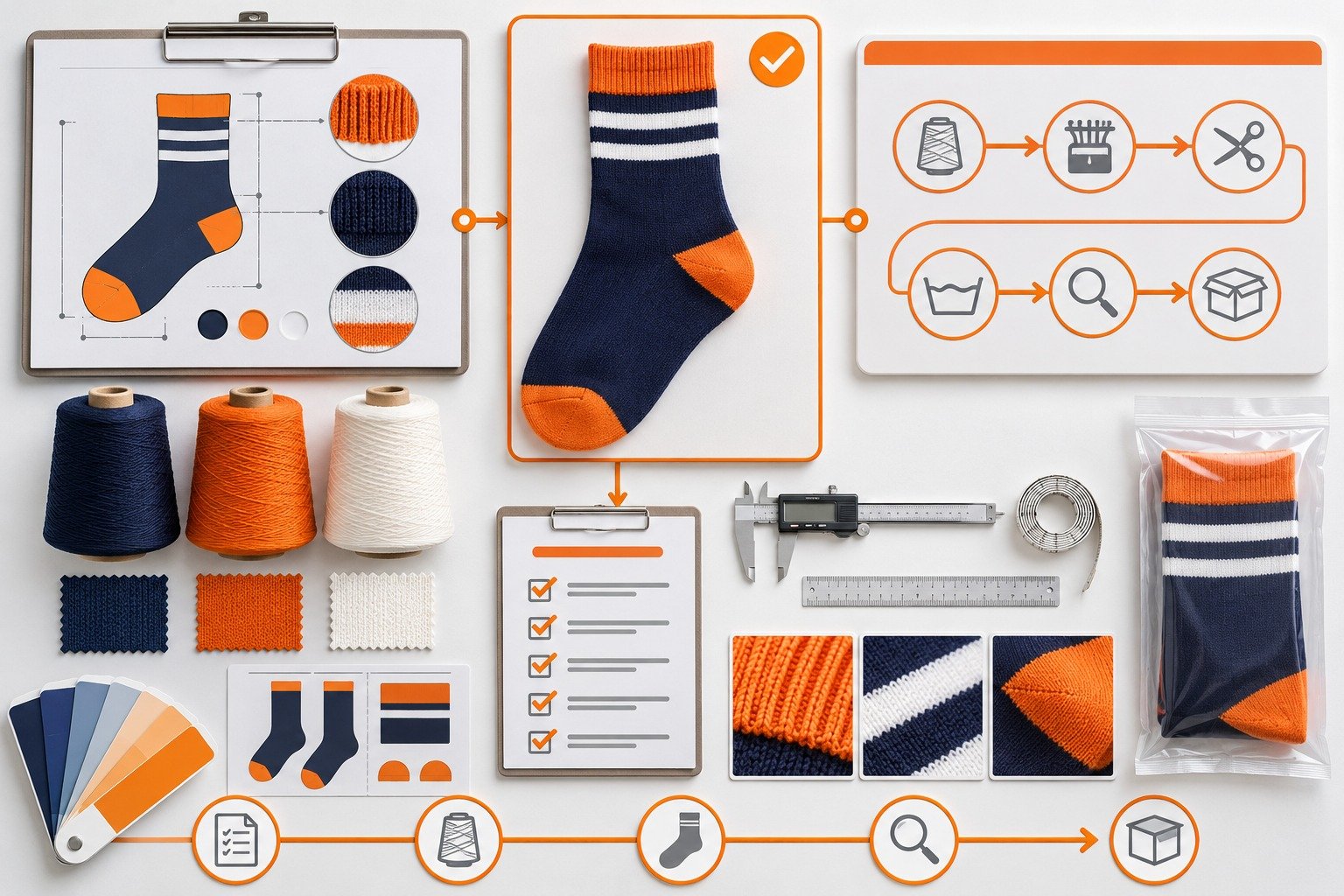
Every process should follow the written specification and approved product reference.
A specialist-supported operation still needs the same level of specification control as an internal operation. Useful controls include:
- A written process requirement linked to the product specification
- An approved sample or approved process reference
- Clear responsibility for material and work-in-process transfer
- Incoming checks after the specialist operation
- Inspection of appearance, dimensions and performance where applicable
- Traceable records for relevant batches and approvals
- Buyer approval before any material process or supplier change
- Final verification before packing and shipment
The finished product remains the reference point. A supplied process should be checked against the same approved requirements used for the rest of the order.
Does a specialist process reduce product quality?
Not automatically. Quality depends on process suitability, written requirements, capability, approval and verification. A qualified specialist with the correct equipment may be more reliable than forcing a process through equipment that is not designed for it.
Risk increases when the process route is unclear, changes are not recorded, samples do not represent bulk production or incoming work is accepted without inspection. Transparency and control are therefore more useful than a simple yes-or-no claim about one building.
For regulated, licensed or performance-related projects, buyers should also confirm which site and legal entity are covered by the relevant audit, certification, test report or authorization. Scope and validity should be checked for the actual project.
What should buyers verify before placing an order?
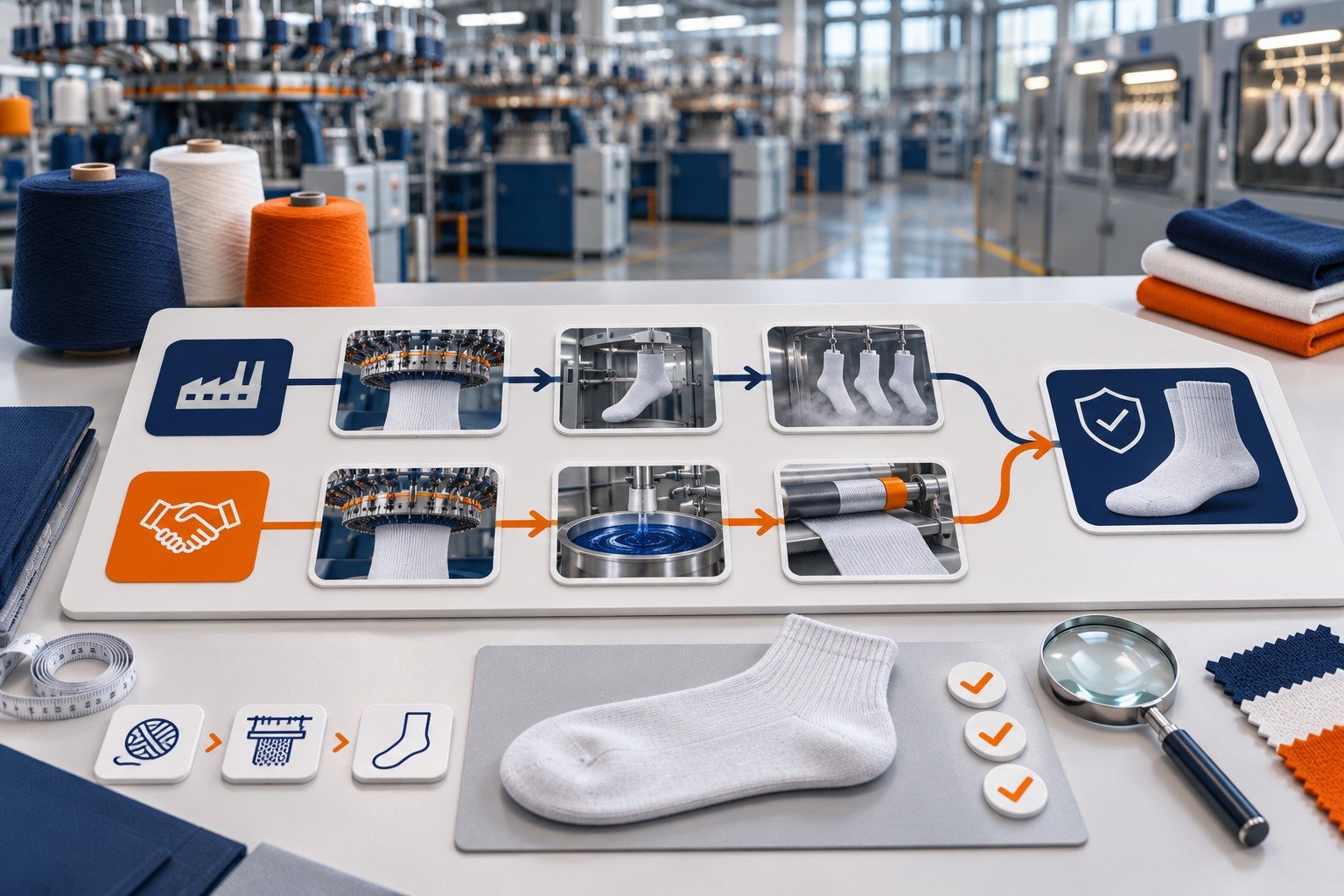
Buyers should confirm responsibility, approval points and inspection controls for each process.
Ask the supplier to explain the route for the specific product. A practical review can cover:
- Which operations are performed at the main manufacturing base?
- Which operations, if any, require a specialist facility?
- Who purchases and approves yarns, trims and packaging components?
- Which sample represents the final production route?
- How is work checked when it returns from a specialist process?
- Which inspection records are retained?
- How are process, material or supplier changes approved?
- Which site and entity apply to compliance documents?
Photos, videos and a process map can support the review, but they should match the quotation, specification, sample and production records for the order.
What information should you send before sampling?
To select an appropriate manufacturing route, provide the product type, intended use, artwork or reference sample, material preference, size range, performance requirements, decoration, packaging, quantity and target delivery date.
The team can then review the likely machine route, finishing needs, specialist operations, approval steps and realistic production schedule before development begins.
A clear answer
Canfly coordinates core custom-sock development, knitting, production control and quality verification through its manufacturing base. Some product-specific processes or components may involve qualified specialist support when the specification requires different equipment or expertise.
The route should be disclosed, documented and verified against the approved product requirements. Buyers are encouraged to ask for the process map that applies to their own style instead of relying on a general factory claim.
Send your design, specifications, quantity, packaging requirements and target delivery date so the Canfly team can review the appropriate production route before sampling.
Email: sales05@zjcanfly.com WhatsApp: +86 137 3535 0489 Website: www.canflysocks.com