
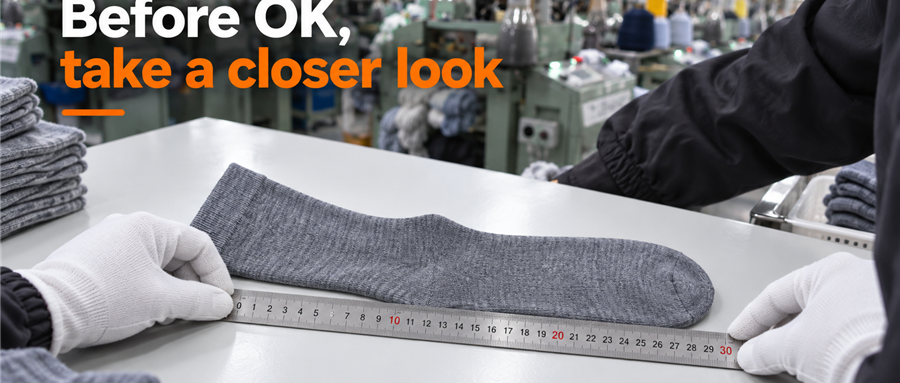
Receiving the first sample is an important moment in a custom sock project. The natural first reaction is to look at the overall appearance: Does the sock look right? Does it match the original idea? Would it suit the target customer?
That first impression matters. Before replying with “OK” or “approved,” however, it is useful to spend a little more time on the details that production will need to repeat.
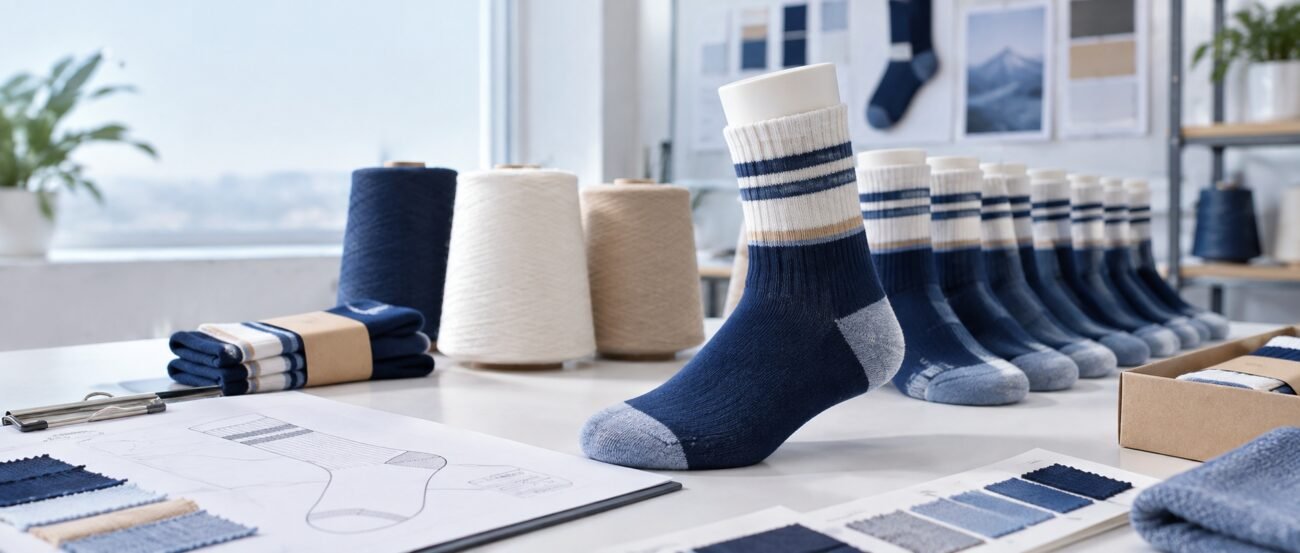
A sample is more than a presentation piece. Once approved, it may become a shared reference for product development, production, quality control and packaging. The clearer the approval, the easier it is for everyone to work from the same expectations.
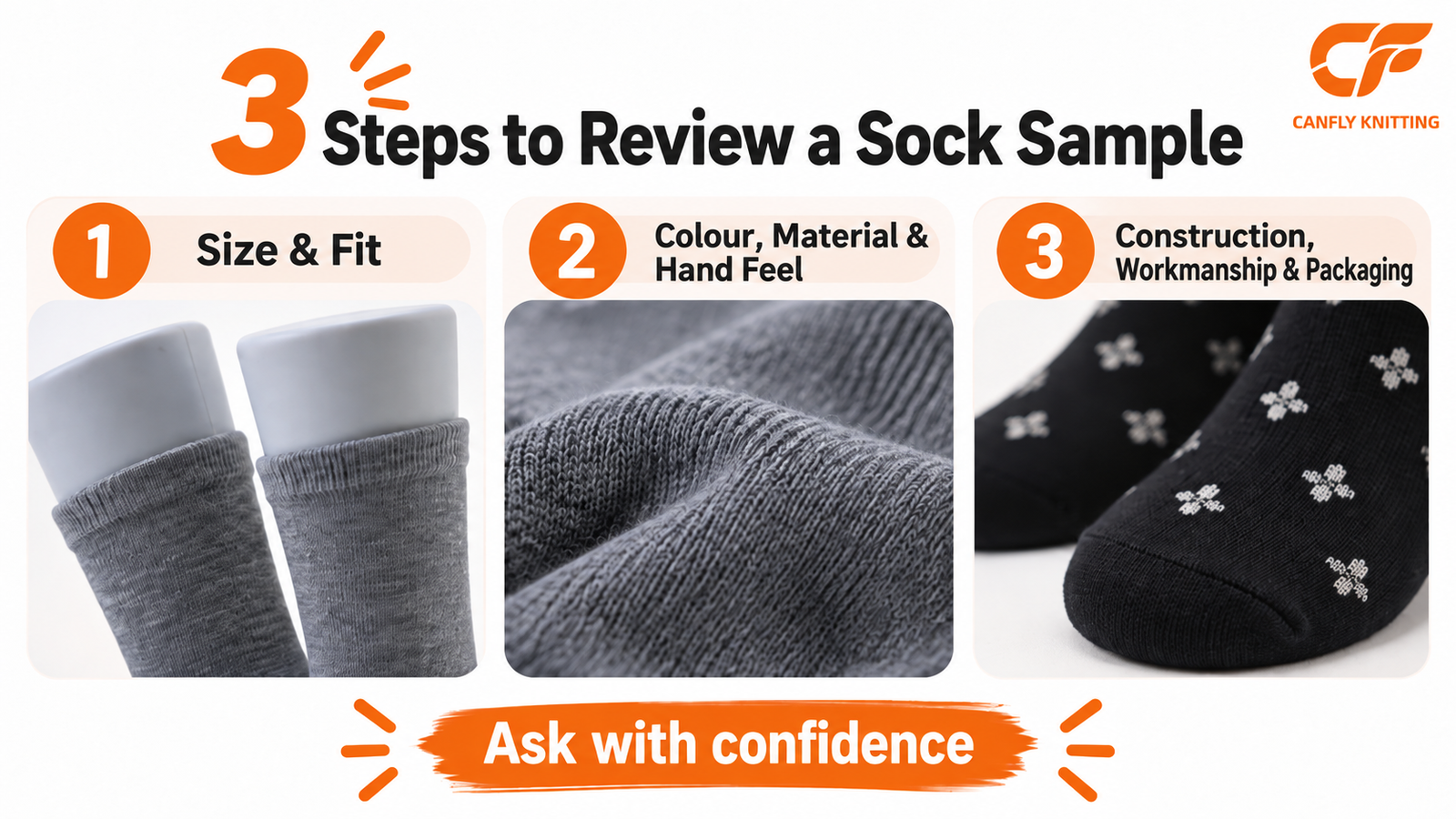
1. Check the Size and Fit
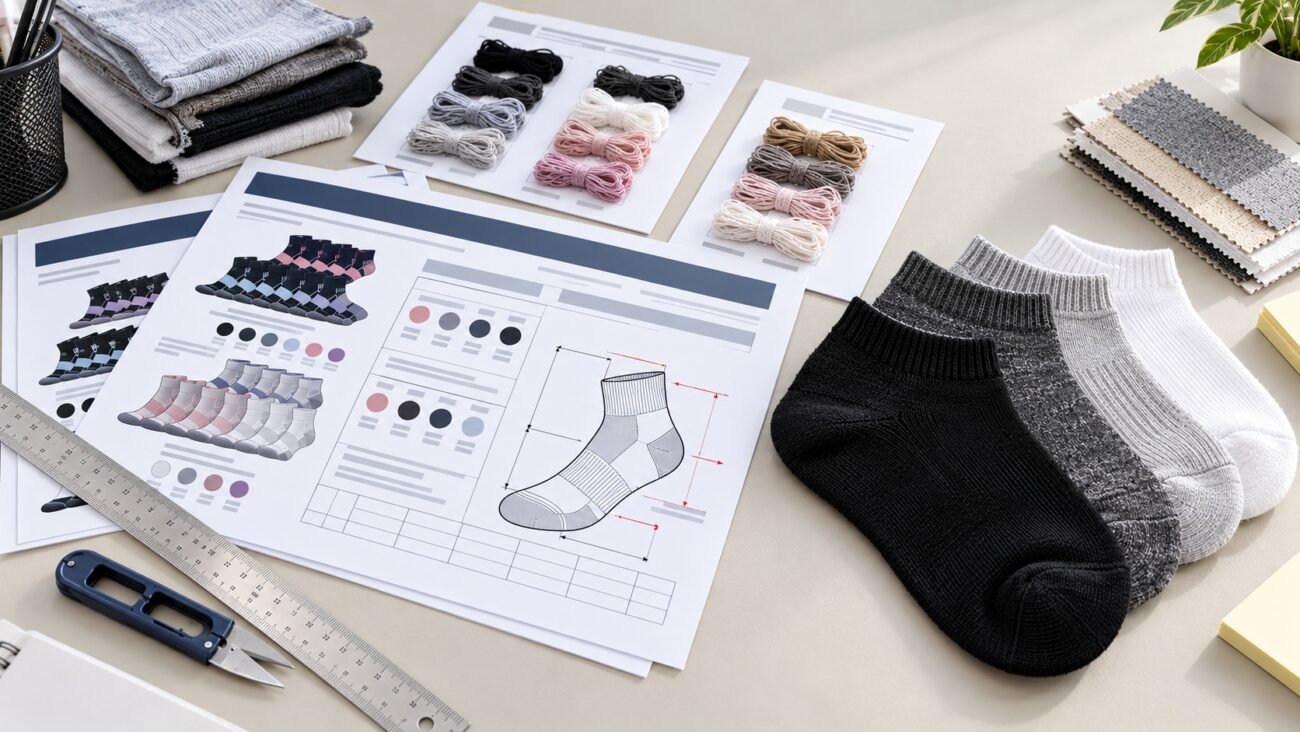
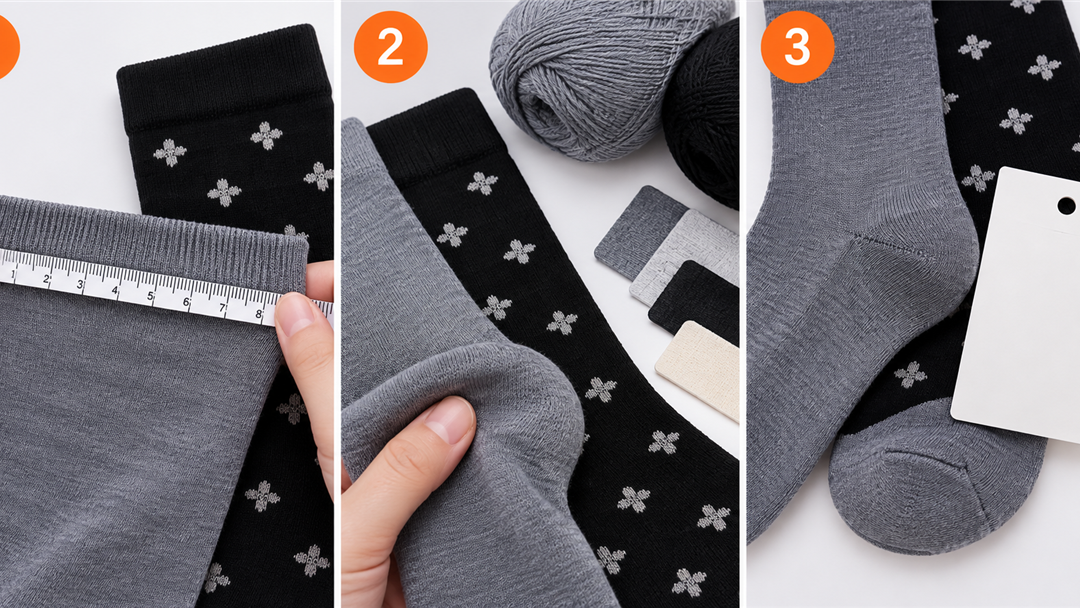
Start with the measurements and the intended fit. Depending on the product, this may include the foot length, leg length, cuff width, heel position and other dimensions defined in the specification.
The right questions depend on the wearer and the market. Who is the sock designed for? Which size range will be sold? Should the cuff feel secure, relaxed or supportive? Is the sock intended for everyday wear, sport, work or another use?
You do not need to know every technical term before speaking with a supplier. Clear information about the target wearer, market and expected wearing experience gives the development team a practical starting point. The agreed measurements and fit comments should then be recorded so they can be referenced during later production checks.
2. Review Colour, Material and Hand Feel
Colour and material can look different in a photograph, on a screen and under different lighting. Review the physical sample in suitable light and compare it with the approved colour reference, yarn selection or previous sample where applicable.
Hand feel also matters. Consider whether the material feels consistent with the product brief and intended use. A lightweight casual sock, a cushioned athletic sock and a warm boot sock will each require a different discussion about yarn, thickness, stretch and comfort.
Only confirmed information should become part of the final product standard. If a colour, yarn or hand-feel point still needs discussion, mark it as pending rather than treating it as approved. This small distinction helps prevent an open question from becoming an assumed production instruction.
3. Confirm Construction, Workmanship and Packaging
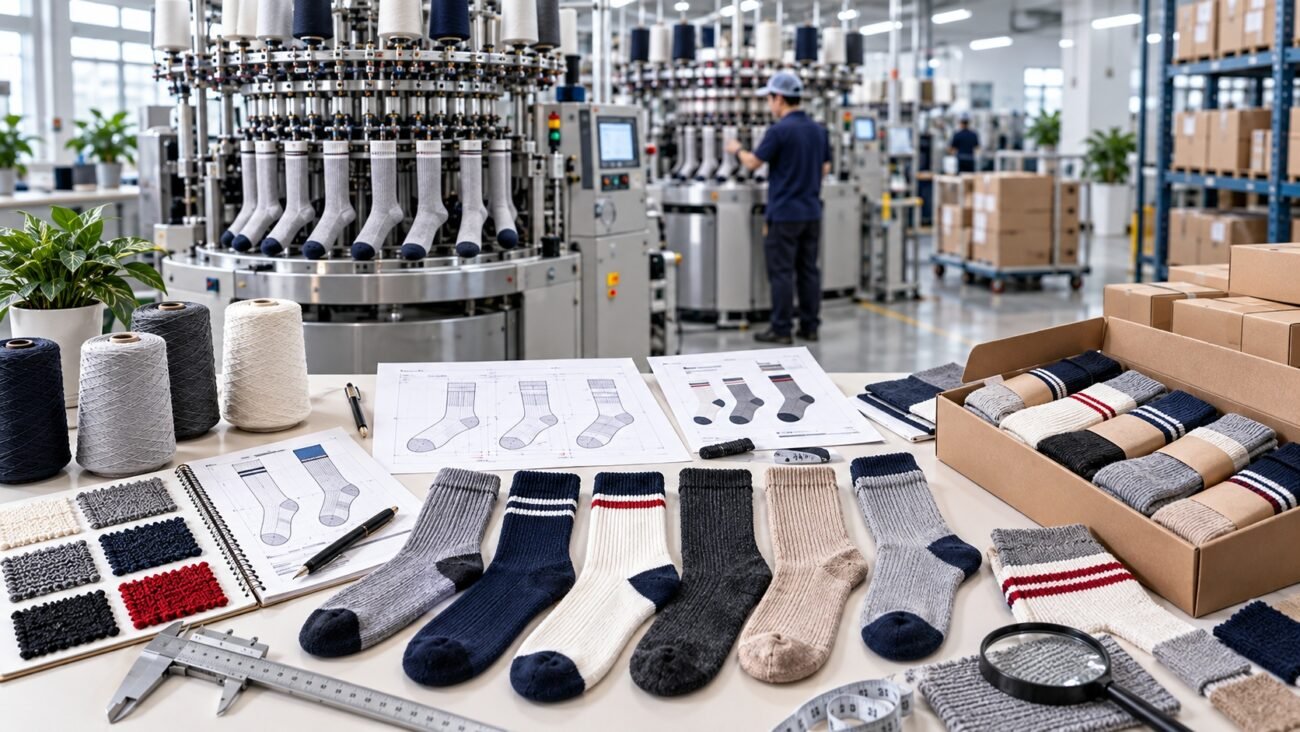
The third area is the detail most important to the individual project. It may be the logo or pattern position, toe-seam appearance, cuff construction, cushioning, grip application or another functional feature. For a retail programme, it may also include the label, belly band, hangtag, polybag, assortment or carton requirements.
There is no single checklist that replaces the product brief. Each sock programme has its own priorities. The purpose of the review is to identify those priorities and make sure they are visible in the approval record.
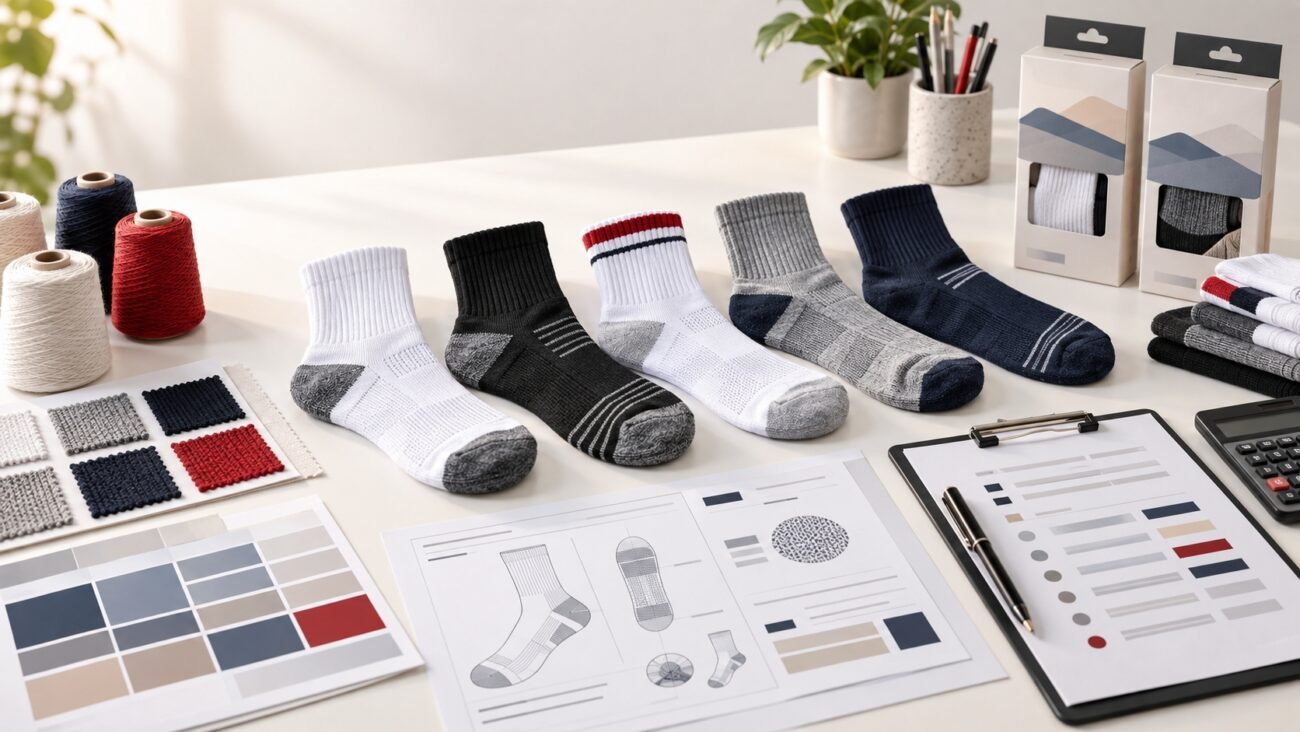
Packaging should be reviewed with the same care as the sock itself. Confirm the artwork version, placement, size information and packing method before bulk packing begins. Customer names, barcodes and other sensitive project information should remain protected when samples or process images are shared publicly.
What Should QC Check?
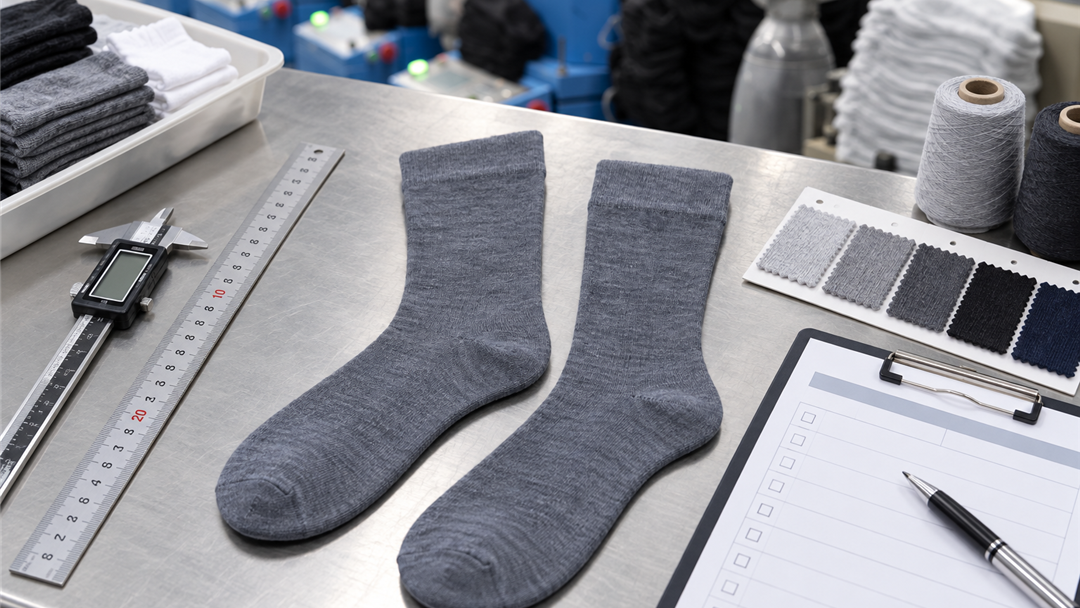
“High quality” is a useful goal, but it is not an inspection method. A practical QC discussion explains which checkpoints apply to the product, what reference is being used and how an issue will be recorded and followed up.
Inspection points should come from the confirmed product requirements and approved references. If a detail needs attention, it should be recorded, discussed and connected to a clear next action. This allows the sourcing team and factory to continue from the same information before shipment.
A Simple Sock Sample Approval Checklist
Size and fit: measurements, proportions, cuff and intended wearing experience.
Colour, material and hand feel: physical colour reference, yarn, thickness, stretch and comfort.
Construction, workmanship and packaging: the product-specific details that production and QC must repeat.
The purpose is not to search for faults. It is to make the next production step easier to understand and manage.
Discuss Your Custom Sock Sample with Canfly Knitting
Canfly Knitting supports OEM, ODM and private-label sock programmes from product development and sampling through production, quality control, custom packaging and export coordination.
If you are reviewing a sock sample, send us the product type, sample photos or specifications, target market and the detail you are most concerned about. Our team can help you identify which points still need to be clarified before the project moves forward.
Email: Sales05@zjcanfly.com
Website: www.canflysocks.com
Request a Sample Review