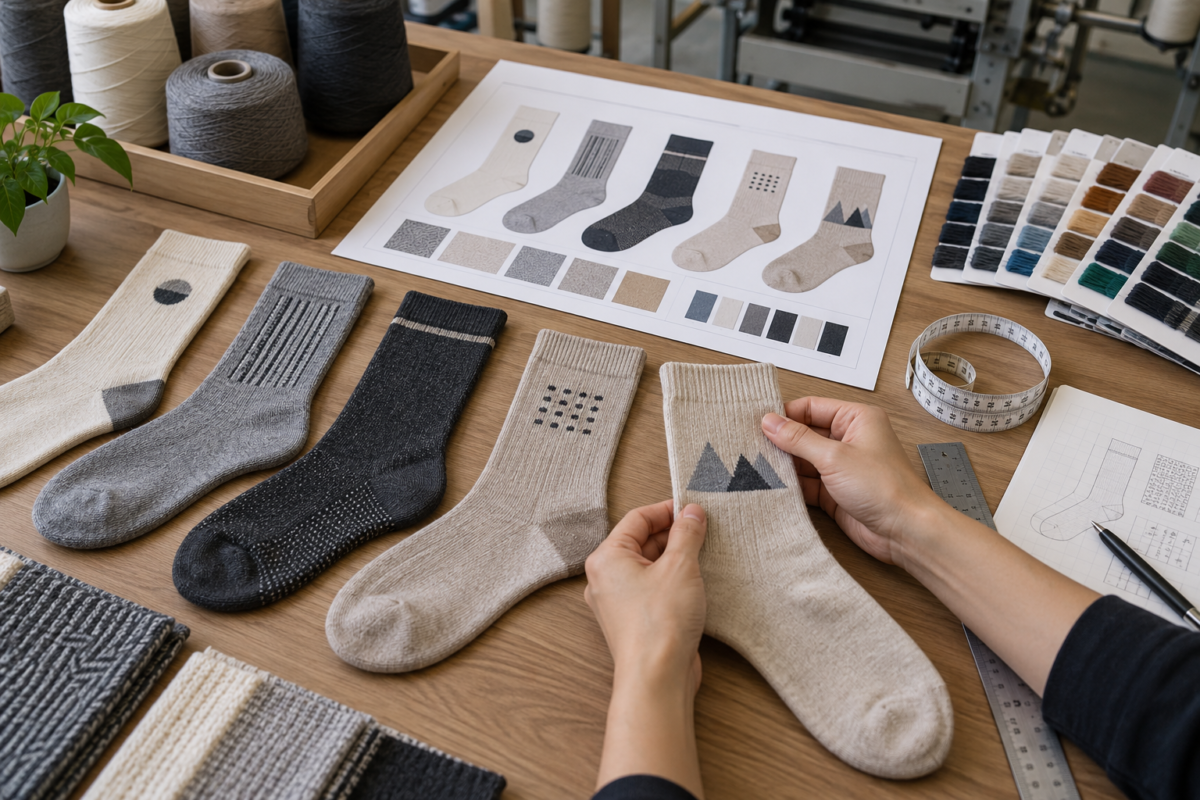

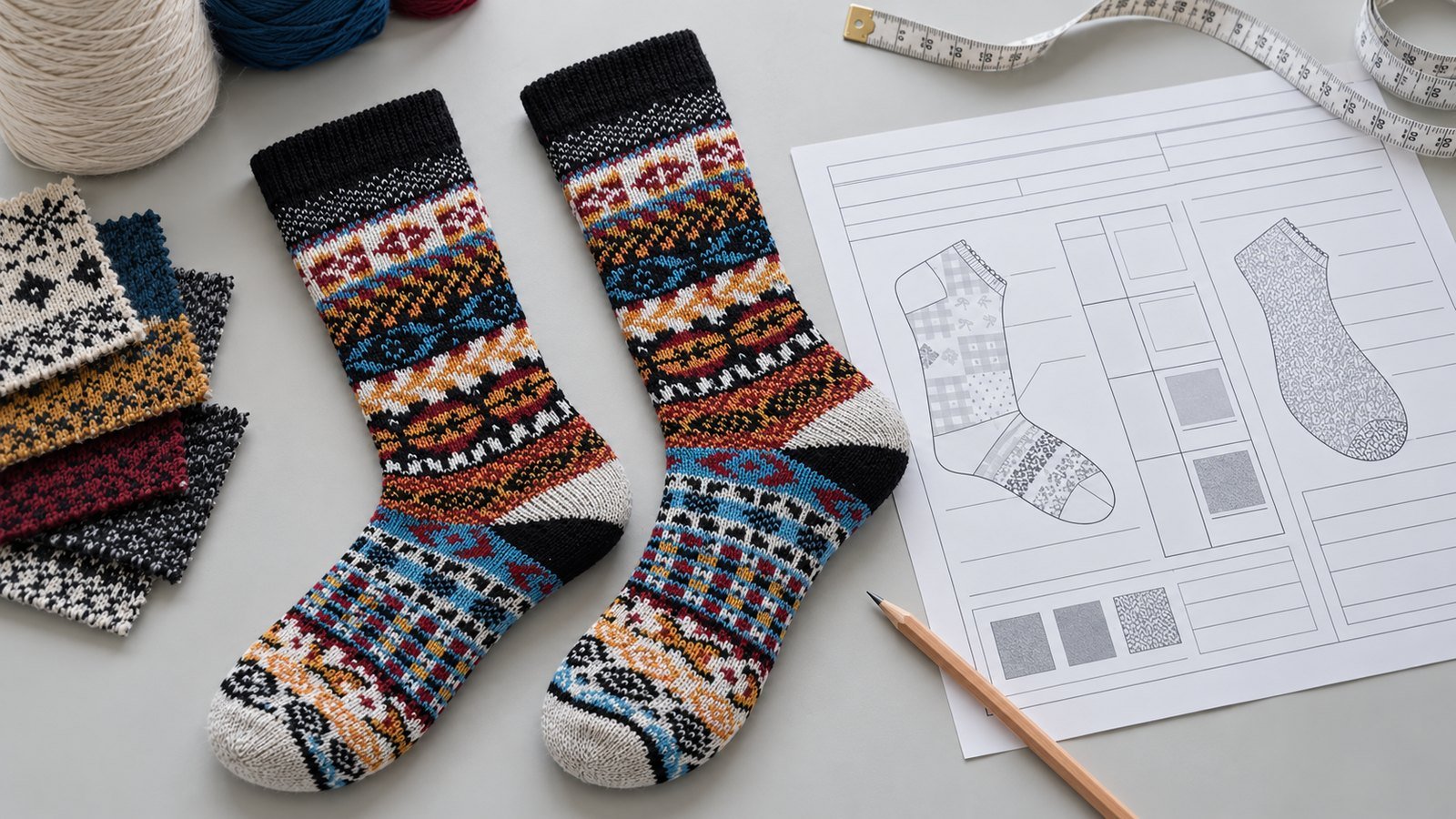
An approved sock sample is an important milestone, but approval alone does not release a complete production instruction. Before bulk production begins, the physical sample, technical files, yarn references, measurements, artwork, packaging data and order quantities should describe the same product.
This transfer is often called a production handover or pre-production release. Its purpose is to give merchandising, production, packaging and quality teams one current reference instead of several emails, marked samples and file versions.
The previous guide explained how sock sample revisions should be recorded before bulk production. This article focuses on the next step: confirming that the approved decisions are ready to be used together.
The images in this article are privacy-safe editorial visuals created from authentic product-development references. Customer names, codes, barcodes and order data are not reproduced. They illustrate workflow concepts and do not represent the complete records of a specific customer order.
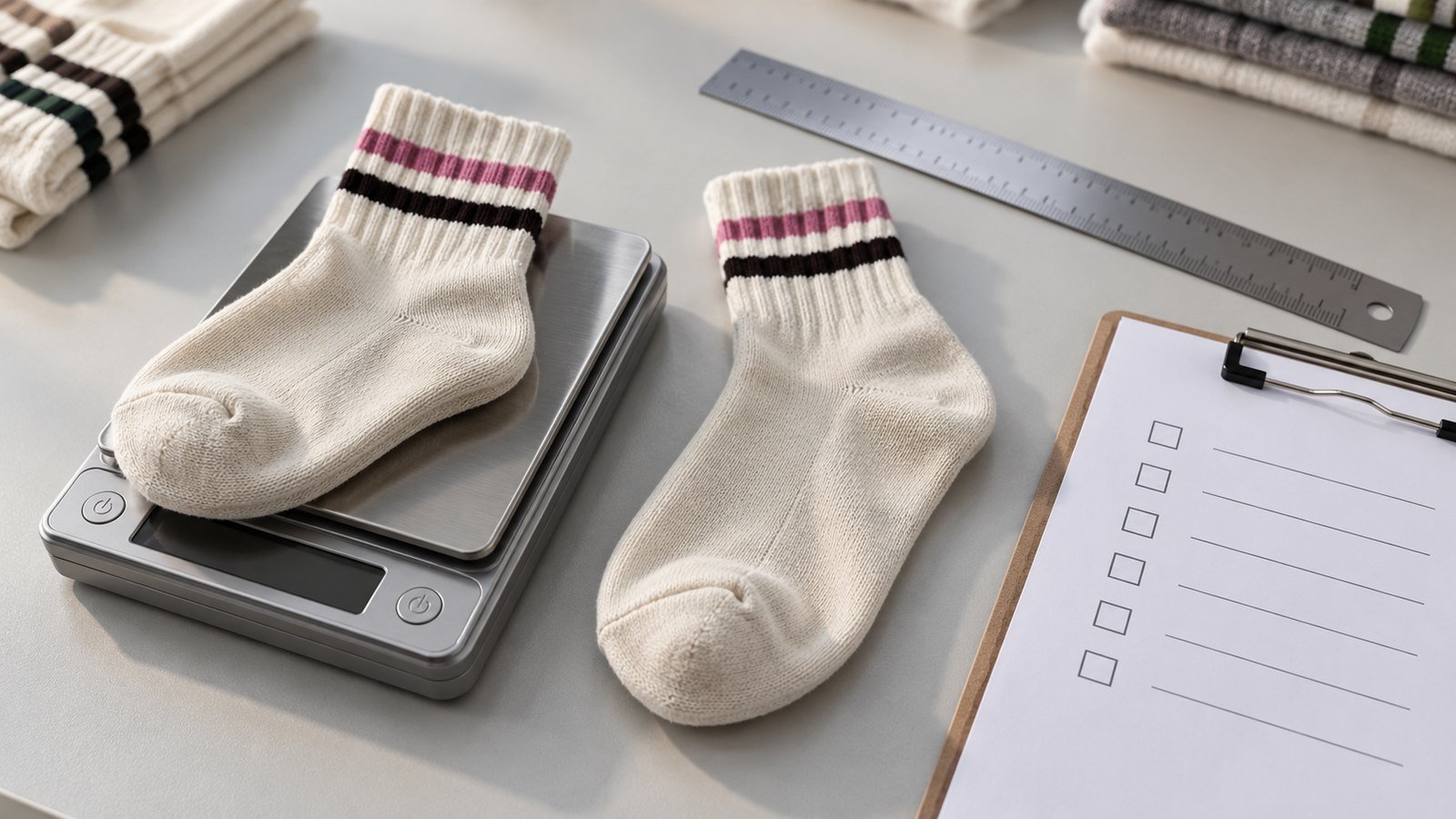 Review the approved sample measurements against the current size specification. Include the measuring method so production and quality teams evaluate the same points under the same conditions.
Depending on the style, the record may cover:
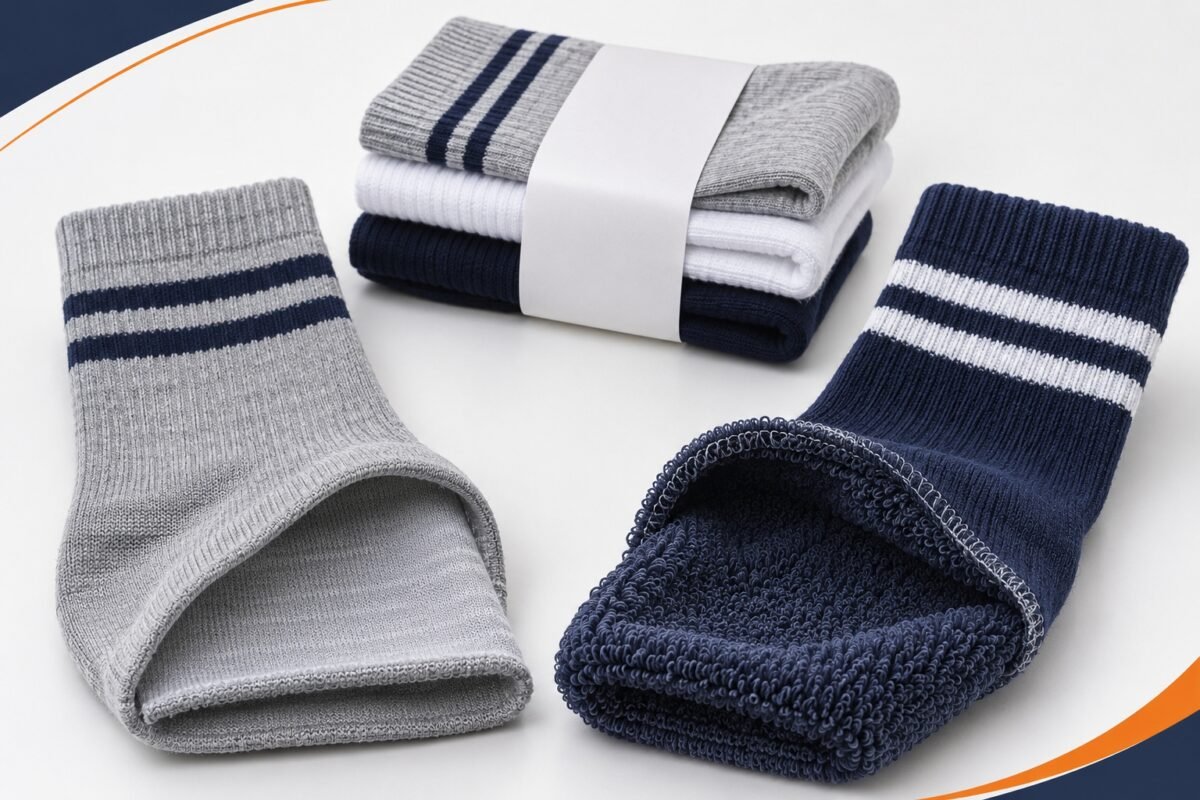
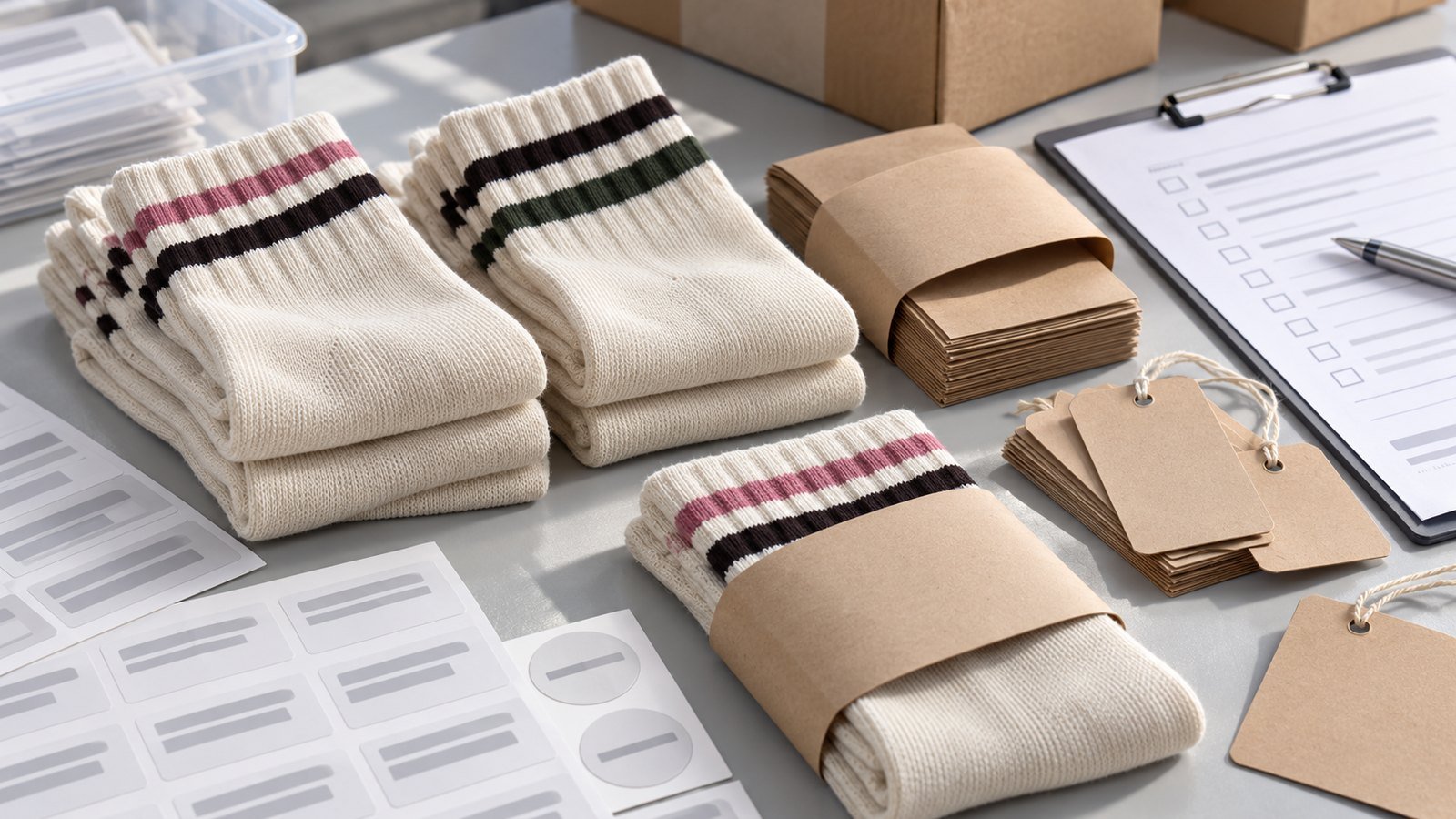 Packaging is part of the production handover because a correct sock can still become an incorrect retail unit if the label, barcode, size, colour name or pack quantity is wrong.
Confirm the approved packaging artwork and connect it to the same style, colour and size references used for the sock. Review:
The table is a summary, not a replacement for the underlying technical files and physical references. Its purpose is to show whether each area is ready and which item still blocks release.
A controlled sock production handover checklist reduces ambiguity at the point where development decisions become production instructions. It helps the buyer, merchandiser, production team, packaging team and quality team work from the same approved information.
Canfly Knitting can review available product references and discuss the information needed before sampling or bulk production. Materials, construction, measurements, artwork, packaging, minimum order quantity, testing and timing should be confirmed for each project.
For a project discussion, contact sales05@zjcanfly.com or WhatsApp +86 137 3535 0489.
01. Freeze the Product Identity and Approved Version
Start with the information that identifies the product. Every document and physical reference used for production should point to the same style, colourway, size range and revision. The production identity may include:- Customer or project reference
- Supplier style number
- Product description
- Colourway
- Size or size range
- Pack configuration
- Sample version
- Tech pack revision
- Approval date
02. Reconcile the Physical Sample With the Current Tech Pack
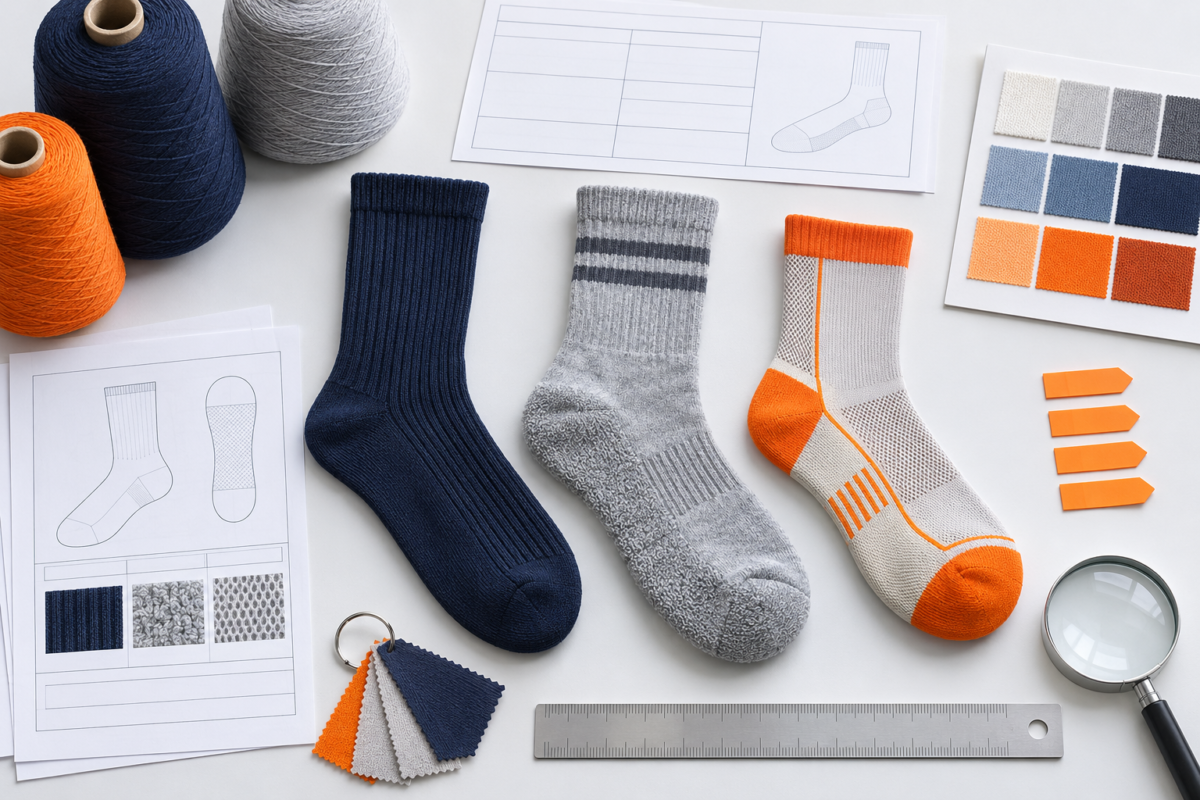
The approved physical sample shows the actual appearance and construction. The tech pack explains how that result should be repeated. Review them together before release. Confirm that the current document reflects all accepted sample changes, including cuff construction, body structure, heel and toe details, logo position, size measurements and special functional zones. If an approved difference has not been transferred into the written specification, production may follow the older instruction. Use the custom sock tech pack checklist to review the main document sections. Record the issue date and revision number on the released file, and identify the physical sample that supports it. A useful handover does not simply attach more files. It removes obsolete information and makes the controlling reference visible.03. Confirm Materials, Yarn References and Colour Status
Material decisions affect appearance, feel, stretch, thickness, performance and cost. Before production, confirm the approved fibre composition, yarn type, yarn count where relevant, elastic components and any special material requirements. Each colour should have a traceable reference. Depending on the project, that may be a supplier yarn code, an approved physical swatch or another agreed standard. State whether each colour is approved, conditionally approved or still pending. If a colour was adjusted during sampling, make sure the new reference appears in the bill of materials and current colour specification. Do not release a bulk colour based only on a photograph or a description such as “slightly darker.” The guide to confirming sock materials and colours before sampling explains how to connect written choices with physical references. Release check: the yarn and colour information in purchasing, sampling and production records is consistent.04. Confirm Measurements, Construction and Measurable References
Sample weight and measurements can support version comparison when the method and product identity are recorded.
- Foot length
- Leg length
- Cuff width in the agreed condition
- Heel position
- Logo position
- Functional-zone dimensions
- Sample weight as a supporting reference
- Approved tolerance, where applicable
05. Lock Artwork, Logo Method and Placement
The production artwork should match the accepted physical result. Confirm the correct logo file, colour information, orientation, dimensions and placement from a fixed reference point. Also state the production method, such as knitted, embroidered, printed or applied branding. The same artwork dimensions can produce different results when the technique, yarn or sock construction changes. Check that:- The artwork file has a visible version or date.
- The logo method matches the approved sample.
- The colour references are current.
- Placement measurements use a clear starting point.
- Size-specific changes are recorded when required.
- The physical result, not only the digital artwork, has been approved.
06. Lock Packaging, Labels and Barcode Data
Packaging materials and product data should be confirmed against the approved style, size and selling-unit breakdown.
- Header card, belly band, hook or box specification
- Brand and product wording
- Fibre-content and care information
- Country-of-origin information where required
- Size and colour description
- Barcode or price-ticket data
- Pair count and assortment
- Inner-pack and carton quantities
- Placement of stickers, tags or security devices
07. Confirm the Order Breakdown and Production Quantities
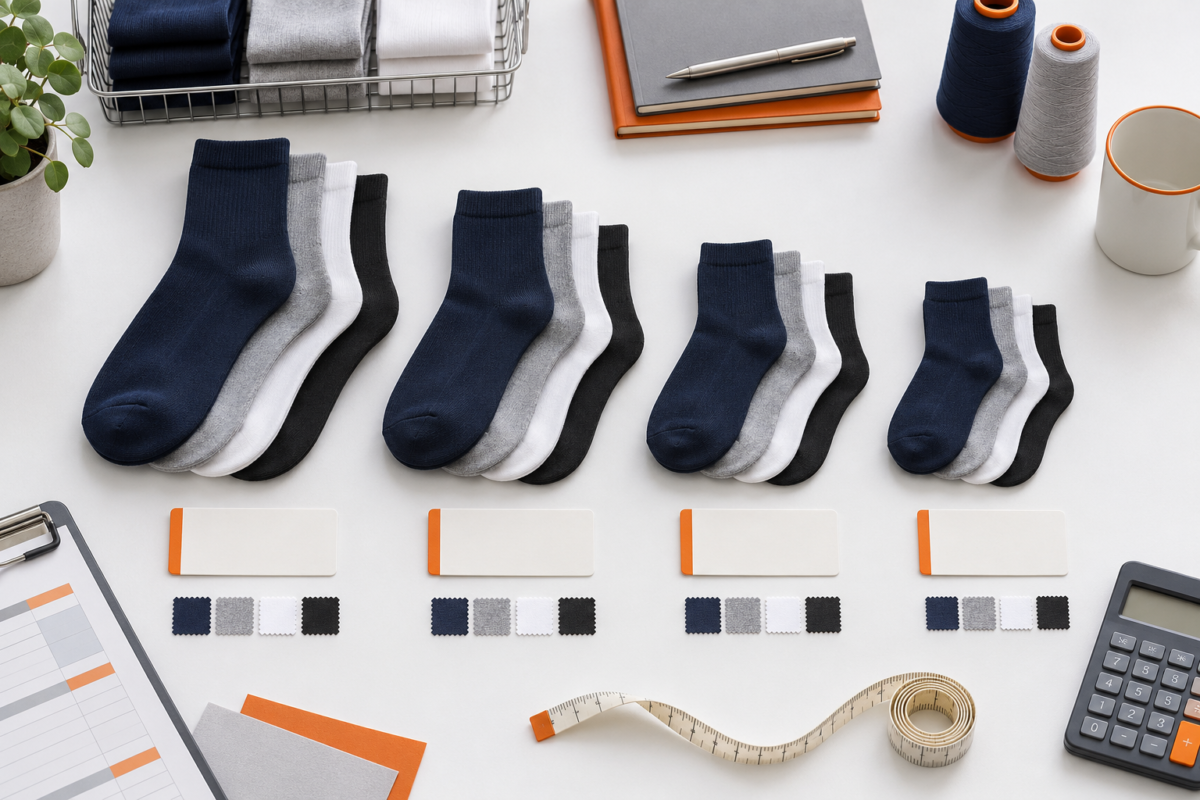
The purchase order total is not enough for production planning. Translate the order into a clear breakdown by style, colour, size and pack configuration. Confirm:- Order quantity by SKU or agreed production unit
- Size and colour ratios
- Allowable quantity tolerance, if agreed
- Packaging quantity per unit
- Inner-pack and carton ratios
- Sample and testing quantities
- Delivery split or destination requirements
- Required completion and shipment dates
08. Define Quality Checkpoints and Escalation Rules
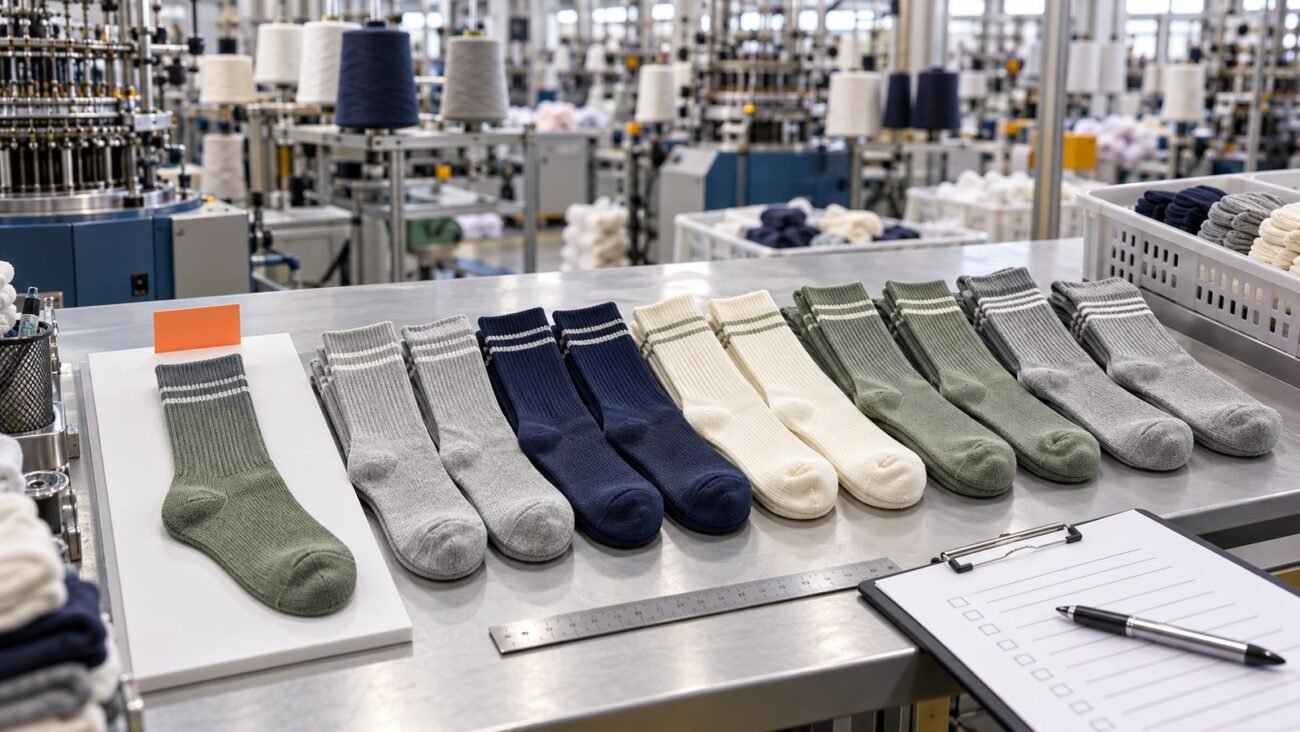
The approved sample and specification should become practical inspection references. Before production begins, identify what will be checked and when. Typical checkpoints may include incoming material confirmation, first production output, in-process measurements, appearance review, packaging verification and final inspection. The exact plan depends on the product, order and agreed requirements. For each important point, record:- What is checked
- Which reference or method is used
- When the check takes place
- Who records the result
- What tolerance or decision rule applies
- What happens if the result differs from the approved reference
09. Issue One Controlled Production Handover Pack
Collect the active information into one controlled handover pack. It may be digital, physical or a combination of both, but the contents and revision status should be easy to identify. A practical pack may include:- Purchase order and confirmed order breakdown
- Released tech pack
- Approved physical sample reference
- Material and colour references
- Measurement specification and tolerances
- Approved artwork and placement details
- Packaging artwork and barcode list
- Testing or compliance requirements
- Quality checkpoints
- Approval record and responsible contacts
A Practical Pre-Production Release Table
| Area | Evidence to confirm | Release status |
|---|---|---|
| Product identity | Style, colour, size, sample and tech pack revision | Approved / pending |
| Materials | Fibre, yarn, elastic and colour references | Approved / pending |
| Measurements | Method, target, actual sample result and tolerance | Approved / revise |
| Artwork | File version, method, dimensions, colours and placement | Approved / pending |
| Packaging | Artwork, wording, size, barcode and pack quantity | Approved / pending |
| Order breakdown | Quantity by style, colour, size and pack | Confirmed / revise |
| Quality plan | Checkpoint, method, responsibility and escalation | Released / pending |
| Production release | Date, approver and controlled file list | Released / hold |