
Repeat orders often look simpler than first orders. The product already exists, the artwork has been approved and the buyer may expect production to continue with the same setup.
However, “same as last time” is not a complete production instruction.
A retail sock program may change between two orders. The size ratio may be different. A terry area may need to be added or removed. The number of pairs in each pack may change. Labels, barcodes, carton quantities or the required shelf date may also be updated.
Before a repeat order enters production, four areas should be confirmed again: construction, size, packaging and bulk consistency.
The first check is the physical construction of the sock.
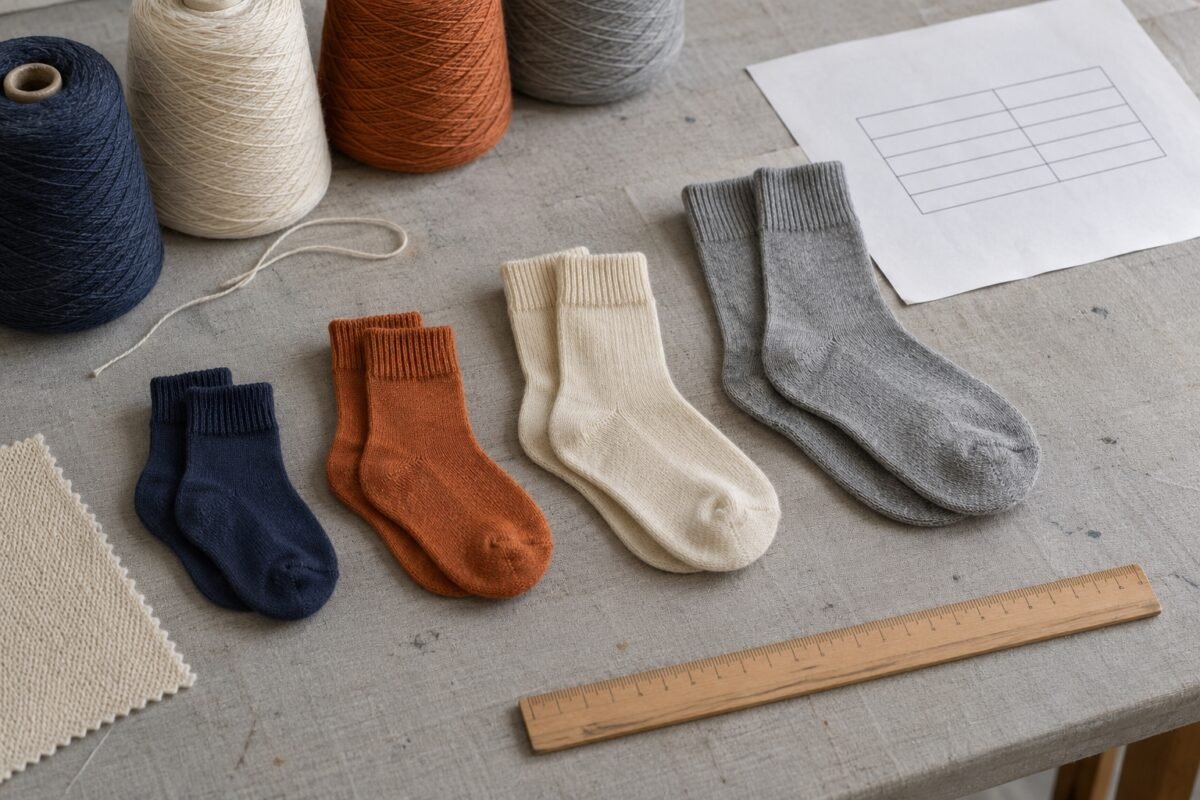
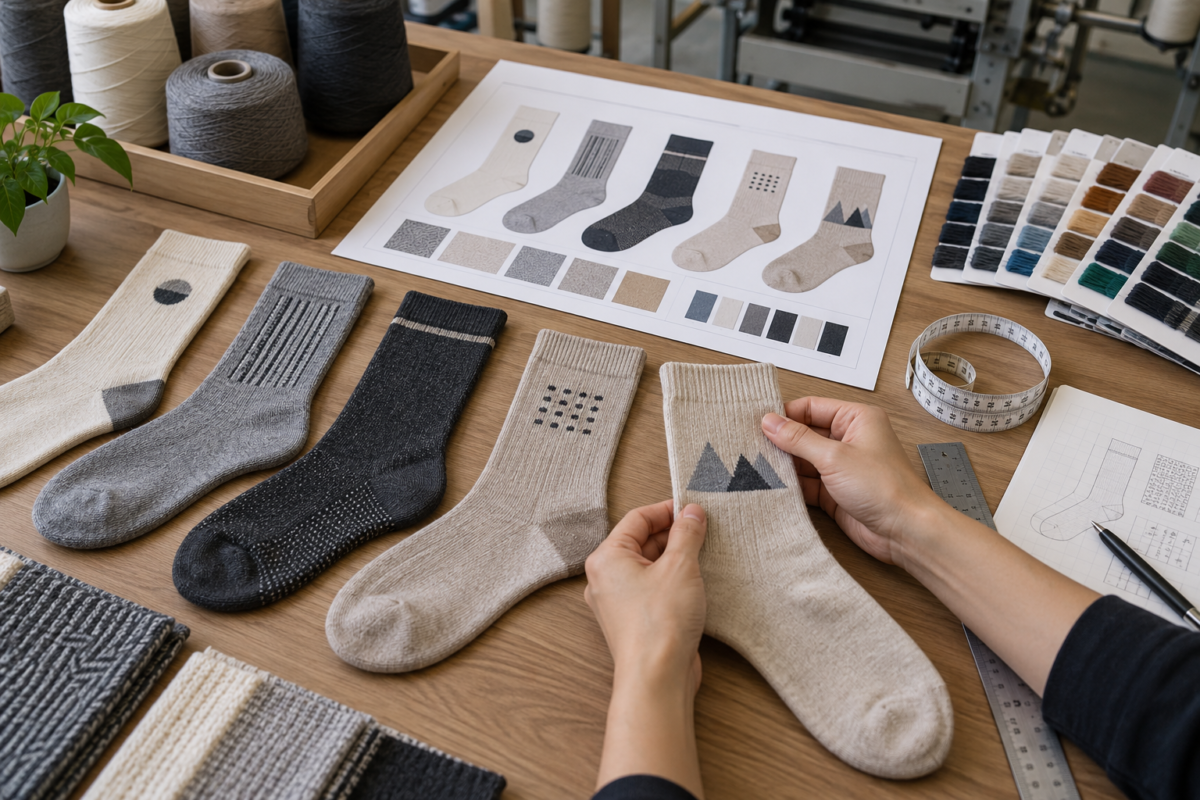
A flat-knit area and a terry area are not interchangeable descriptions. They affect the inside structure, thickness, cushioning, weight and packing volume of the finished product. If the product uses partial terry, the required location should be clearly marked—for example, the sole, heel, toe or another functional zone.
For a repeat order, compare the current requirement with the approved reference rather than assuming that every area remains unchanged. Review how to record sock sample revisions before production when any requirement has changed.
Useful confirmation points include:
 The second check is size.
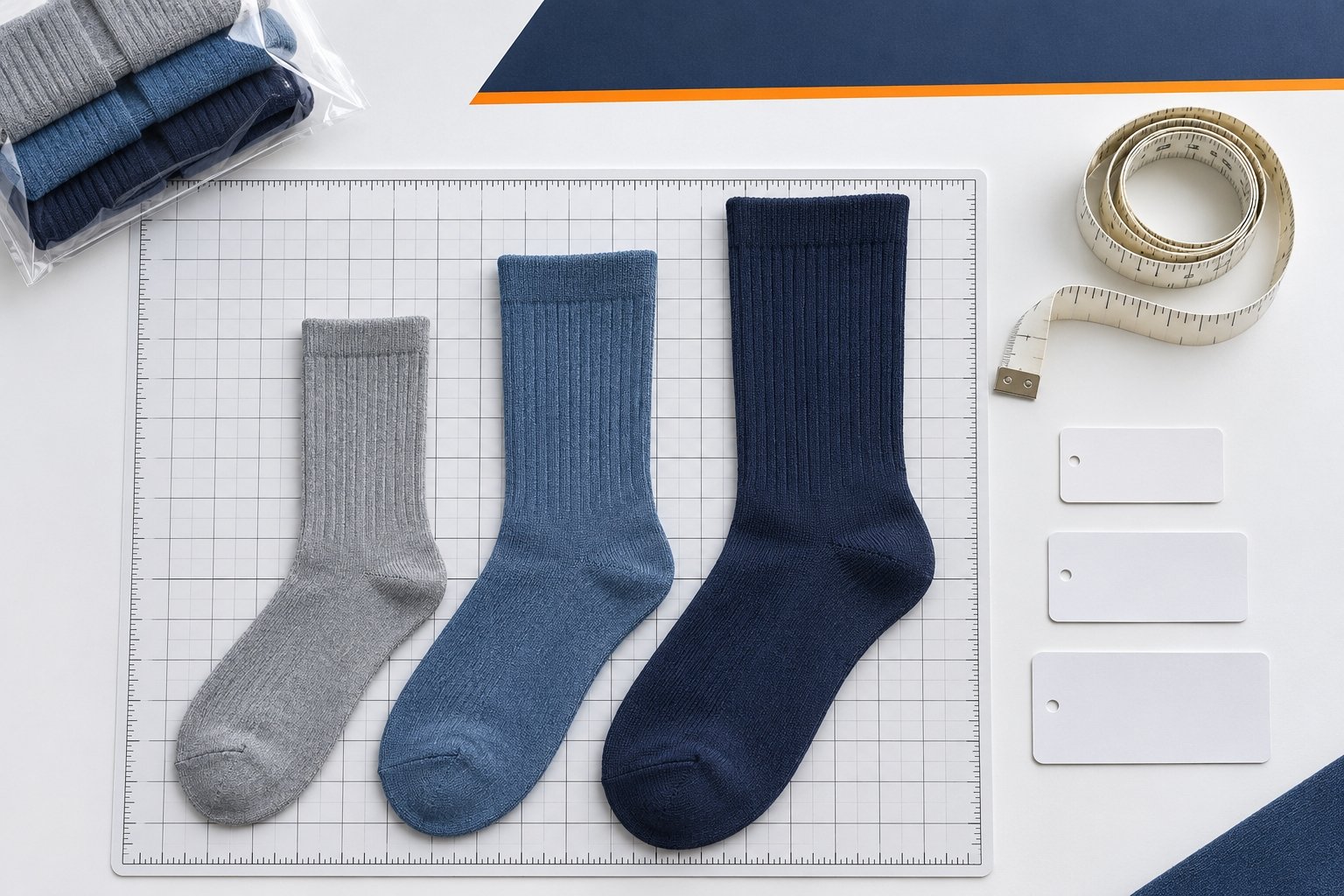
Size labels such as S, M, L or a shoe-size range are useful for retail communication, but they do not replace approved product measurements. A repeat order should still refer to measurable dimensions such as foot length, leg height and cuff width where relevant.
The buyer should also confirm the quantity required for each size.
This matters because the total order quantity does not show the production ratio. A 20,000-pair order could contain equal quantities across four sizes, or it could be concentrated in only one or two sizes. These two programs may require different production and packing arrangements.
Before production, confirm:
 The third check is packaging.
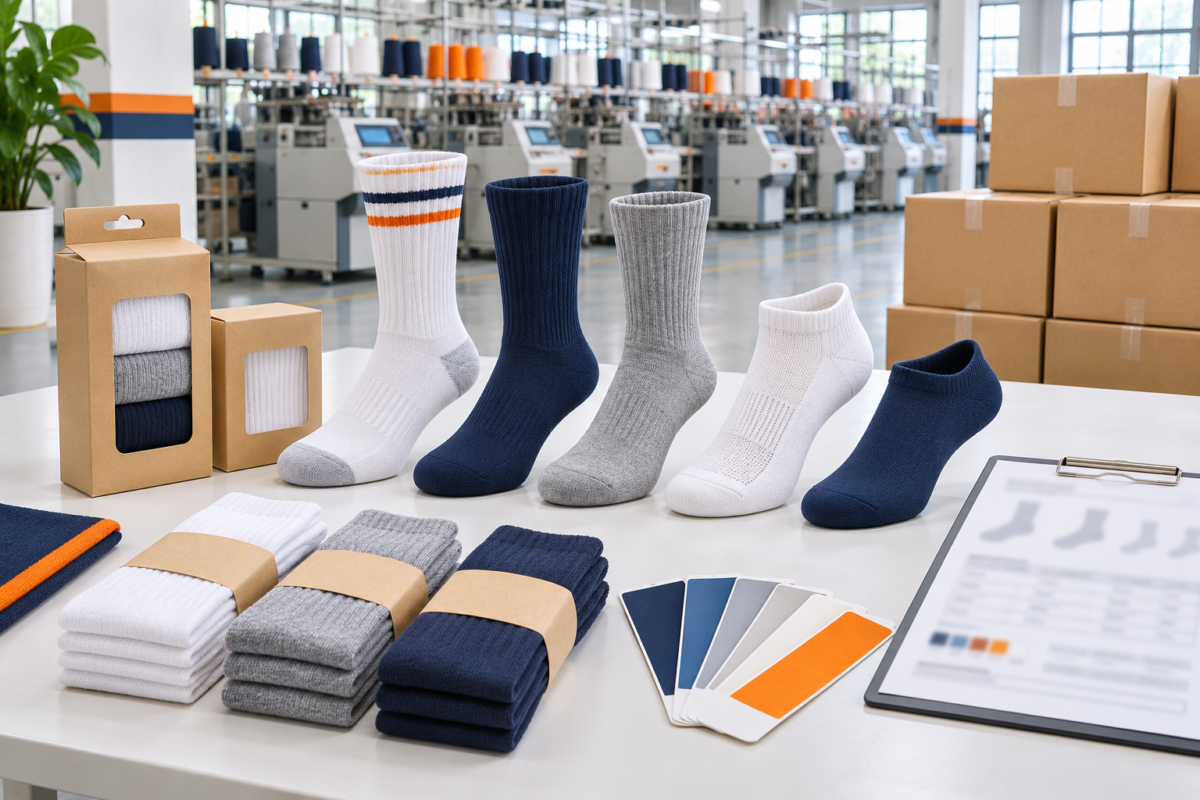
Retail sock multipacks are production units as well as sales units. The factory needs to understand exactly how individual pairs become a finished retail pack and how those packs are placed into cartons.
The review should cover:
 The fourth check is the relationship between the approved reference and bulk production.
The approved sample should identify what production needs to repeat. Depending on the product, this may include:
 1. Confirm the flat-knit and terry construction
The first check is the physical construction of the sock.
A flat-knit area and a terry area are not interchangeable descriptions. They affect the inside structure, thickness, cushioning, weight and packing volume of the finished product. If the product uses partial terry, the required location should be clearly marked—for example, the sole, heel, toe or another functional zone.
For a repeat order, compare the current requirement with the approved reference rather than assuming that every area remains unchanged. Review how to record sock sample revisions before production when any requirement has changed.
Useful confirmation points include:
- Which parts of the sock are flat knit?
- Which parts require terry loops?
- Is the terry full, partial or zoned?
- Has the yarn composition or yarn count changed?
- Does the revised construction affect the fit or packaging volume?
2. Reconfirm the size range and quantity by size
The second check is size.
Size labels such as S, M, L or a shoe-size range are useful for retail communication, but they do not replace approved product measurements. A repeat order should still refer to measurable dimensions such as foot length, leg height and cuff width where relevant.
The buyer should also confirm the quantity required for each size.
This matters because the total order quantity does not show the production ratio. A 20,000-pair order could contain equal quantities across four sizes, or it could be concentrated in only one or two sizes. These two programs may require different production and packing arrangements.
Before production, confirm:
- The size range
- The approved measurements for each size
- The tolerance used for inspection
- The quantity required for each size
- Whether different sizes share the same colors and artwork
3. Review the complete multipack configuration
The third check is packaging.
Retail sock multipacks are production units as well as sales units. The factory needs to understand exactly how individual pairs become a finished retail pack and how those packs are placed into cartons.
The review should cover:
- Number of pairs in each pack
- Size and color assortment within each pack
- Folding direction and display orientation
- Paper band, header card, hanger or bag structure
- Label and barcode positions
- Required warnings or market information
- Number of retail packs in each inner box or master carton
4. Define how bulk consistency will be checked
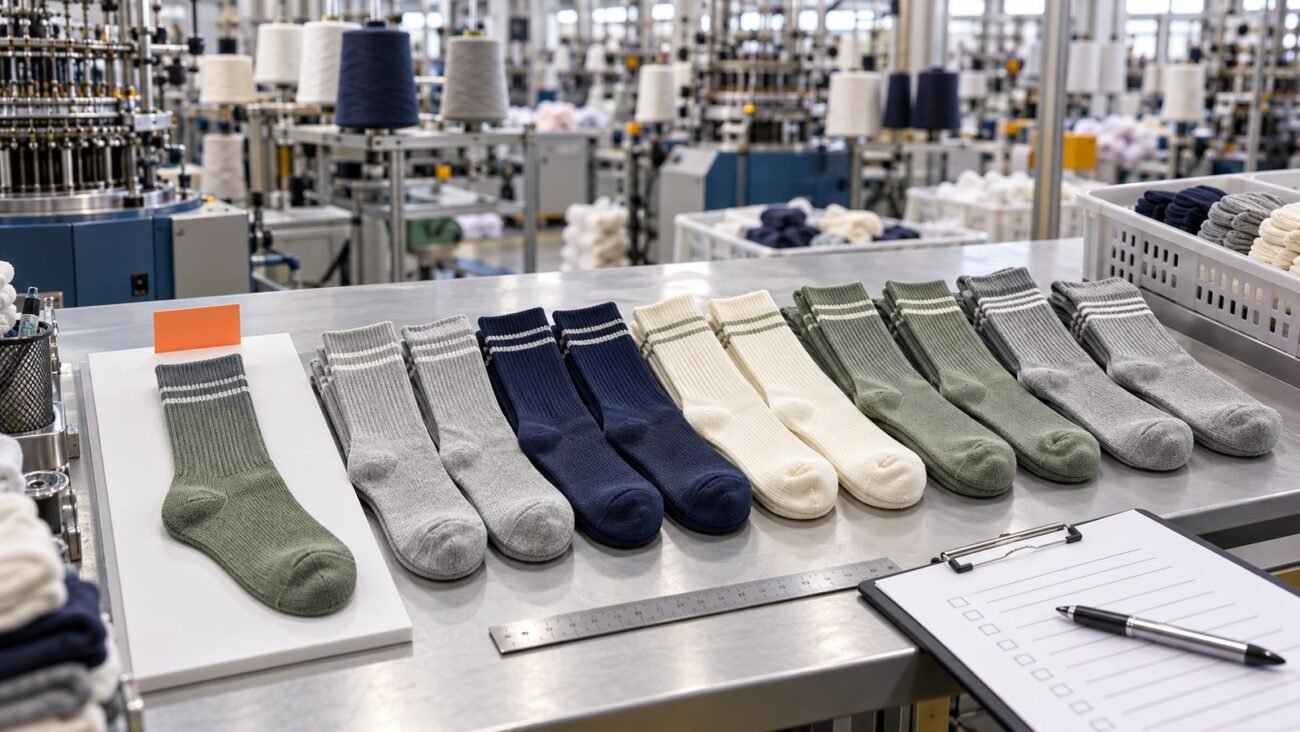
The fourth check is the relationship between the approved reference and bulk production.
The approved sample should identify what production needs to repeat. Depending on the product, this may include:
- Yarn and construction
- Finished measurements
- Color and artwork placement
- Terry location and density
- Cuff appearance and stretch expectation
- Pair matching
- Multipack arrangement
- Label, barcode and carton presentation