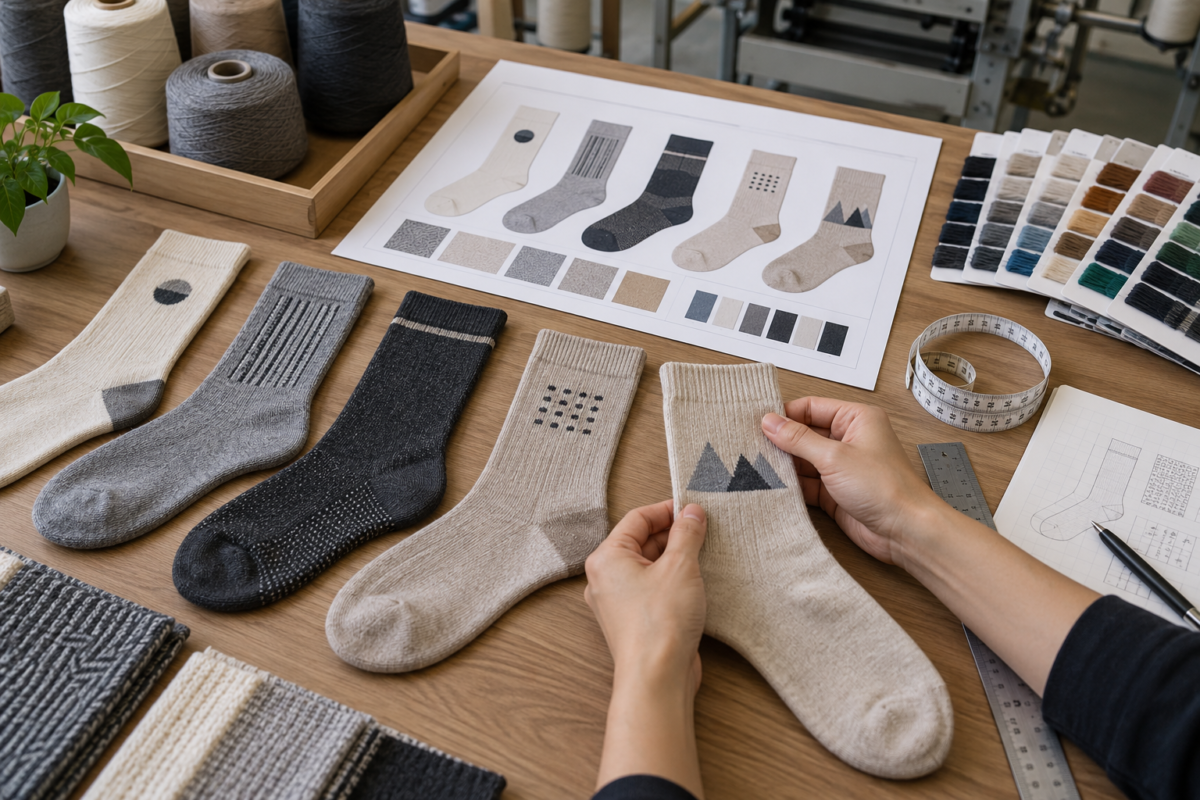

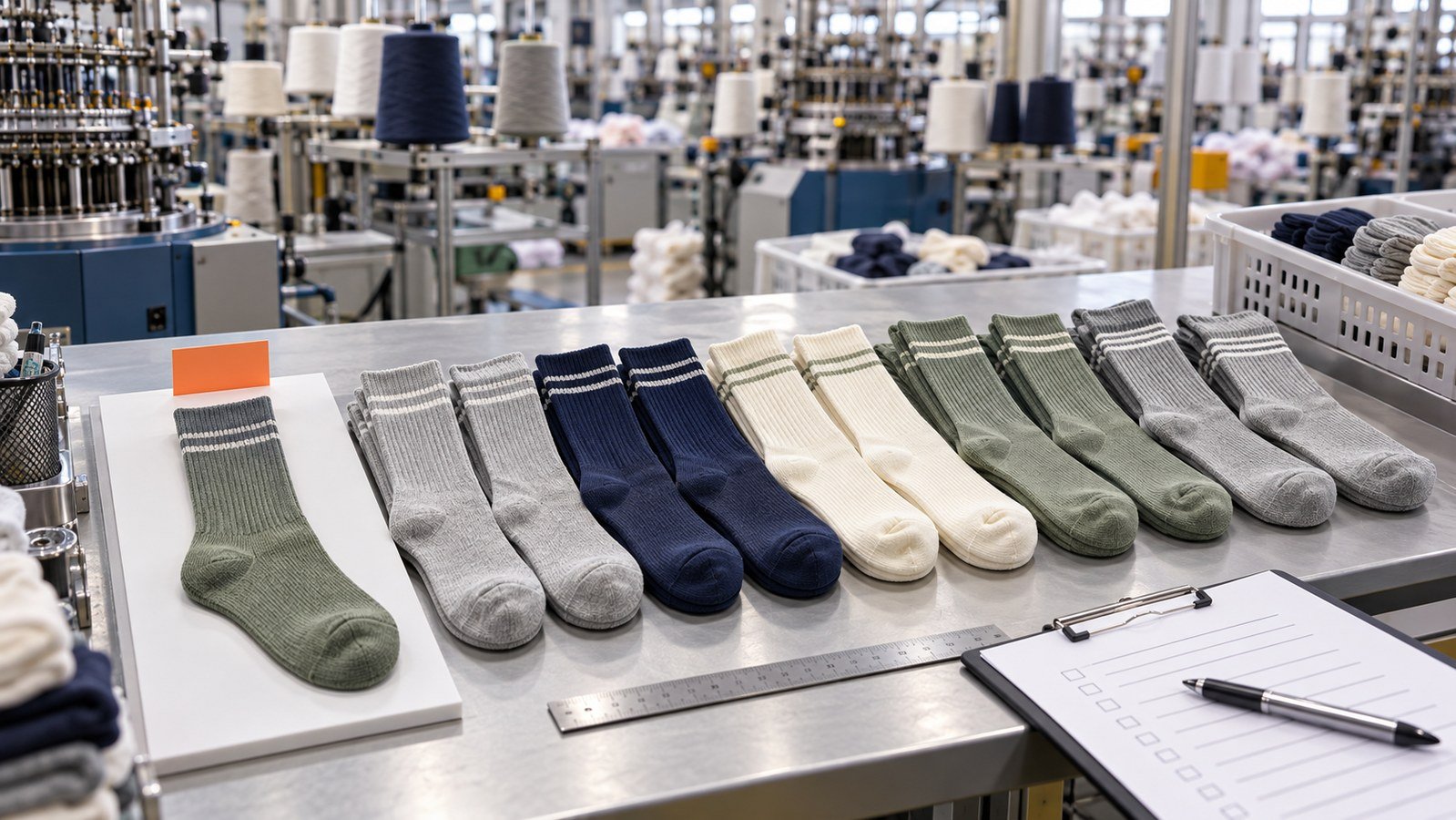
First-piece approval confirms that an early production result matches the approved sample and current specification under a defined set of conditions. The next challenge is maintaining that result as production continues across machines, yarn lots, sizes, operators, finishing stages and packaging activity.
In-process quality control provides checkpoints between the first approved piece and final inspection. It helps identify variation while corrective action is still practical, instead of discovering a repeated issue after the complete order has been knitted or packed.
The previous guide explained what buyers should confirm during first-piece review. This article continues the production sequence and explains how the approved references can be converted into a usable in-process quality plan.
The images in this article are privacy-safe editorial visuals created from authentic production and product-development references. Customer names, codes, barcodes and order data are not reproduced. They illustrate workflow concepts and do not represent the complete records of a specific customer order.
 After first-piece approval, define how frequently production output will be sampled. The interval may depend on order size, product complexity, machine changes, yarn-lot changes, previous results and the seriousness of a possible defect.
The production check may include:
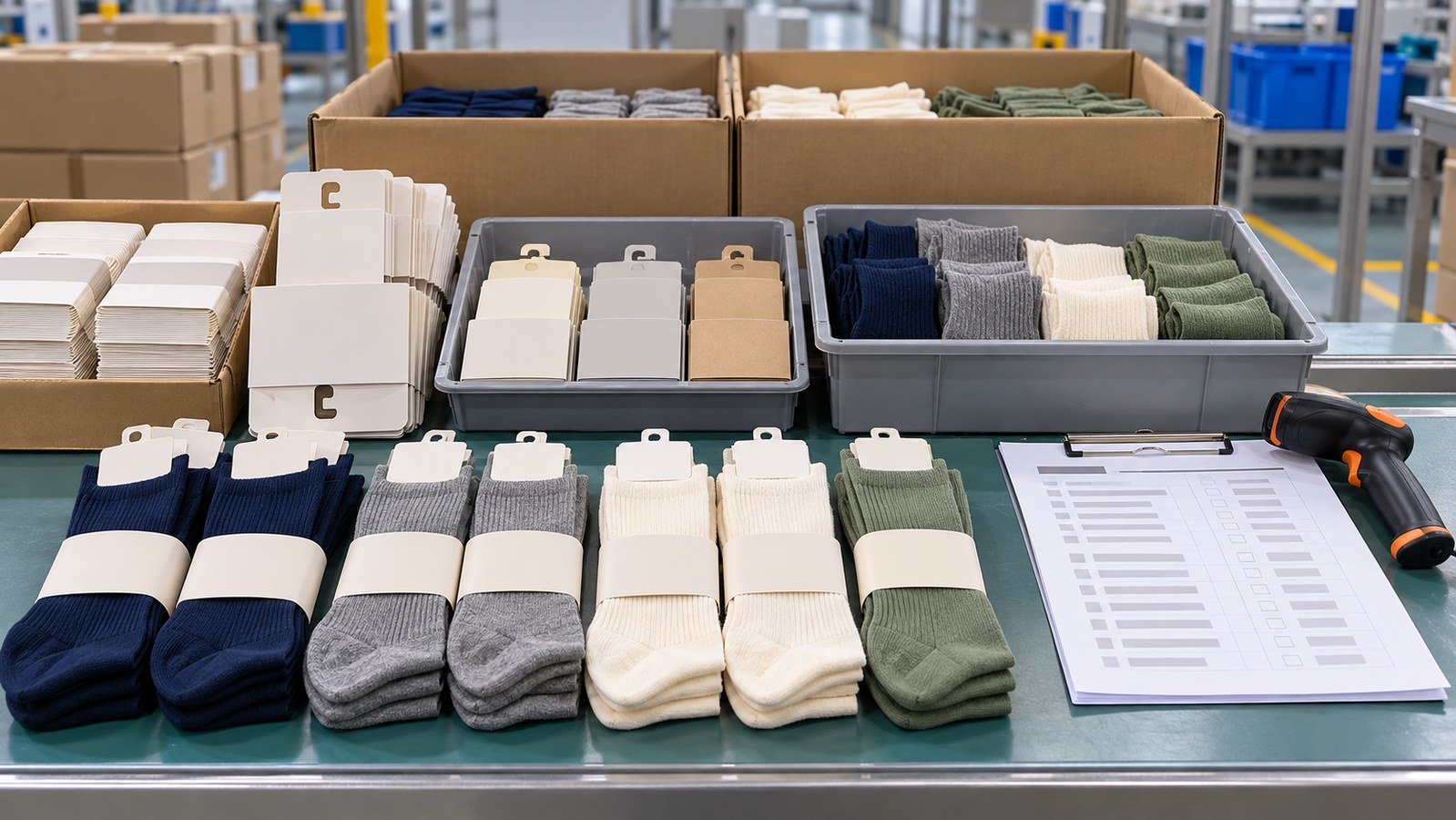 Packing creates a different group of risks. Correct socks can be paired incorrectly, placed under the wrong size label, combined into the wrong multipack or packed with outdated barcode information.
Packing checks may include:
In-process quality control is most effective when it uses the approved reference set, checks product-specific risks at the right stages and records corrective action clearly. It does not replace final inspection. It reduces the chance that a repeated production issue reaches final inspection across a large quantity.
Canfly Knitting supports brands, retailers and private-label sock programmes through development, sampling, production handover, manufacturing, quality control, packaging and export coordination. Inspection points, sample quantities, tolerances and acceptance criteria should be agreed for the individual product and order.
To discuss a custom sock project, send the product type, target market, estimated quantity, available specification and required delivery timing.
Email: sales05@zjcanfly.com
WhatsApp: +86 137 3535 0489
Website: www.canflysocks.com
01. Build the Inspection Plan Around Product Risk
An effective inspection plan is specific to the product. A basic everyday sock, a detailed jacquard design, a compression style and a multi-size performance sock do not carry the same production risks. Start by identifying the characteristics that could affect function, appearance, selling-unit accuracy or customer acceptance. These may include:- Yarn and colour identity
- Size and measurement consistency
- Cuff stretch and recovery
- Logo or artwork clarity
- Heel and toe position
- Terry, mesh or compression-zone placement
- Toe seam quality
- Pair matching
- Finishing and boarding condition
- Labels, barcodes and pack assortment
02. Use One Approved Reference Set
Production and quality teams should work from the same approved information. The reference set may include the approved physical sample, current technical specification, measurement method, yarn and colour references, artwork, packaging files and order breakdown. Every record should carry enough product identity to prevent confusion between styles, colours, sizes and revisions. If several related designs are produced together, assign a unique reference to each one rather than relying only on visual descriptions. Remove or clearly mark obsolete documents and samples. A quality inspector should not need to decide which file named “final” is current. The production handover checklist explains how these references should be aligned before bulk production begins. When an approved change occurs during production, update the affected instruction and tell the relevant teams which output was made before and after the change.03. Confirm Incoming Yarn and Components
Quality control begins before knitting. Check that incoming yarns and components match the released material record and are identified for the correct style and colourway. Depending on the project, incoming checks may cover:- Supplier yarn or material code
- Fibre composition or certification status
- Colour reference and dye lot
- Yarn count or construction requirement
- Elastic, grip or special component identity
- Quantity and allocation to the order
- Visible contamination or damage
04. Check Knitting Output at Defined Intervals
Consistent measuring points and recorded actual results help reveal production variation before it grows.
- Overall shape and proportion
- Pattern registration
- Logo clarity and position
- Heel and toe formation
- Rib, mesh, terry or functional zones
- Loose loops, missed stitches and yarn ends
- Holes, oil marks and contamination
- Cuff condition
- Product weight where relevant
05. Measure Size and Construction Consistently
Measurements should follow the same points and conditions used during sample approval and first-piece review. A different measuring method can create apparent variation even when the product has not changed. Define:- Measurement points
- Relaxed, stretched or conditioned state
- Tool and unit
- Sample quantity
- Tolerance or action limit
- Check frequency
- Method for recording results
06. Control Finishing and Boarding Conditions
Finishing processes can affect dimensions, shape, surface appearance and hand feel. Checks made directly after knitting may not represent the final product after washing, boarding, drying or trimming. At the relevant stage, review:- Final shape and symmetry
- Foot and leg dimensions
- Cuff, heel and toe form
- Surface cleanliness
- Creases, shine or heat marks
- Hand feel and thickness
- Pair consistency
- Trimming and loose yarn ends
07. Verify Pairing, Labels and Packaging During Packing
Pairing, labels, packaging and assortment should be checked against the approved order breakdown.
- Pair colour, size and design match
- Left-right or orientation requirements where relevant
- Size and colour identification
- Pairs per selling unit
- Hangtag, belly band, header card, hook or box
- Label and sticker position
- Barcode data and scannability
- Assortment and inner-pack quantity
- Carton quantity and shipping marks
08. Define Escalation and Corrective Action
The inspection plan should explain what happens when a result does not meet the requirement. Without a defined response, teams may continue production, adjust settings without recording the change or separate goods inconsistently. A practical response can include:- Stop or hold the affected process when necessary.
- Identify the potentially affected production range.
- Record the defect, measurement or mismatch.
- Investigate material, machine, method, finishing or instruction causes.
- Define and implement the correction.
- Produce and review a new confirmation sample.
- Decide how held products will be screened, reworked or classified.
- Update the relevant records and communicate the decision.
09. Keep Records Traceable and Useful
Quality records should help another person understand what was checked, what was found and what happened next. They do not need to be complicated, but they should be connected to the product and production stage. A useful record identifies:- Style, colour and size
- Order and specification revision
- Process stage
- Date and time
- Machine, line or lot where relevant
- Sample quantity
- Characteristic and method checked
- Actual result or defect
- Decision and responsible person
- Corrective action and verification
A Practical In-Process Quality Control Matrix
| Production stage | Example checks | Record or action |
|---|---|---|
| Incoming materials | Yarn code, colour lot, component identity and condition | Release, hold or clarify material |
| Knitting start | First piece, pattern, construction and key measurements | Approve setup or correct before continuation |
| Knitting in process | Appearance, workmanship, dimensions and machine variation | Record interval results and isolate affected output |
| Finishing | Shape, measurements, surface and hand feel | Confirm settings and compare before/after adjustments |
| Pairing and packing | Pair match, labels, selling unit, barcode and assortment | Correct packing setup and verify packed output |
| Corrective follow-up | New sample and affected quantity review | Approve correction and document disposition |