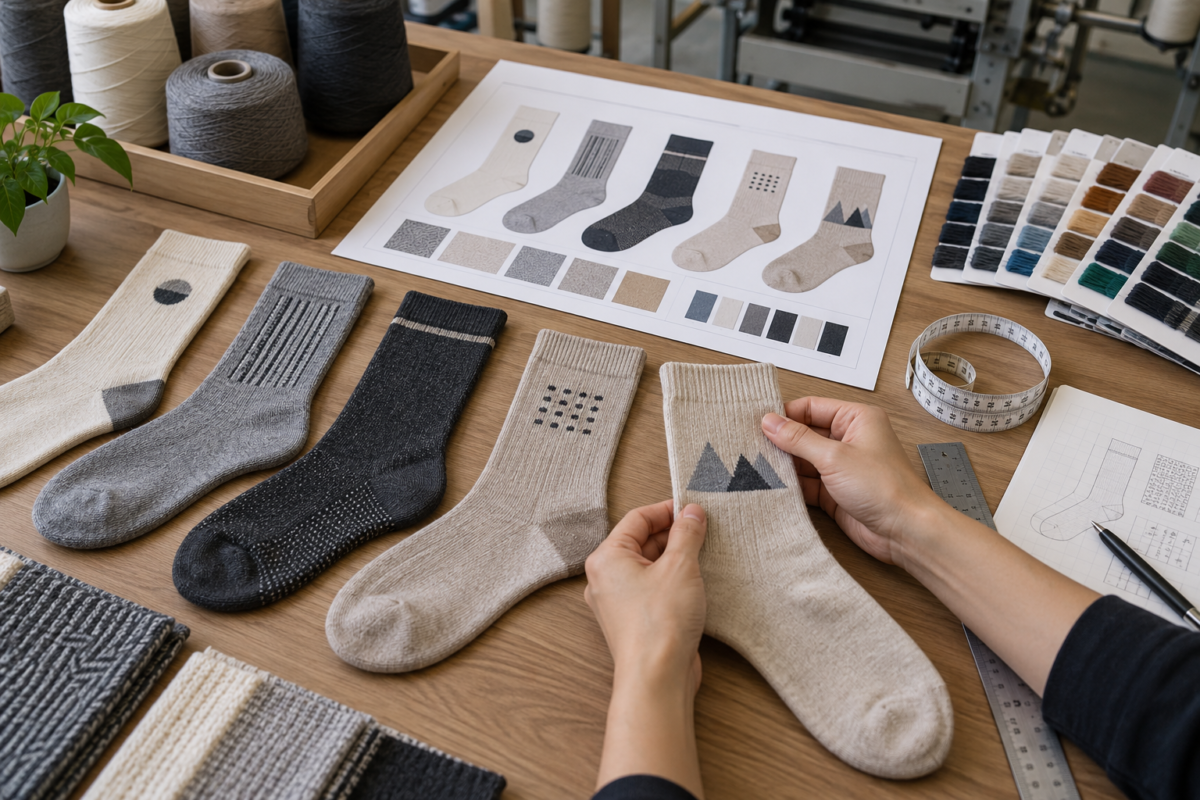


Releasing an approved sock specification to production is an important handover, but the first output from the production line still needs to be compared with the approved reference. A first-piece review helps confirm that the current yarn, machine settings, construction, measurements, finishing and packing instructions are producing the intended result.
This review is sometimes called a first-piece inspection, first-off check or pre-production confirmation. The exact timing and scope depend on the product and order. Its purpose is to identify a mismatch early, while the production team can still investigate the cause and control the next action.
The previous guide explained what should be confirmed before releasing a custom sock order to bulk production. This article follows the same project logic and focuses on the first physical output after that release.
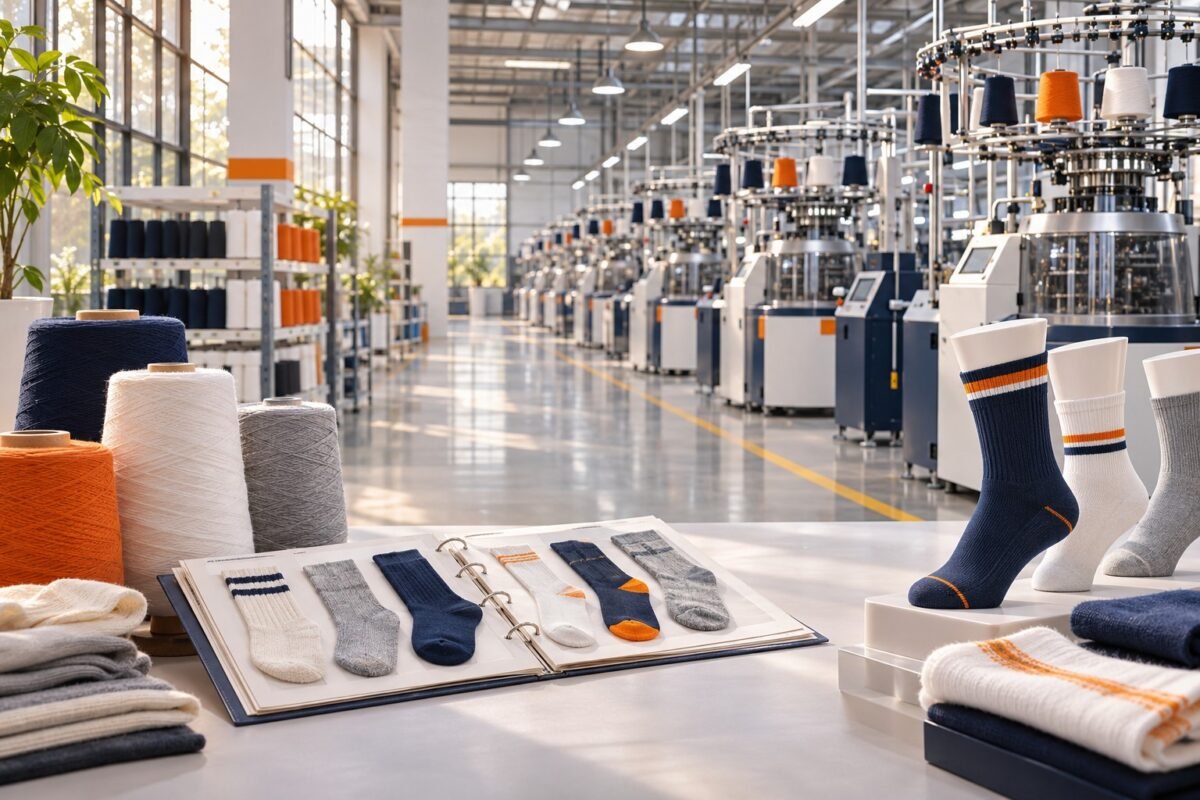
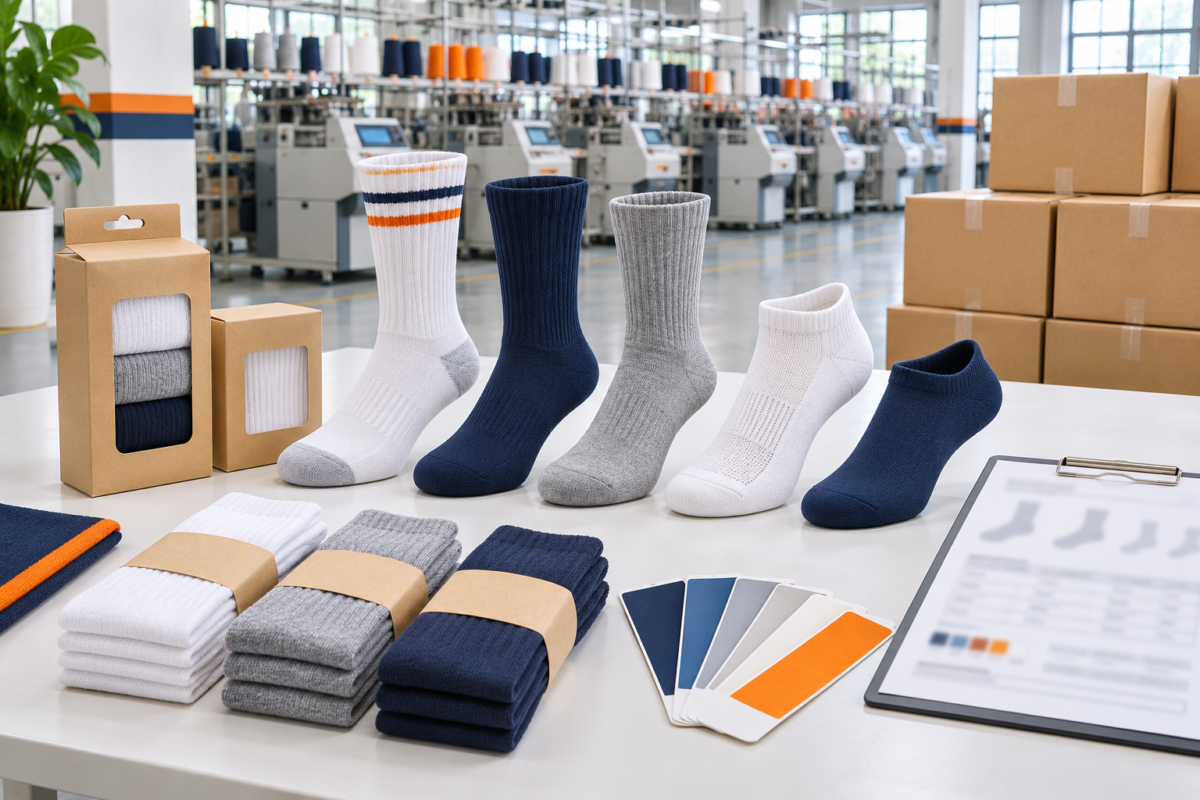
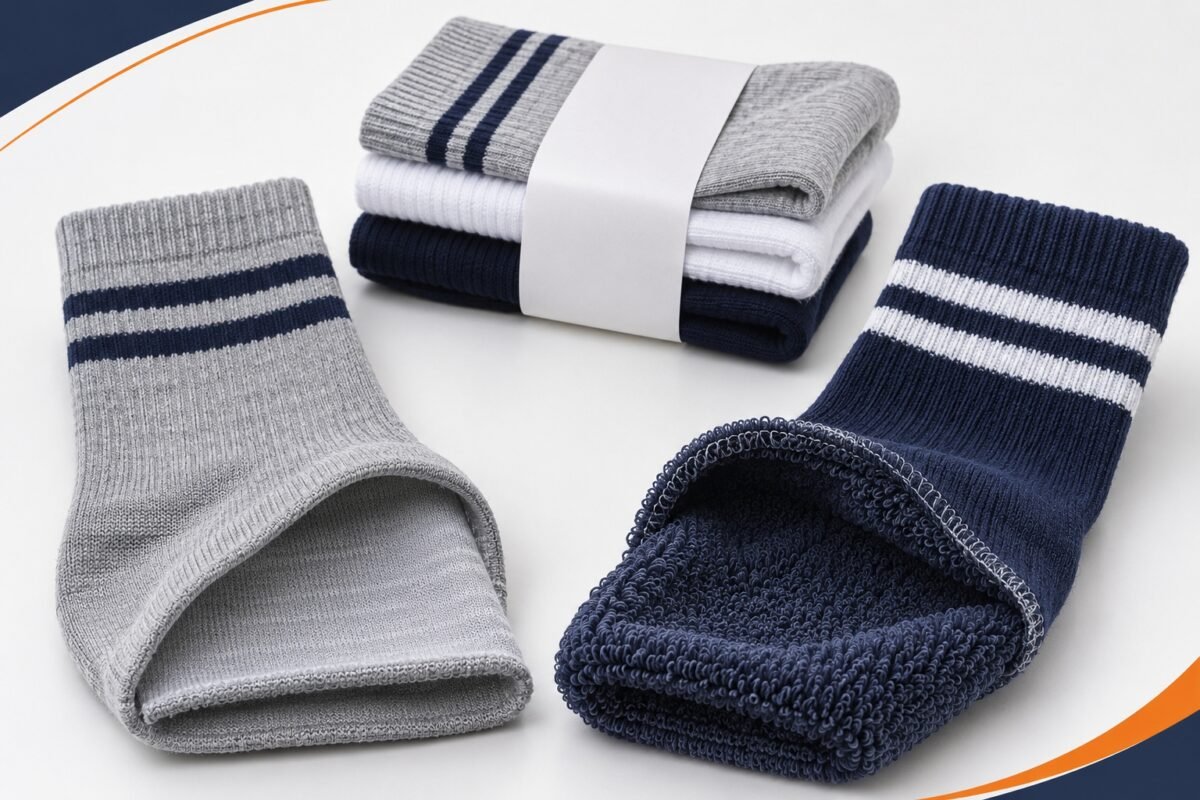
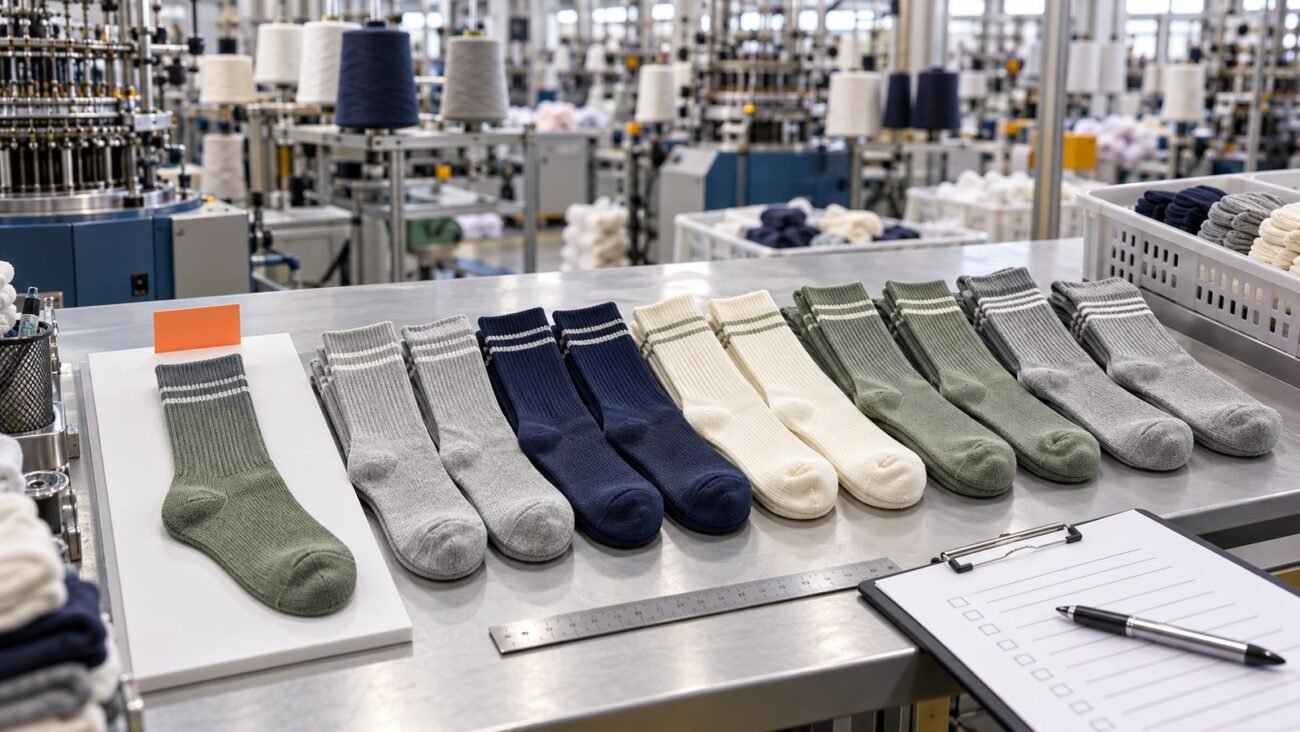
The images in this article are privacy-safe editorial visuals created from authentic product-development and production references. Customer names, codes, barcodes and order data are not reproduced. They illustrate workflow concepts and do not represent the complete records of a specific customer order.
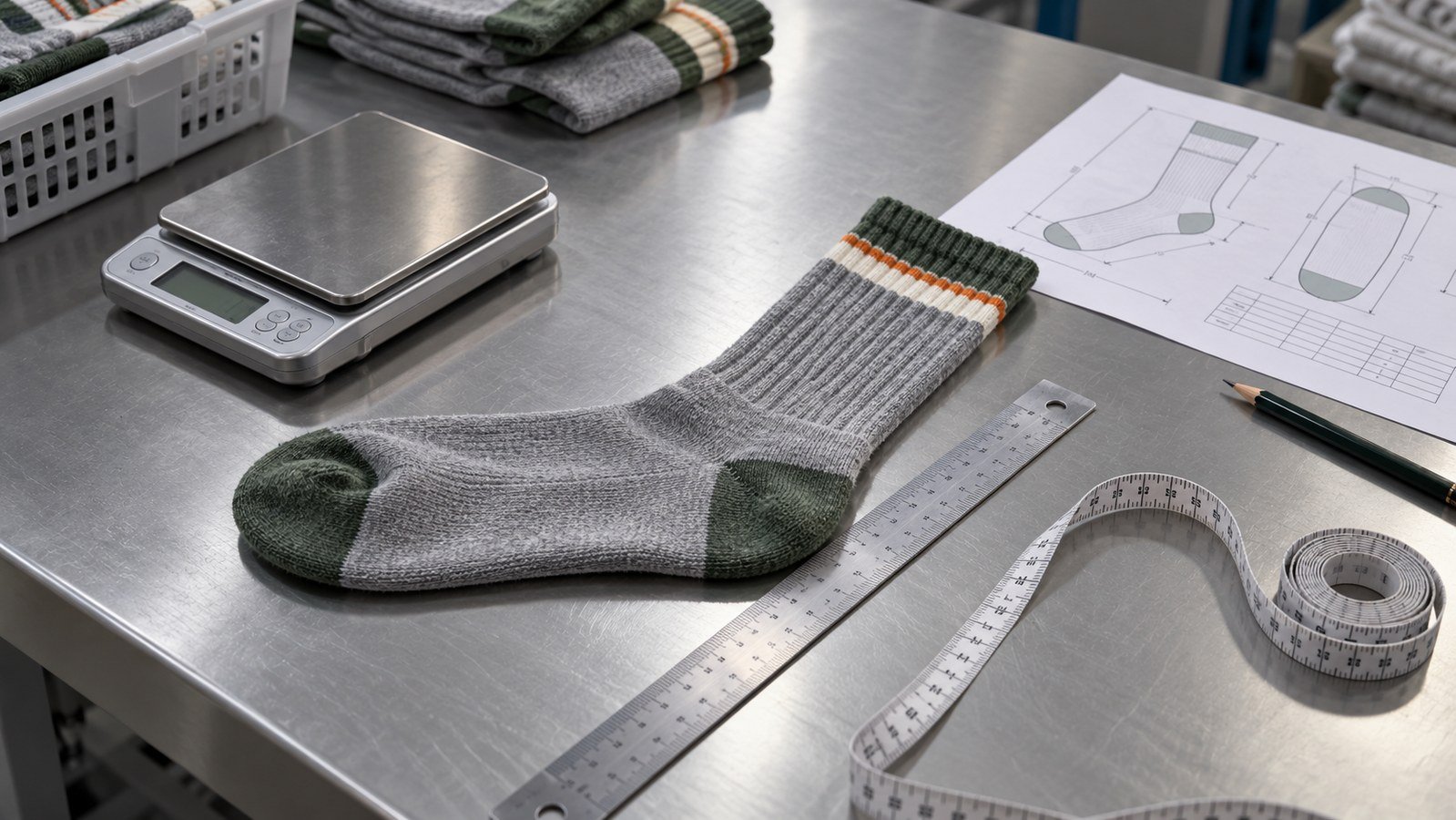 Measure the first pieces using the same points, conditions and tools defined in the released size specification. State whether measurements are taken relaxed, stretched, after boarding or after another agreed conditioning method.
Depending on the sock style, useful checks may include:
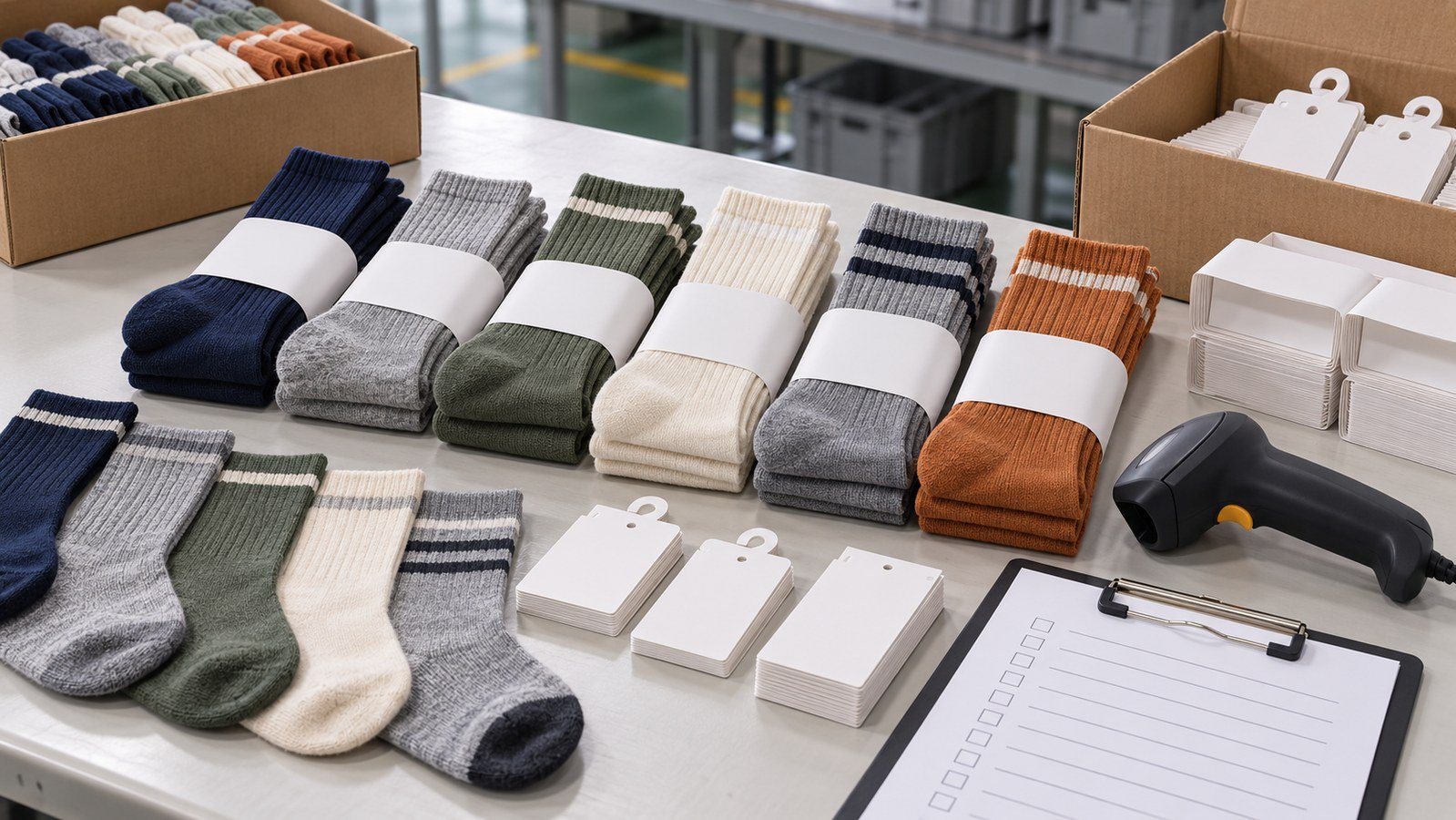 Where packaging materials are available at the first-piece stage, check them against the approved packing instruction. A correct sock can still become the wrong selling unit if size labels, colour names, barcodes, quantities or assortment instructions are mismatched.
Confirm as applicable:
A first-piece review is most useful when it confirms a controlled production condition and creates a practical plan for continued checks. It should not become a ceremonial approval based only on one attractive photograph.
Canfly Knitting supports brands, retailers and private-label sock programmes through product development, sampling, production handover, manufacturing, quality control, packaging and export coordination. Review scope, sample quantity, tolerances and approval method should be confirmed for the individual product and order.
To discuss a custom sock project, send the product type, target market, estimated quantity, available specification and required delivery timing.
Email: sales05@zjcanfly.com
WhatsApp: +86 137 3535 0489
Website: www.canflysocks.com
01. Define What the First Piece Represents
Before evaluating a sock, identify where it came from and what production conditions it represents. A sample made on a development machine, a trial made with substitute yarn and a sock taken from the planned bulk-production setup do not provide the same evidence. Record information such as:- Style and colourway
- Size or size range
- Production machine or line reference
- Yarn lot or material reference
- Date and production stage
- Finishing condition
- Sample quantity reviewed
- Specification revision used
02. Compare Against the Approved Sample and Released Specification
Review the first production piece beside the approved physical sample and the current released specification. Each reference answers a different question. The approved sample shows the accepted overall result, while the specification records materials, measurements, artwork, packaging and tolerances. Start with a side-by-side visual comparison. Check proportion, sock height, colour balance, pattern scale, logo position, heel and toe appearance and the relationship between design elements. Then use the written specification to verify details that cannot be judged reliably by appearance alone. Do not compare the new piece only with memory, a screen image or an earlier rejected sample. The comparison reference should be identified and controlled through the sock production handover checklist. If the first piece differs, record the exact point and determine whether the cause is material, machine setup, construction, finishing or an instruction that was interpreted differently.03. Verify Yarn, Colour and Material Behaviour
Confirm that the yarns and components match the released material record. This may include body yarn, elastic, plating yarn, special fibres, gripper material or other product-specific elements. Colour should be reviewed under an agreed light condition and against the approved physical reference where available. A photograph can help document the review, but it may shift with lighting, camera processing and screen settings. Also observe how the selected materials behave in the actual construction:- Surface appearance and coverage
- Hand feel and thickness
- Stretch and recovery
- Elastic response at the cuff
- Colour interaction in knitted artwork
- Terry, mesh or compression-zone definition
- Visible grin-through or uneven coverage
04. Check Measurements Using the Agreed Method
Measurements are useful only when the product identity, method, sample quantity and actual results are recorded together.
- Foot length
- Leg length
- Cuff width
- Body width
- Heel position
- Toe length
- Logo or motif position
- Functional-zone placement
- Product weight, when relevant
05. Examine Construction and Workmanship
Inspect the construction features that production must repeat. The relevant points depend on the product, but the review may cover:- Cuff structure and elastic distribution
- Rib, mesh, terry or compression zones
- Heel and toe formation
- Toe seam appearance and comfort
- Yarn ends, loose loops and skipped stitches
- Pattern registration and design transitions
- Logo clarity and placement
- Pair matching
- Holes, oil marks, stains or contamination
06. Review Boarding, Finishing and Final Appearance
Knitting is only one part of the final result. Boarding, washing, drying, trimming and other finishing steps can change dimensions, surface condition, shape and presentation. Confirm that the first piece has reached the finishing stage required for the review. A sock checked directly after knitting may not represent the measurements or appearance after boarding. Likewise, an over-boarded piece may appear longer or narrower than the controlled production target. Review:- Overall shape and symmetry
- Creases, shine or heat marks
- Surface cleanliness
- Cuff, heel and toe form
- Pair consistency
- Final measurements
- Final hand feel
07. Confirm Packaging and Product Identification
Packaging, size identification and selling-unit details should match the approved production reference.
- Product and packaging style references
- Size and colour marking
- Pair or multipack configuration
- Hangtag, belly band, header card or box
- Sticker and label position
- Barcode data and scannability
- Required warning or fibre information
- Inner-pack and carton assortment
08. Record the Result and Control Any Correction
The review should produce a clear status instead of an informal message. Typical outcomes may include:- Approved to continue under the reviewed conditions.
- Approved with a defined correction that can be verified during production.
- Held for revised first-piece review before production continues.
- Rejected because the result does not match the approved reference.
09. Connect First-Piece Review With In-Process Quality Control
A first-piece approval confirms the reviewed production condition at one point in time. It does not replace checks during the rest of production. Yarn lots, machine settings, operators, finishing conditions and packaging activity can change as the order progresses. Use the first-piece findings to identify the characteristics that need continued monitoring. The in-process plan may include:- Measurement frequency
- Appearance and workmanship checks
- Colour or yarn-lot control
- Machine or line sampling
- Pairing and assortment checks
- Packaging and barcode verification
- Escalation rules for out-of-tolerance results
A Practical First-Piece Review Record
| Record field | What to capture | Why it matters |
|---|---|---|
| Product identity | Style, colour, size and order reference | Connects the result to the correct product |
| Production condition | Machine or line, yarn lot, date and finishing stage | Shows what the reviewed piece represents |
| Reference set | Approved sample and specification revision | Prevents comparison with an obsolete version |
| Measurements | Method, sample quantity, actual values and tolerances | Makes the decision measurable |
| Appearance and workmanship | Defined observations and supporting photographs | Separates specific issues from vague comments |
| Packaging | Selling unit, labels, barcode and assortment status | Confirms product and pack alignment |
| Decision | Approved, conditional, held or rejected | Controls whether production may continue |
| Follow-up | Correction, owner, deadline and verification | Turns feedback into a checkable action |