
What Should Buyers Confirm Before Developing Kids’ Socks for Europe?
Developing kids’ socks for Europe often starts with colors, patterns and a target price. Those points matter, but they do not give a factory enough information to build the right product.
A useful development brief connects the commercial idea to a specific age group, size system, use case, construction, material direction and retail route. It also identifies who will check the product, label and supporting documents before the order is placed on the market.
The earlier these decisions are made, the fewer surprises appear during sampling, testing and packaging approval.
Start with the exact market, not “Europe” as one destination
Europe is not a single retail brief. The destination country, selling channel and importer setup can affect language, packaging, traceability and document requirements.
Before sampling, confirm:
- The country or countries where the socks will be sold
- Whether the product is for a retailer, distributor, marketplace or direct online sale
- The importer or other responsible economic operator for the market
- The required languages on the product, packaging and online listing
- Whether the retailer has additional restricted-substance, testing or packaging rules
For consumer products offered in the EU, the General Product Safety Regulation has applied since 13 December 2024. A buyer should therefore clarify the economic operators, traceability information and safety documentation for the actual sales route rather than leaving this until shipment.

1. Define the child’s age group and the size system
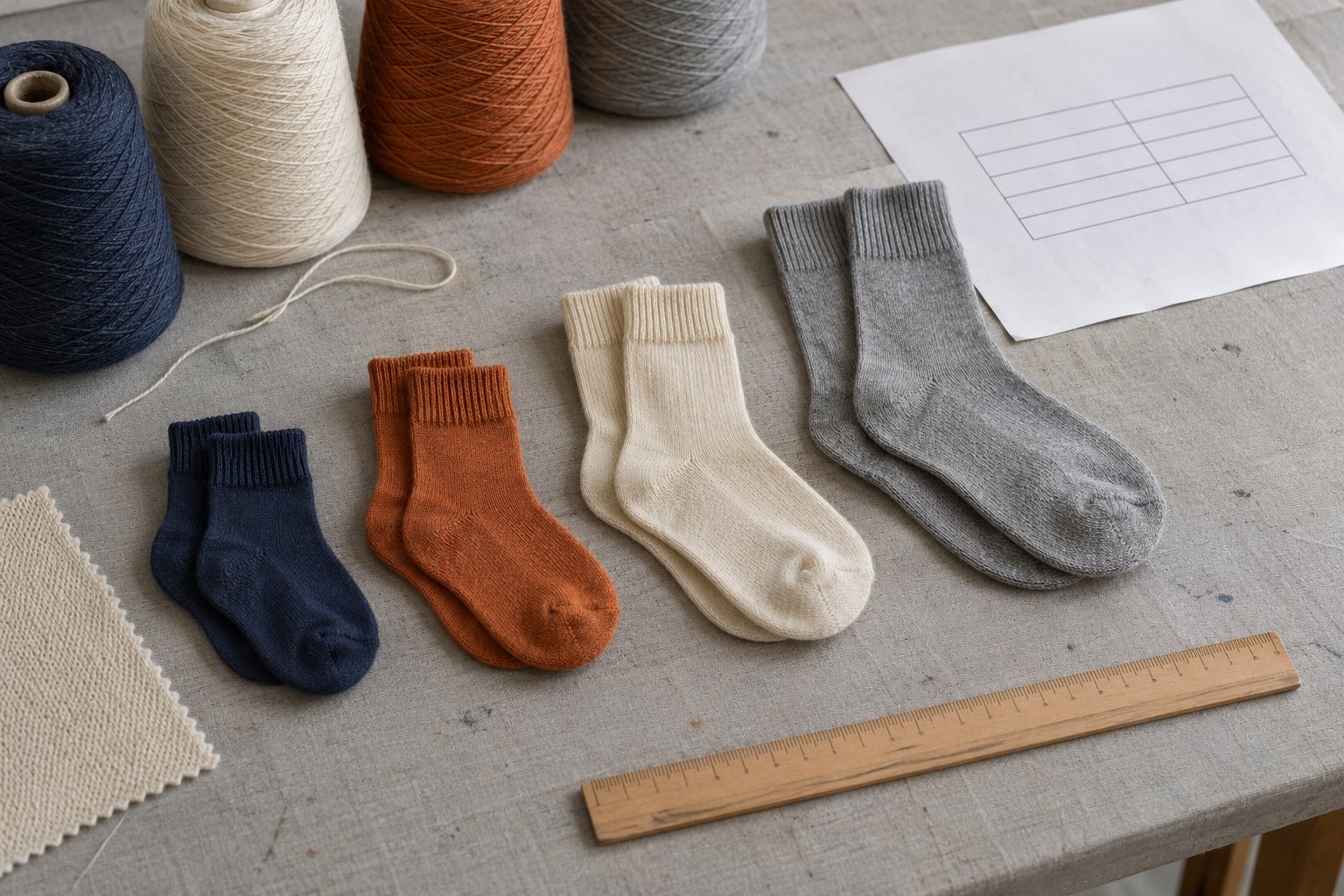
“Kids’ socks” covers very different products. A baby sock, preschool sock and school-age sports sock do not use the same proportions, cuff decisions or packaging logic.
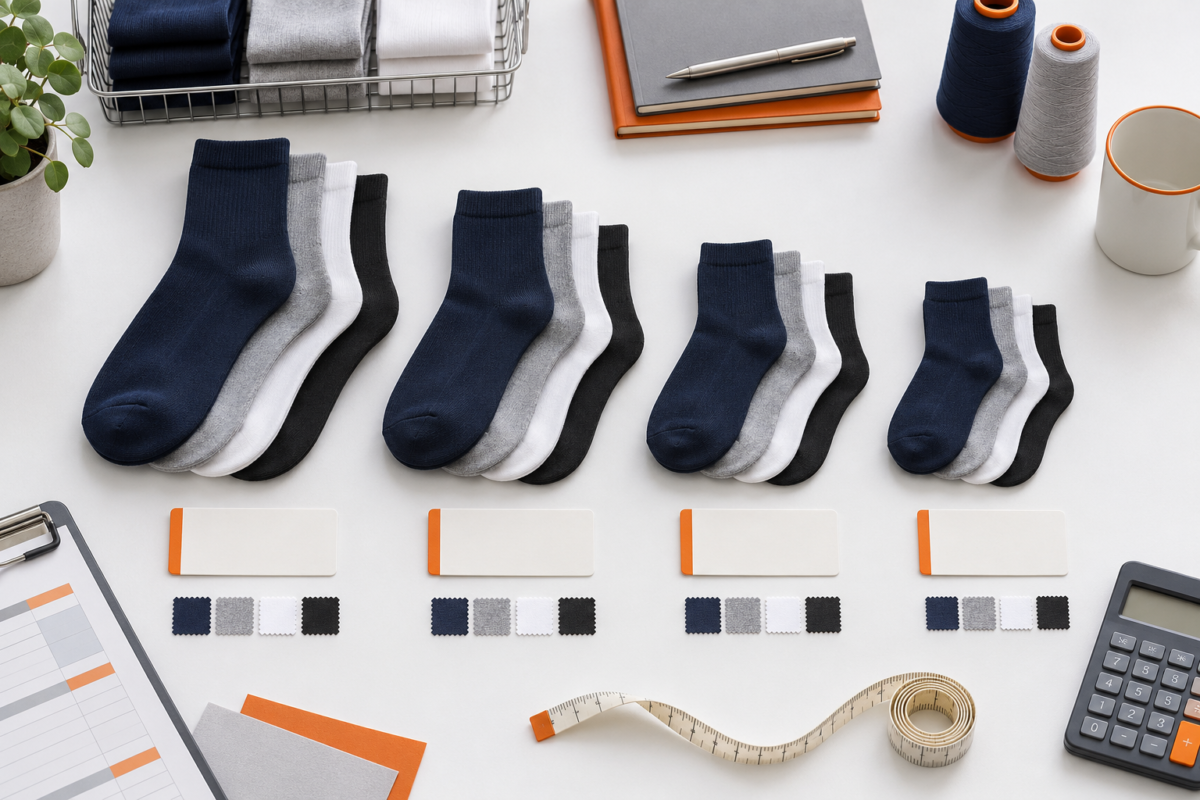
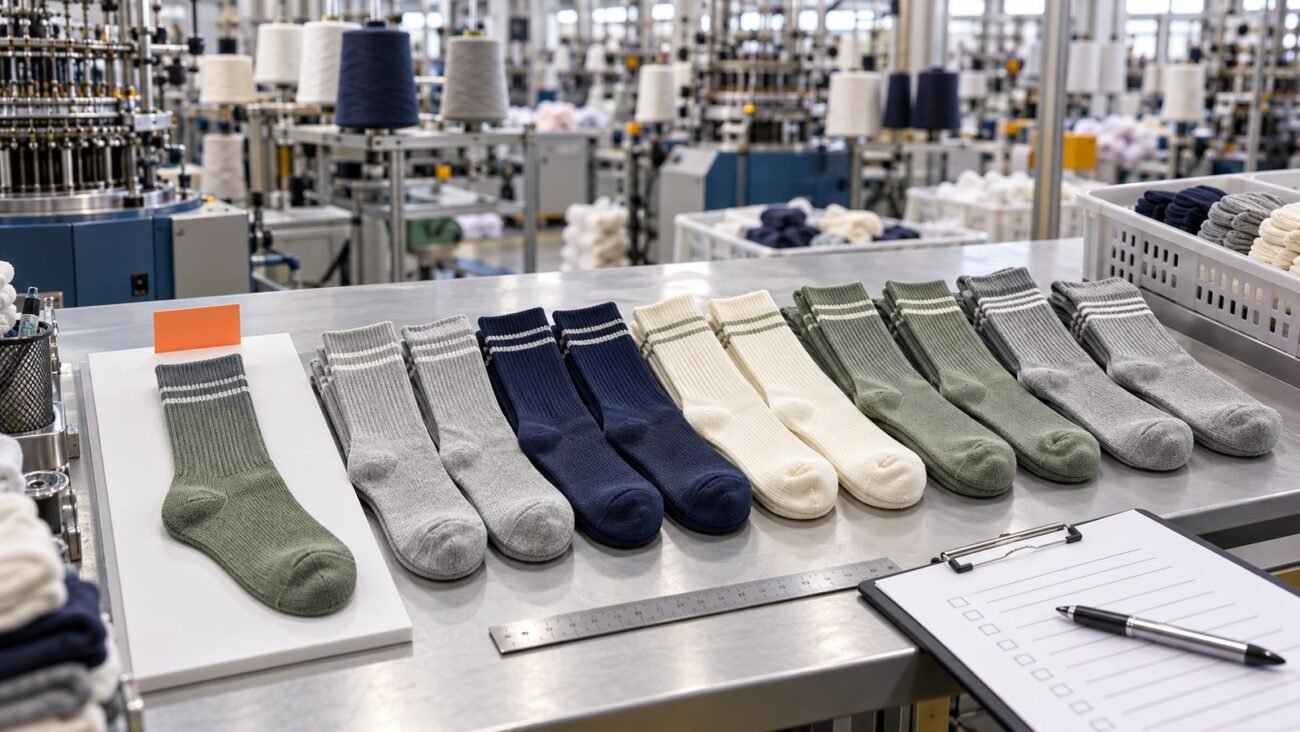
Give the supplier the intended age group and the retail size notation. Then connect each size label to approved finished measurements and tolerances. Useful measurement points may include foot length, leg height, cuff width and other construction-specific dimensions.
Do not approve the range from a label alone. A size such as 23–26 or 27–30 still needs a physical specification that the sampling and inspection teams can follow.
If the order includes several sizes, also confirm the quantity ratio by size. A correct total quantity can still create the wrong retail assortment if the size split is unclear.

2. Explain how the socks will be used
Everyday, school, sports, winter, indoor and grip socks can require different decisions. Intended use affects yarn, thickness, stretch, cushioning, cuff construction and finishing.
For example, a soft indoor sock may prioritize warmth and surface feel. A school sock may need a cleaner appearance and repeatable color. A sports sock may use ventilation, cushioning or elastic support zones. A grip sock also needs an agreed grip layout and a way to review its intended performance.
Describe the use before asking the supplier to recommend a construction. Otherwise, two samples can look similar while serving different purposes.
3. Review material claims and fibre composition early
Material terms should be specific enough for costing, sampling and labelling. “Cotton sock” can describe several blends, and the result will change with yarn type, fibre percentage, elastic components and knitted structure.
For textile products sold in the EU, fibre-composition labelling is governed by Regulation (EU) No 1007/2011. The fibre names and percentages used on the label should match the product and the applicable rules. Required language also depends on the Member State where the product is made available to consumers.
Before approving the packaging, confirm:
- Target fibre composition and allowable development range
- Whether any material or performance claim needs supporting evidence
- The agreed fibre names for the destination market
- Who will verify the final label copy
Care instructions, origin statements and retailer wording should also be checked for the actual market and sales channel. They should not be copied from an unrelated product.
4. Check comfort and construction on the physical sample
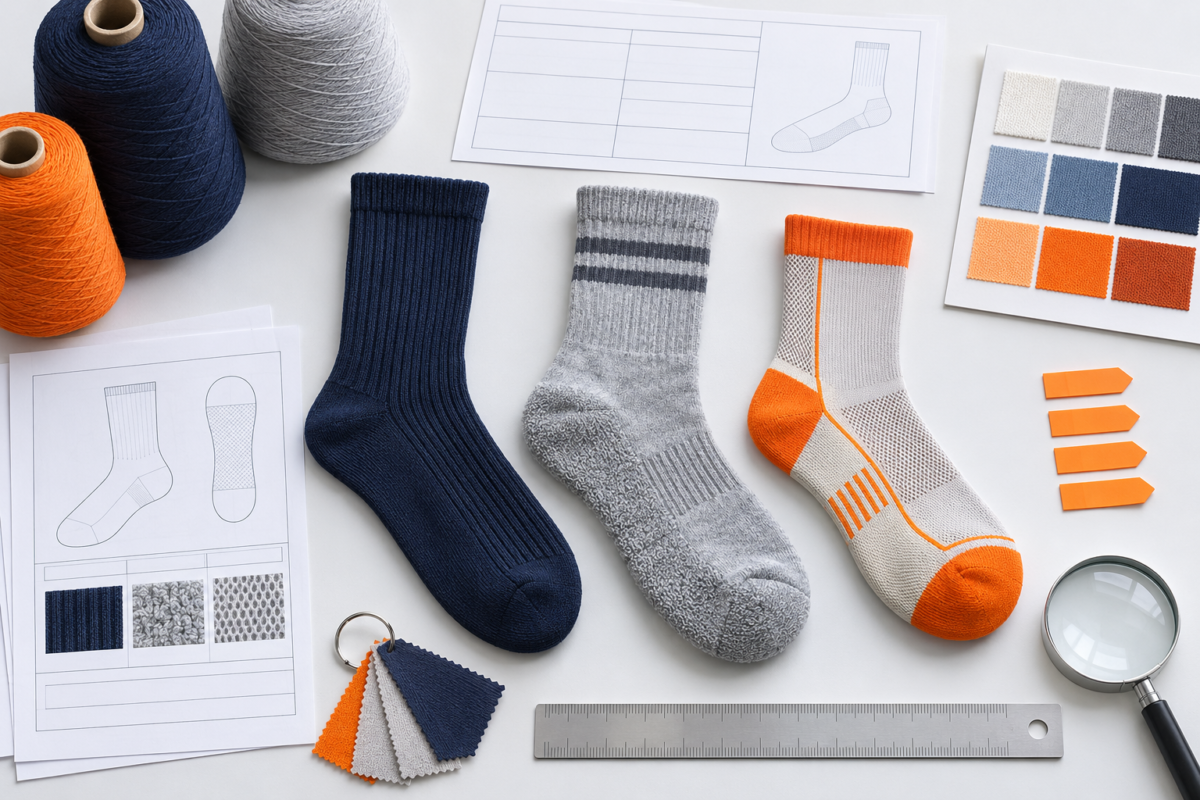
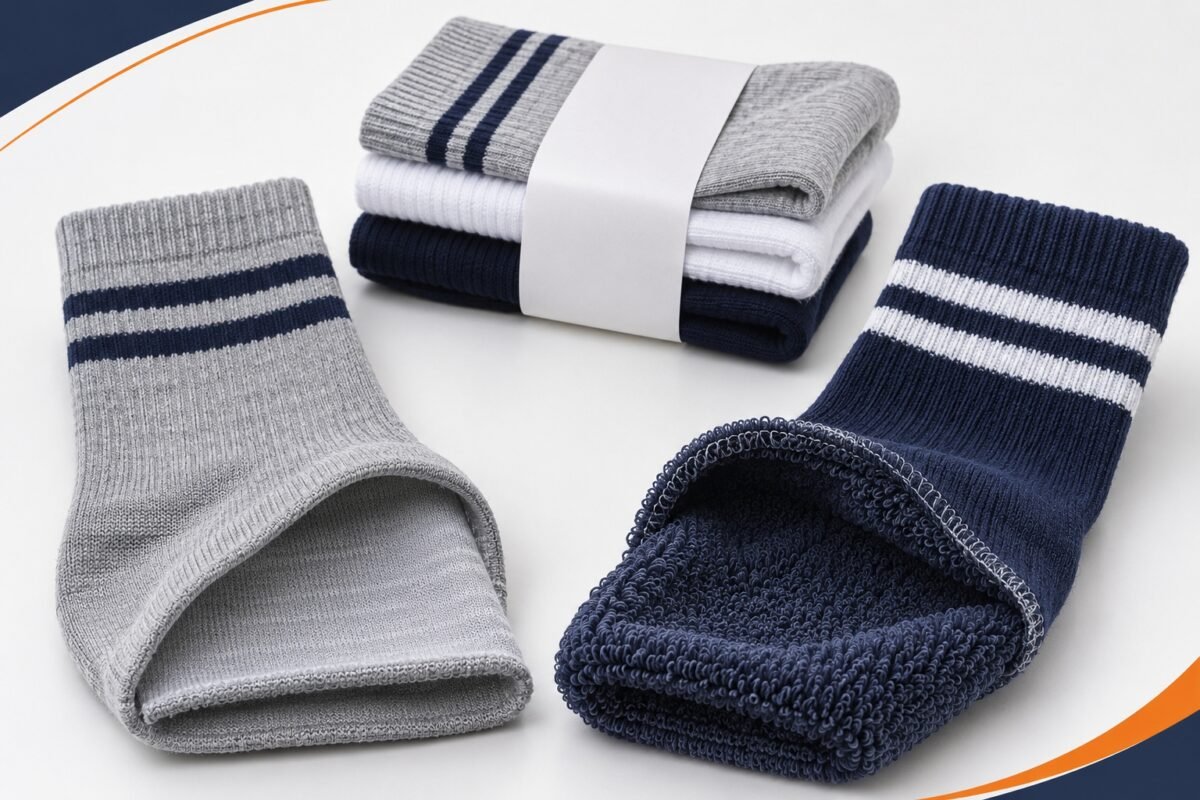
Children’s products should be reviewed as worn products, not only as flat artwork. The physical sample should allow the buyer to check the toe seam, cuff pressure, stretch, recovery, inside yarns, terry loops and any bulky transitions.
A design may look correct on screen but behave differently when knitted in a small size. Fine jacquard details can lose definition. Long floats inside the sock may be unsuitable for the intended result. A thick motif can change stretch. A narrow cuff may look neat while creating too much pressure.
Record the construction that has been approved. If the supplier changes yarn count, needle arrangement, density or finishing conditions to solve a problem, the updated sample and specification should stay together.

5. Treat decorations and added components as a separate review
Embroidery, appliqués, bows, pom-poms, non-slip dots and other additions can affect safety, durability, comfort and testing. Their suitability depends on the child’s age, the product’s intended use and the destination market.
Ask whether a decorative detail is essential to the commercial design. If it is, define its material, size, position and attachment method. If it is not essential, a knitted or printed alternative may simplify production and reduce the number of components that require review.
Do not assume that a decorative element is acceptable because it appeared on an earlier adult product. The kids’ style should be assessed as its own product.
6. Agree on the chemical and performance test plan
Testing should follow the actual product, materials, claims and market. It should not begin with a generic list copied from another order.
REACH Annex XVII restricts certain substances in clothing and other consumer articles. Retailers may also maintain their own restricted-substance lists or request additional tests. The buyer, importer and testing partner should determine which requirements apply to the final materials and components.
Depending on the project, the review may also cover colorfastness, dimensional change, appearance after washing, seam or attachment durability, grip performance and other product-specific points. Agree on the test methods, sample source and acceptance criteria before bulk production whenever possible.
Ordinary socks do not automatically require CE marking. CE marking should only be used when the product falls under EU legislation that specifically requires it. If a sock is marketed with a specialized protective or medical purpose, confirm its classification and regulatory route separately before making claims or preparing labels.
7. Build traceability and label information into the packaging
The retail pack should do more than hold the socks together. It must carry the approved product information and support traceability for the intended sales route.
Confirm the following before printed packaging is released:
- Product identification or style reference
- Size and age information used by the buyer
- Fibre composition and required language
- Manufacturer, importer or responsible-person information as applicable
- Batch or other traceability reference
- Care, warning or usage information required for the product
- Pack quantity, size assortment and color assortment
The exact information and its placement should be reviewed by the responsible buyer or compliance team. A factory can prepare artwork and production files, but it should not invent market-specific legal copy.
8. Approve the sock and the retail pack together
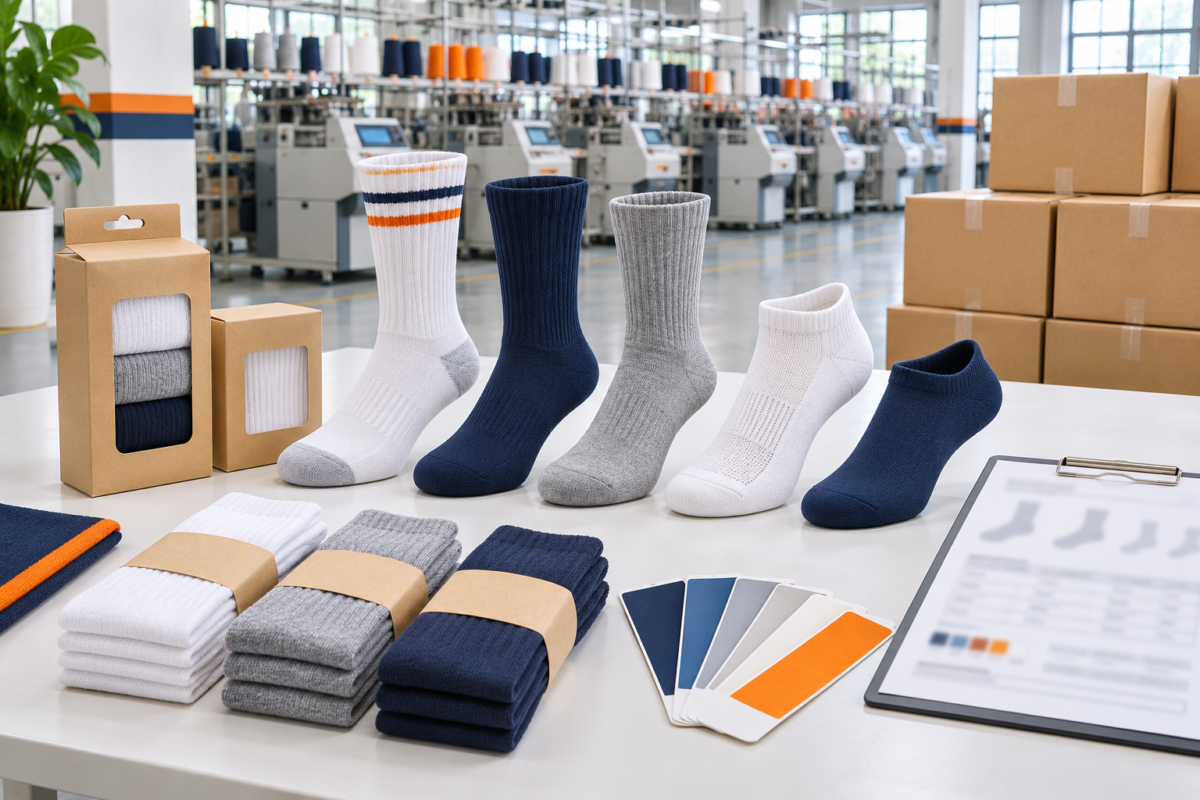
Packaging can change the product presentation and carton plan. Confirm the folding direction, pairs per pack, paper band or header-card dimensions, hanger or bag structure, and the number of retail packs per carton.
A three-pair pack and a five-pair pack may use the same sock but require different folding, paper dimensions and carton multiples. If the size assortment changes, the printed pack information may also need another version.
The final approval should therefore identify the sock sample, packaging artwork and packing specification that belong together.

A practical development brief
Before requesting a kids’ sock sample for Europe, send the supplier:
- Destination country and sales channel
- Intended age group and retail size range
- Finished measurements and tolerances
- Use case and season
- Material and construction direction
- Artwork and color references
- Functional or decorative features
- Test and documentation expectations
- Pack quantity, size ratio and packaging format
- Approximate order quantity and target launch window
Mark which points are fixed and which are open to factory recommendations. This gives the supplier room to solve construction issues without changing the commercial purpose of the product.
A clear answer
Before developing kids’ socks for Europe, buyers should confirm the market, age group, size specification, intended use, material, construction, decorations, test plan, label information and packaging route.
The goal is not to add paperwork to sampling. It is to make sure that the sample represents the product that will actually be produced, checked, packed and sold.
Share your destination market, age group, size range, design, material direction, quantity and packaging plan with Canfly so the development route can be reviewed before sampling.
Official references
- EU General Product Safety Regulation (EU) 2023/988
- EU Textile Labelling Regulation (EU) No 1007/2011
- ECHA REACH restrictions
- European Commission guidance on CE marking
This article is a development checklist. Applicable legal and retailer requirements should be confirmed for the specific product, destination and sales route.