

A final inspection can only produce a useful shipment decision when the buyer and supplier agree on the rules before inspection begins. “Use AQL” is not a complete instruction. The inspection team still needs the lot definition, sampling standard, inspection level, AQL values, defect classifications, test methods and decision authority.
For bulk socks, the same physical issue may have different commercial consequences. A loose thread that can be trimmed may be minor in one programme. A hole, wrong size marking or incorrect barcode may be major. A sharp foreign object or a safety-related nonconformity may be critical. The buyer’s product, market and retail manual determine the final classification.
This article explains how to build an AQL inspection plan for bulk socks without treating a familiar set of numbers as a universal industry rule.
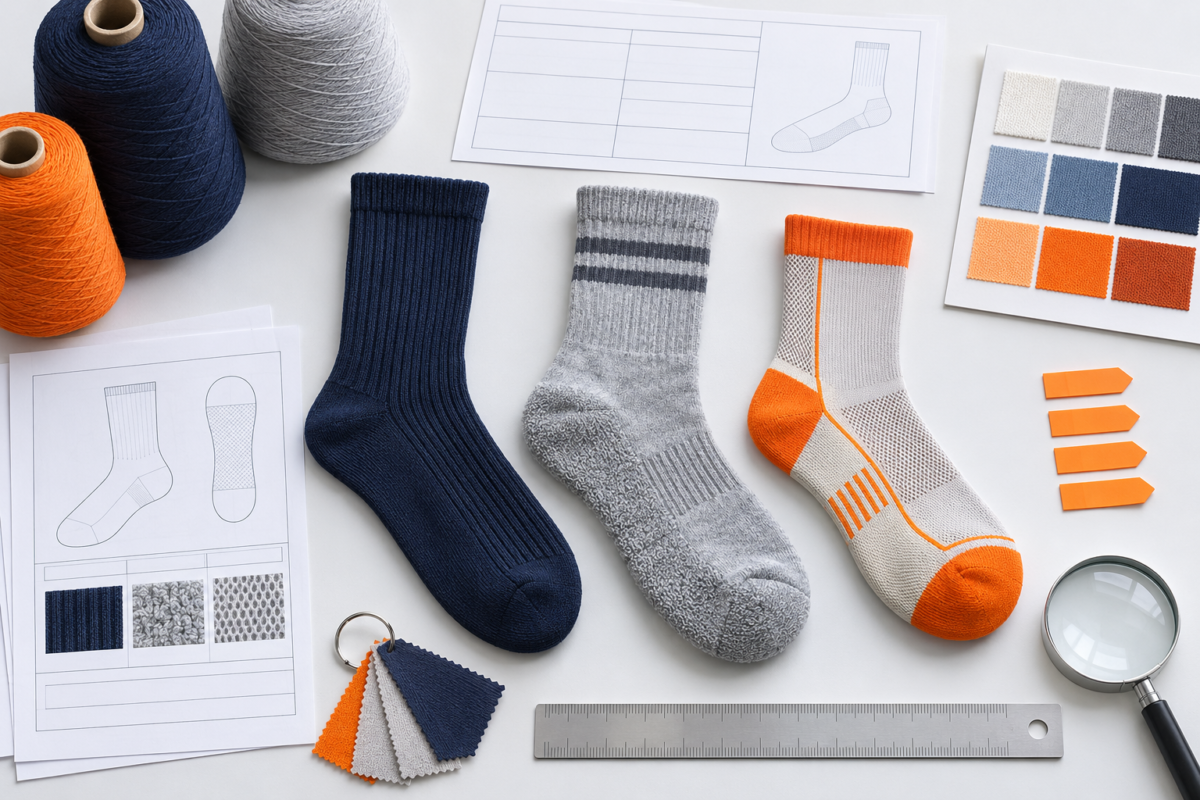
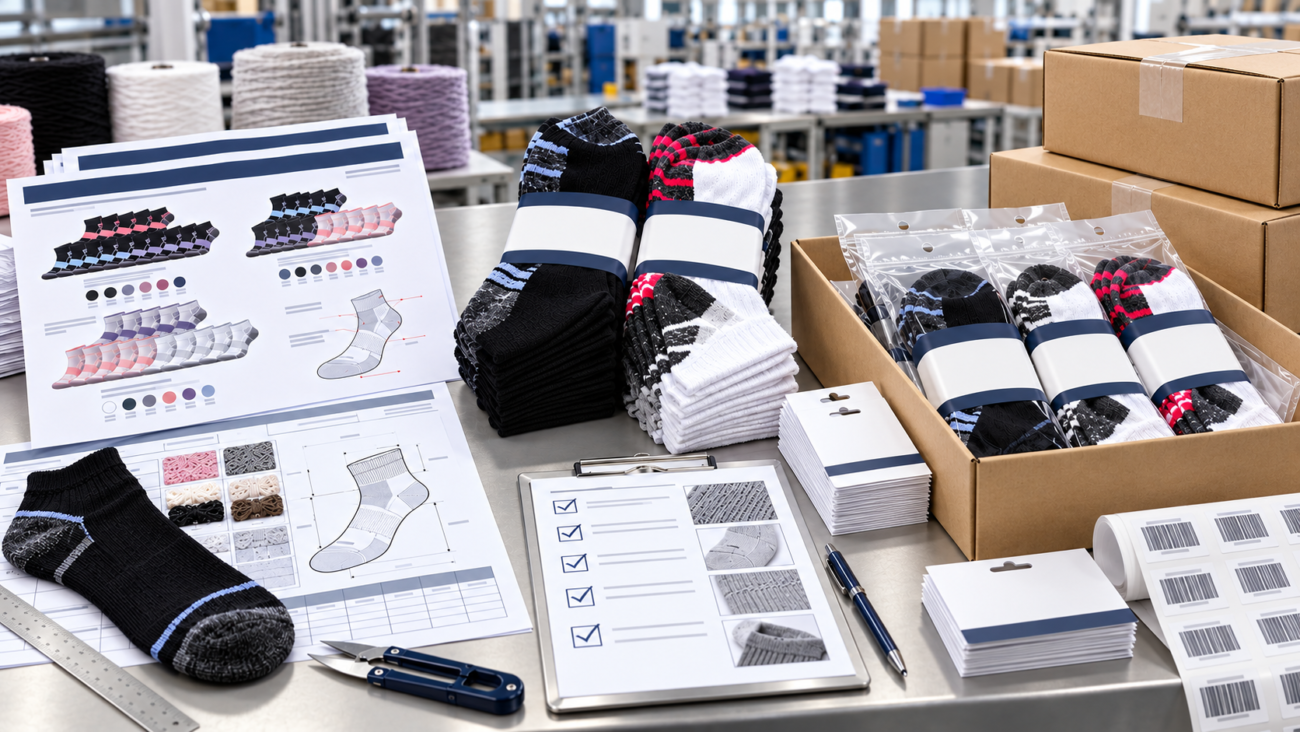
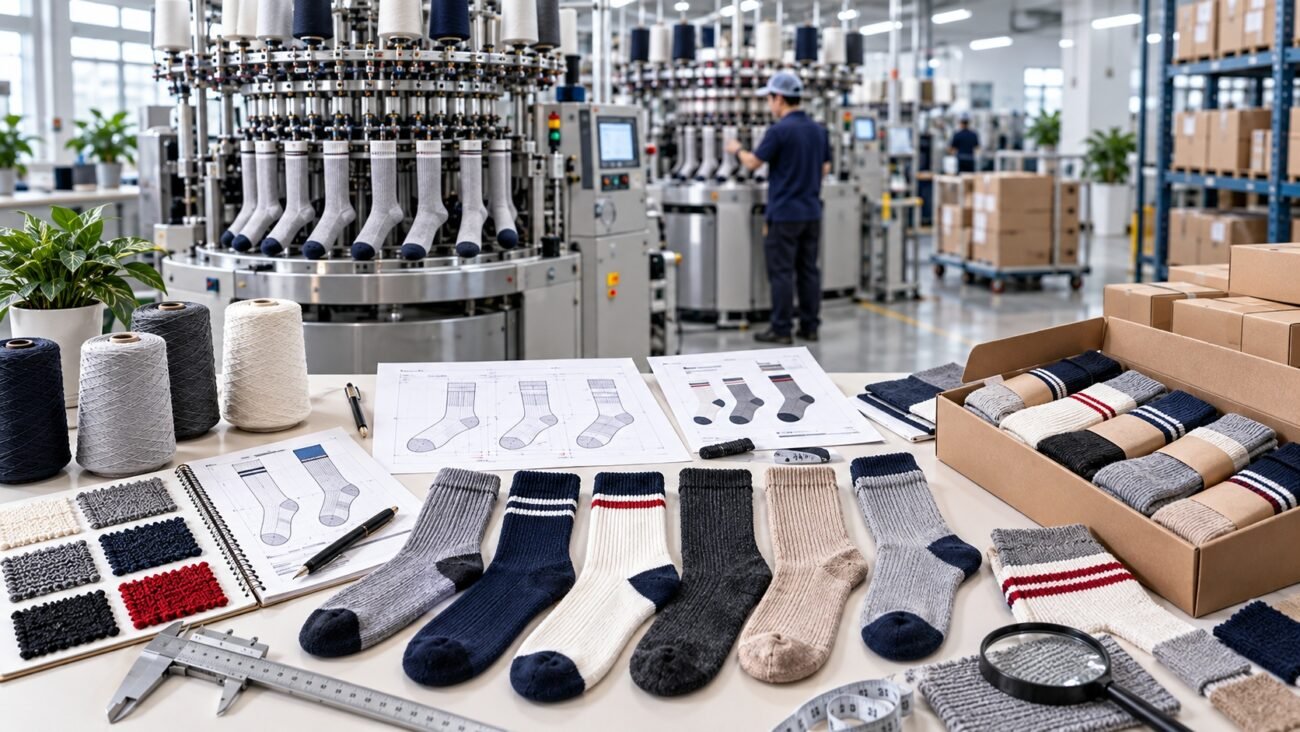
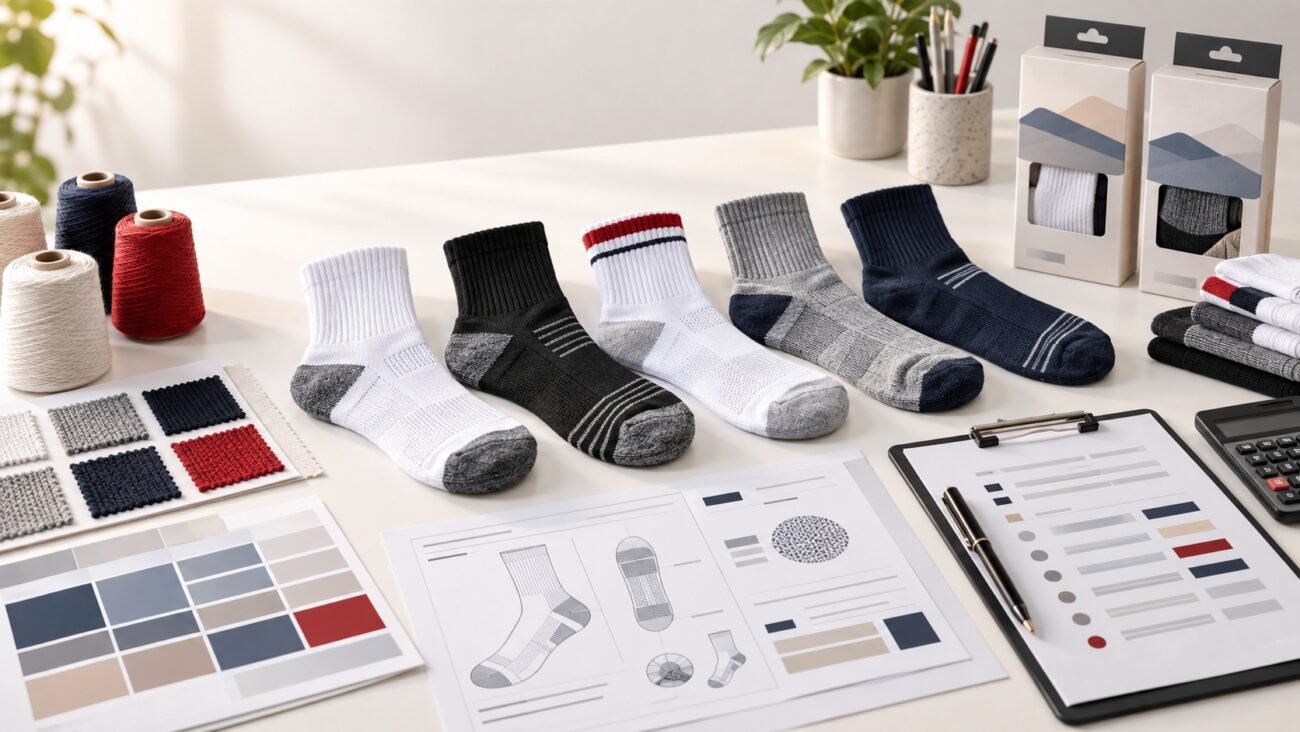
The images in this article are privacy-safe technical editorial visuals created from authentic sock-inspection references. They illustrate sampling and defect-review practices without reproducing customer designs, labels, barcodes, order numbers or inspection records.
01. What AQL Means in Acceptance Sampling
AQL means Acceptance Quality Limit. ISO 2859-1:2026 describes AQL-indexed sampling schemes for lot-by-lot inspection by attributes. An inspector checks a selected sample and counts defined nonconformities or nonconforming units, then applies the chosen sampling plan to reach an acceptance or non-acceptance decision for the lot.
AQL does not mean that the supplier is permitted to intentionally ship that percentage of defective socks. It is an index used within an acceptance-sampling system. An accepted sample also does not prove that every unit in the shipment is defect-free.
Acceptance sampling balances inspection effort with statistical risk. It does not replace process control, in-line checks, testing or corrective action.
Buyer takeaway: an AQL result is a lot decision produced by an agreed sampling plan, not a quality guarantee for every pair.
02. Define the Inspection Lot First
The lot is the group of units from which the sample will be selected and to which the inspection decision will apply. If the lot is unclear, the sample size and result may be applied incorrectly.
For a sock order, define:
- Purchase order and shipment reference
- Style or product number
- Colourway
- Size range
- Packing configuration
- Total quantity and inspection unit
- Production period or batch where relevant
- Number of cartons or pallets
- Whether mixed styles may be treated as one lot
- Whether reworked goods form a separate lot
The inspection unit must also be clear. Depending on the agreement, it may be one pair, one retail pack or another defined sales unit. Counting a three-pair pack as three units in one report and as one unit in another changes the inspection basis.
03. Select the Sampling Plan in Writing
The buyer or authorised quality team should specify which sampling standard and revision applies. ISO 2859-1:2026 is the current ISO edition for AQL-indexed lot-by-lot inspection by attributes. Some programmes may instead specify ANSI/ASQ Z1.4 or a retailer’s own procedure.
The written instruction should identify:
- Sampling standard and edition
- Normal, tightened, reduced or other applicable inspection state
- General or special inspection level
- Lot size and resulting sample size
- AQL for each defect class
- Whether defects or defective units are counted
- Single, double or multiple sampling plan where applicable
- Acceptance and non-acceptance numbers
- Rules for mixed styles, colours and sizes
- Reinspection and switching requirements
Do not copy an acceptance table from an unrelated order. The correct sample size and decision limits come from the selected standard and the specific lot information.
04. Take Samples Across the Shipment
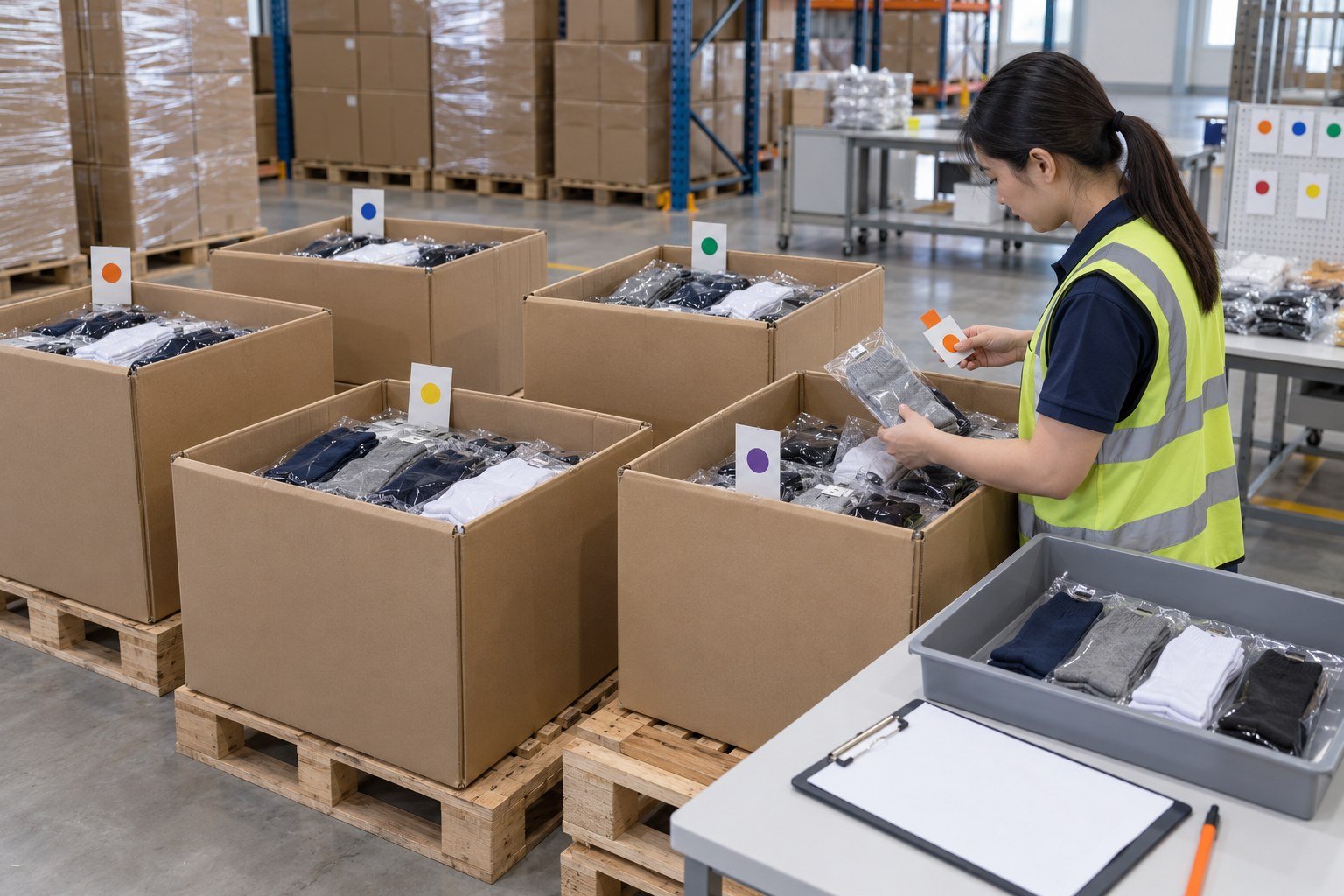
Samples should be selected across cartons, positions, colours and sizes so the inspection represents the available lot.
A sample should represent the lot. Selecting only the cleanest cartons, the top layer of a pallet or the easiest units to reach can hide variation.
A practical random-selection plan may include:
- Cartons from different pallet positions
- Cartons packed at different times
- Units from the top, middle and lower portions of selected cartons
- Proportional coverage of colours and sizes
- Coverage of different production or packing lines where relevant
- A traceable record of which cartons were opened
The inspector should control sample selection or directly observe it. Replacement of a selected unit simply because it looks defective undermines the random sample.
If the lot is not fully available, the report should state the available quantity and inspection limitation rather than presenting the result as a complete pre-shipment inspection.
05. Define Critical Defects
A critical defect is normally one that may create an unsafe condition, violate a mandatory requirement or create another unacceptable high-risk outcome. The buyer must approve the project-specific definition.
Possible sock-related examples, depending on the product and market, include:
- Sharp metal, needle fragments or other hazardous foreign objects
- A component presenting a choking or injury risk in a children’s product
- Safety labelling or mandatory information missing where legally required
- Evidence of prohibited contamination
- A failed safety requirement confirmed by the specified test method
- A serious mismatch that makes the product unsafe for its stated use
Visual inspection cannot prove every safety or chemical requirement. Restricted-substance compliance, fibre composition, flammability or other regulated properties may require laboratory testing and document review.
Critical-defect acceptance is often set very strictly, but the applicable rule must come from the buyer’s approved inspection specification.
06. Define Major Defects
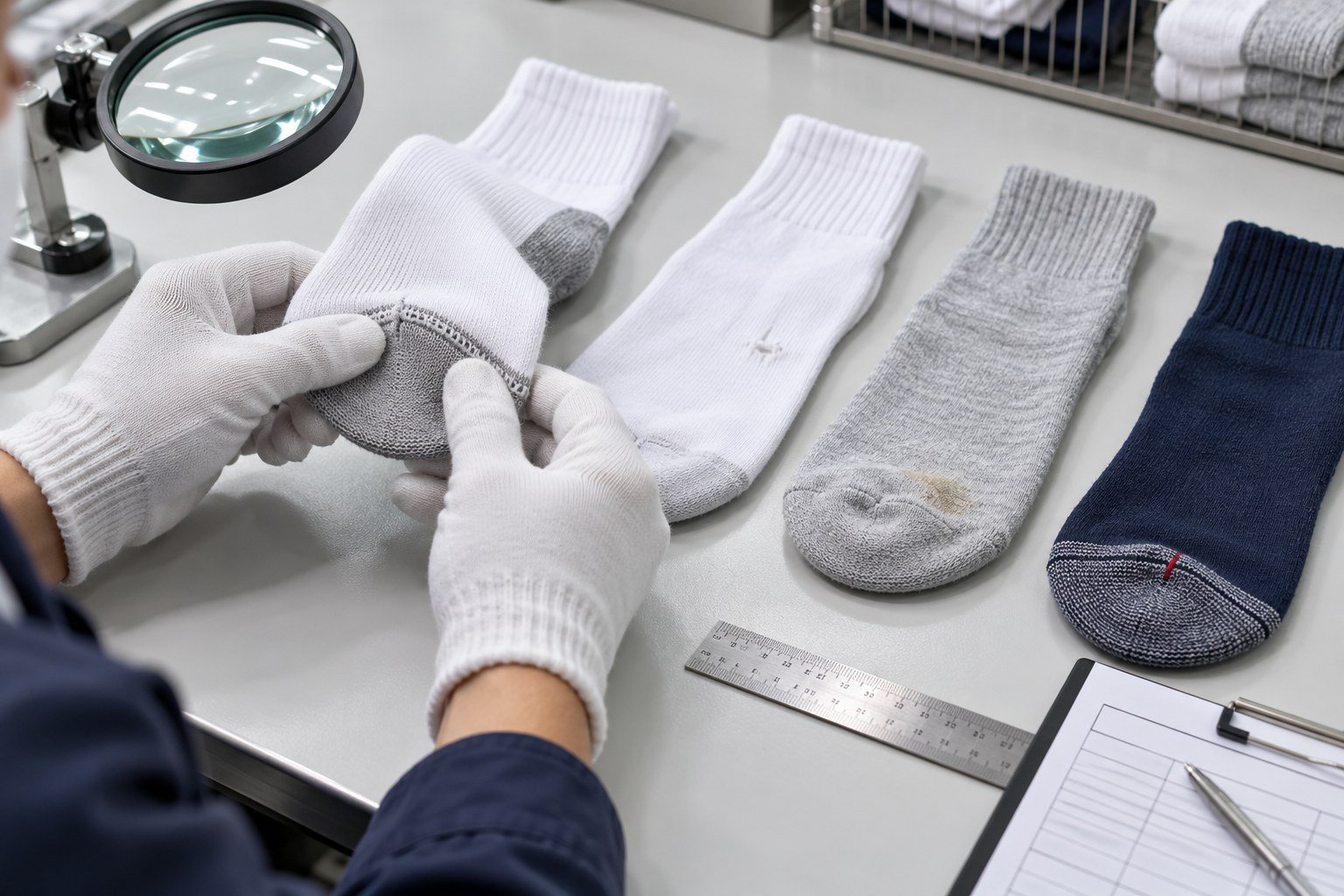
Clear defect descriptions, approved tolerances and reference examples improve classification consistency.
A major defect is generally a nonconformity likely to cause product rejection, failure in normal use, incorrect sale or a significant difference from the approved specification.
Possible examples include:
- Hole, open seam or serious knitting fault
- Incorrect size, colour, material appearance or construction
- Missing sock, mismatched pair or wrong pack quantity
- Incorrect heel, toe, logo or functional-zone placement beyond tolerance
- Measurement outside the approved tolerance
- Severe shade variation within a pair or pack
- Incorrect retail label, barcode or assortment information
- Poor elastic recovery or fit failure against the approved test
- Oil, dirt or staining that makes the product unsaleable
- Packaging damage that exposes or compromises the product
Classification should consider intended use. A seam issue may be more serious in a performance or medical-style product than in a decorative item.
07. Define Minor Defects
A minor defect generally differs from the specification but is unlikely to make the product unsafe or unusable. It may still reduce appearance, presentation or workmanship quality.
Possible examples include:
- Trim-able loose yarn ends
- Slight cosmetic variation within the approved limit
- Small presentation irregularity that does not affect sale or use
- Minor packaging wrinkle or alignment issue
- Small knitting or finishing imperfection with no functional effect
- Slight print or label-position variation within the permitted tolerance
Repeated minor defects can reveal a systematic process problem. A buyer may also classify a visually prominent “minor” issue as major when it affects shelf presentation or brand standards.
The defect catalogue should include photographs, tolerance references and classification decisions from approved samples whenever possible.
08. Inspect More Than Appearance
A useful final inspection connects visual workmanship with measurements, function, packing and shipment information.
Depending on the specification, checks may cover:
- Pair matching and assortment
- Sock length, foot length and key dimensions
- Stretch and recovery at the cuff or functional zones
- Weight or thickness where specified
- Toe seam and boarding appearance
- Heel and toe position
- Terry, mesh, rib, compression or support-zone placement
- Logo, artwork and colour approval
- Odour, cleanliness and contamination
- Label, barcode and carton-mark accuracy
- Retail packing and carton quantity
- Metal detection or other required safety control
Use the approved measurement method. Relaxed measurements, stretched measurements and measurement points should not be mixed within the same report.
09. Record Each Defect Consistently
The report should allow another qualified person to understand what was found and how it was classified.
For each defect, record:
- Style, colour and size
- Sample or carton reference
- Defect description
- Location on the sock or packaging
- Quantity affected
- Critical, major or minor classification
- Photograph where permitted
- Specification or tolerance reference
- Whether one unit contains multiple defects
- Any immediate containment action
Avoid vague entries such as “quality bad.” A useful entry identifies the actual nonconformity, such as “toe seam opening at the left edge” or “foot length exceeds approved tolerance.”
10. Decide, Contain and Reinspect
After counting the agreed defect classes, apply the acceptance and non-acceptance numbers from the selected sampling plan. The result should be reported as accepted, not accepted or otherwise defined by the buyer’s procedure.
When a lot is not accepted:
- Stop release of the affected lot.
- Identify the defect pattern and affected styles, colours, sizes or cartons.
- Determine whether sorting, repair, repacking or reproduction is appropriate.
- Record the corrective and preventive action.
- Complete the required reinspection using the buyer’s approved rule.
- Obtain authorised release before shipment.
Do not remove failed samples and repeat the same inspection until a pass appears. Reinspection must follow the agreed procedure and be traceable to the corrective action.
Practical AQL Inspection Brief
| Item to confirm | Why it matters | Evidence |
|---|---|---|
| Lot and inspection unit | Defines what the decision covers | PO, lot summary and packing list |
| Standard and edition | Determines the sampling framework | Approved inspection instruction |
| Inspection level and AQL | Determines sample and decision criteria | Sampling-plan record |
| Defect catalogue | Aligns critical, major and minor decisions | Approved examples and tolerances |
| Random selection | Reduces selection bias | Carton and sample record |
| Visual and functional checks | Connects workmanship to product use | Inspection checklist and results |
| Defect evidence | Supports review and corrective action | Descriptions and controlled photos |
| Lot disposition | Controls release, sorting or reinspection | Signed decision and action record |
Frequently Asked Questions
Is AQL 2.5 automatically correct for every sock order?
No. AQL values, inspection levels and defect classes are buyer or programme decisions. They should be agreed before production or inspection and applied with the selected sampling standard.
Does AQL 2.5 mean 2.5 percent defective socks are allowed in the shipment?
Not as a simple shipment allowance. AQL is an index used to select acceptance-sampling criteria. The lot decision depends on the lot size, inspection level, sample size and acceptance or non-acceptance numbers in the chosen plan.
Should one pair or one sock be counted as the inspection unit?
The inspection instruction must define the unit. For many retail programmes it may be one pair or one sales pack, but the same definition must be used for lot size, sample selection and defect counting.
Can the factory select the samples before the inspector arrives?
Preselected samples may create bias. The inspector should select or directly control random selection across the available lot according to the approved procedure.
Is passing AQL the same as passing laboratory tests?
No. Visual and dimensional sampling cannot replace chemical, fibre-content, flammability, performance or other specified laboratory tests.
What happens when the lot fails?
The lot should be held, the defect pattern investigated, affected goods contained and corrective action recorded. Sorting or repair may be followed by reinspection according to the buyer’s approved procedure.
AQL inspection for bulk socks works best when the rules are defined before the inspector opens the first carton. The buyer and supplier should agree on the lot, sampling standard, inspection level, AQL values, defect catalogue, test methods and reinspection process. Random selection and clear evidence then turn the final inspection into a consistent shipment decision rather than a subjective visual check.
Canfly Knitting supports brands, retailers and private-label sock programmes through development, manufacturing, in-process control, final inspection, packing and export coordination. The applicable sampling plan, tolerances and shipment-release criteria are confirmed for each customer programme.
For a bulk sock project, send the product specification, size and colour breakdown, order quantity, packing requirements, quality manual, inspection standard and required delivery timing.
Email: sales05@zjcanfly.com
WhatsApp: +86 137 3535 0489
Website: www.canflysocks.com
Technical references: ISO 2859-1:2026 — Sampling procedures for inspection by attributes; ASQ — Attribute and variable sampling plans