

Sock packaging is often treated as a final design task. In practice, it affects product information, material purchasing, packing work, inspection and shipment preparation.
A sock can be approved while its packaging is still incomplete. If the missing information is discovered after bulk production has started, the project may need new artwork, replacement labels, extra packing work or a revised delivery plan.
Brands can reduce this risk by treating packaging as a defined part of product development. The same information should remain connected to the private label sock development process. The following six steps explain what should be confirmed and when.
01 · Begin with the Sales Channel
Packaging should support the way the product will be displayed, identified and delivered.
A retail store may require a hanger, size marking, price label and barcode. An ecommerce order may use a simple band or bag but require a scannable product identifier. A gift set, promotional pack or subscription product may need a different presentation and pack quantity.
The first discussion should therefore cover:
- Target market and sales channel
- Individual pair, multipack or gift-set format
- Display requirements
- Required languages and legal information
- Product identifiers or retailer data
- Sustainability or material preferences
- Warehouse and shipment requirements
Confirmation at this stage: a packaging direction that matches the product, destination and sales channel.
02 · List Every Packaging Component
“Retail packaging” is too broad to serve as a production instruction. Break it into separate components so that each item can be designed, quoted and approved.
Depending on the project, the list may include:
- Header card, belly band or wrap
- Hook, hanger or clip
- Pairing band or fastener
- Care label, brand label and size label
- Barcode or price sticker
- Individual bag or protective sleeve
- Inner box, display box or multipack carton
- Shipping carton and carton marks
For every component, record the material, size, print requirements, attachment method and quantity per selling unit. If a component is optional, state who will decide whether it is included.
Confirmation at this stage: a packaging component list with no undefined items hidden inside a general description.
03 · Prepare Accurate Artwork and Product Data
Packaging artwork should be checked against the approved product information. A visually attractive design can still create problems if the barcode, size, fibre content or country-specific wording is incorrect.
Before releasing artwork, confirm:
- Brand name and logo files
- Product name, style number and colour name
- Size notation for the target market
- Fibre content and care information
- Country of origin wording when required
- Barcode type, number and readable placement
- Required warnings, claims or certification marks
- Printing colours, finishes and cut lines
The buyer should supply final source files or clearly identify who is responsible for preparing them. A clear custom sock development brief helps assign these responsibilities early. The supplier should confirm the accepted file format and any production limits before printing begins.
Confirmation at this stage: approved print-ready artwork connected to the correct product and packaging component.
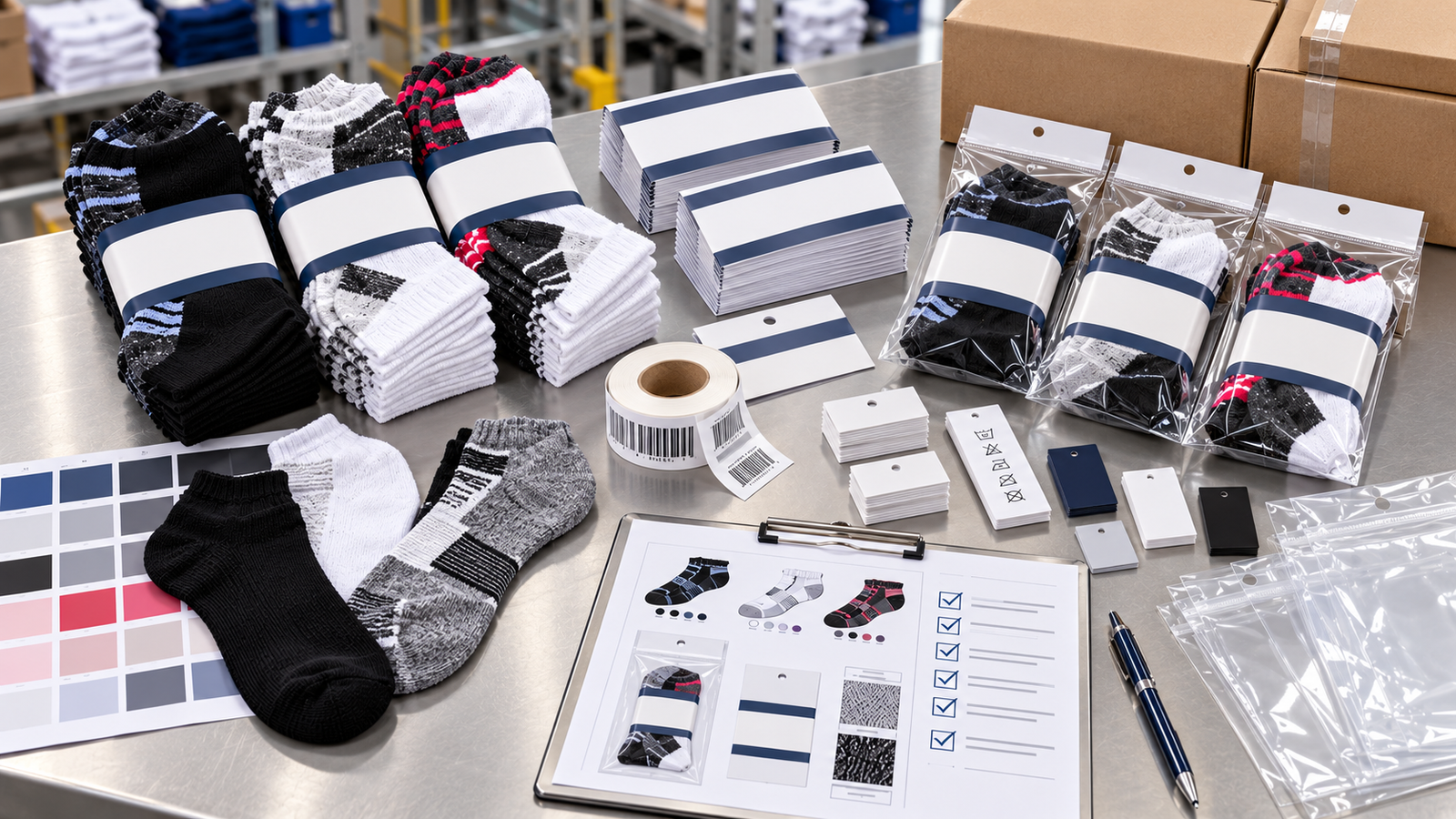
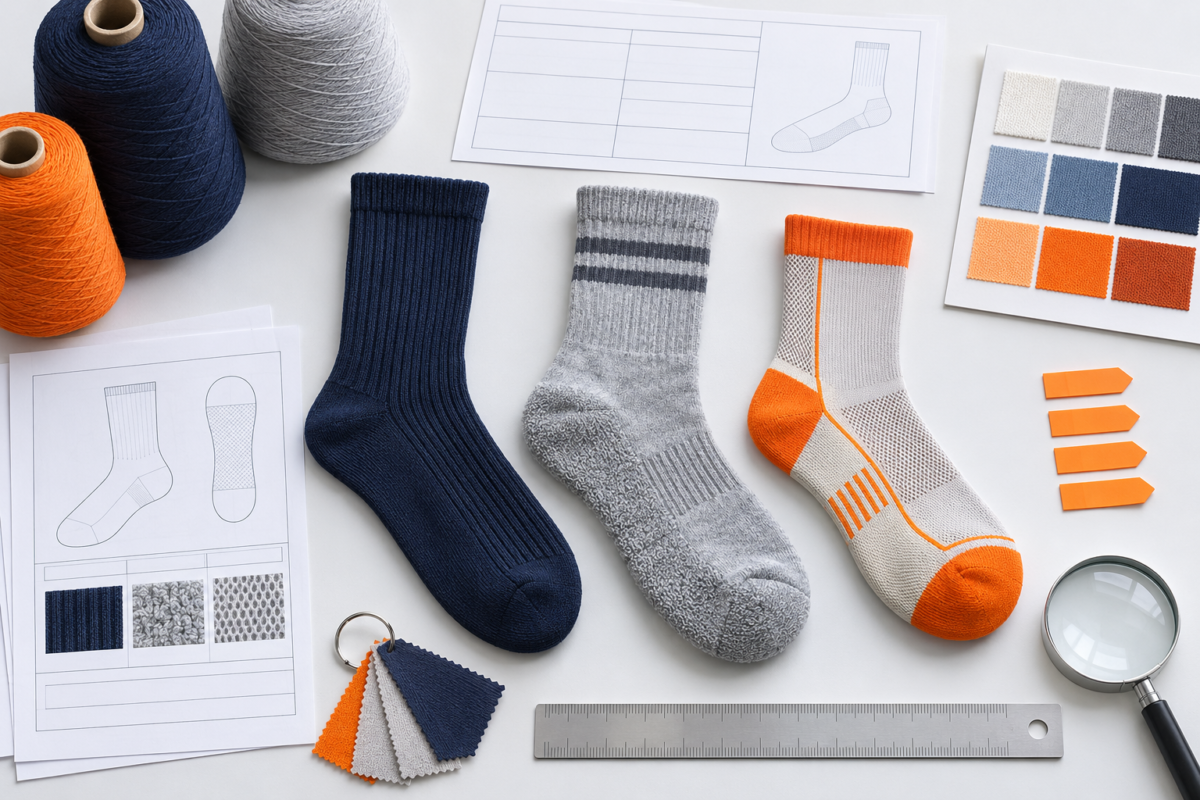
Packaging components, artwork, labels and product data should be checked together before printing and packing begin.
04 · Confirm Pack Ratios and Carton Information
Packaging must also explain how finished socks are grouped from the selling unit to the shipping carton.
Confirm the complete packing structure:
- Number of pairs in each selling unit
- Size and colour assortment within a multipack
- Selling units in each inner pack or inner carton
- Inner packs or selling units in each master carton
- Expected carton dimensions and weight limits
- Carton marks, purchase-order details and destination information
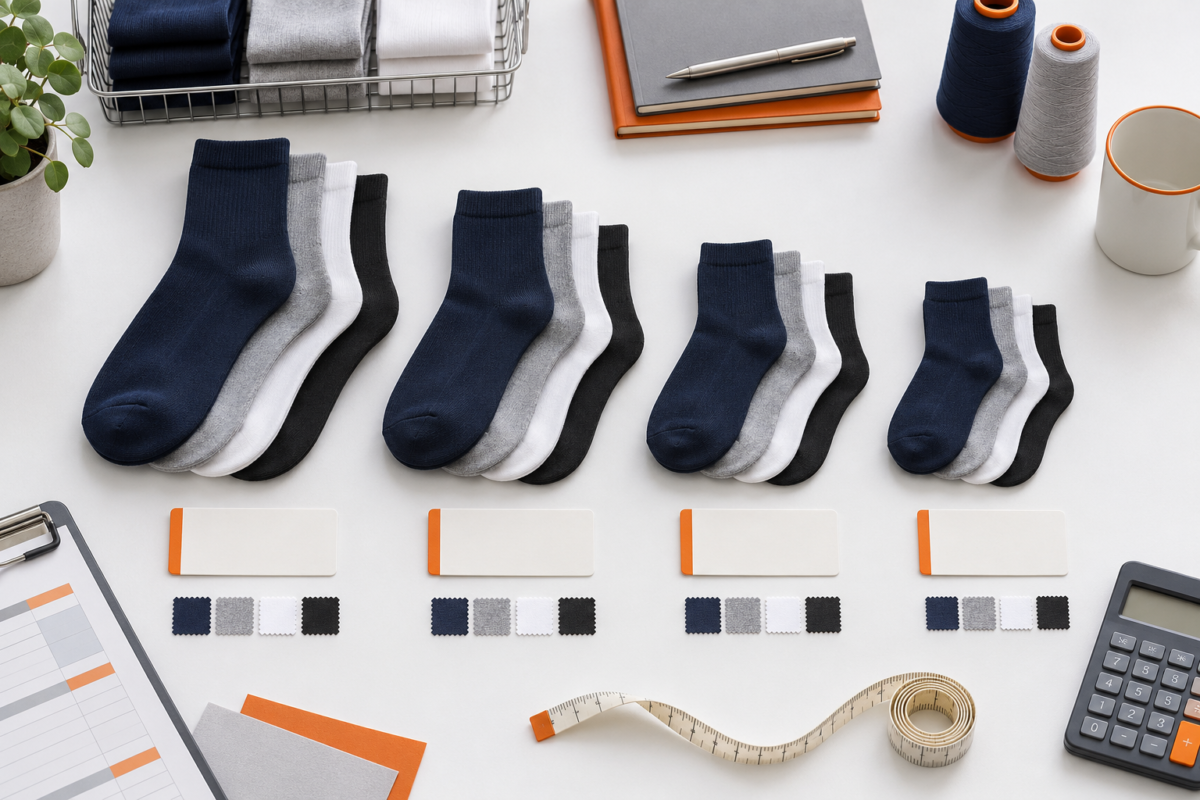
The total quantities at each level should match the purchase order. Mixed colours or sizes need a clear assortment table so that the packing team and warehouse use the same ratios.
Confirmation at this stage: a packing specification that connects pair quantities, selling units, inner packs and shipping cartons.
05 · Approve Physical Results Before Full Packing
Screen artwork alone cannot show every physical result. Material thickness, print colour, folding, attachment position and barcode readability may need to be checked on an actual packaging sample.
The approval process may include:
- Digital artwork approval
- Material or colour reference approval
- Printed packaging sample
- Sock and packaging assembly sample
- Barcode scan check
- Pre-production or first packed unit confirmation
Record which approval is required for the specific order and who can give it. If the packaging sample is approved with conditions, list the remaining changes and confirm them before full packing.
Confirmation at this stage: an approved physical reference or a documented alternative appropriate to the order.

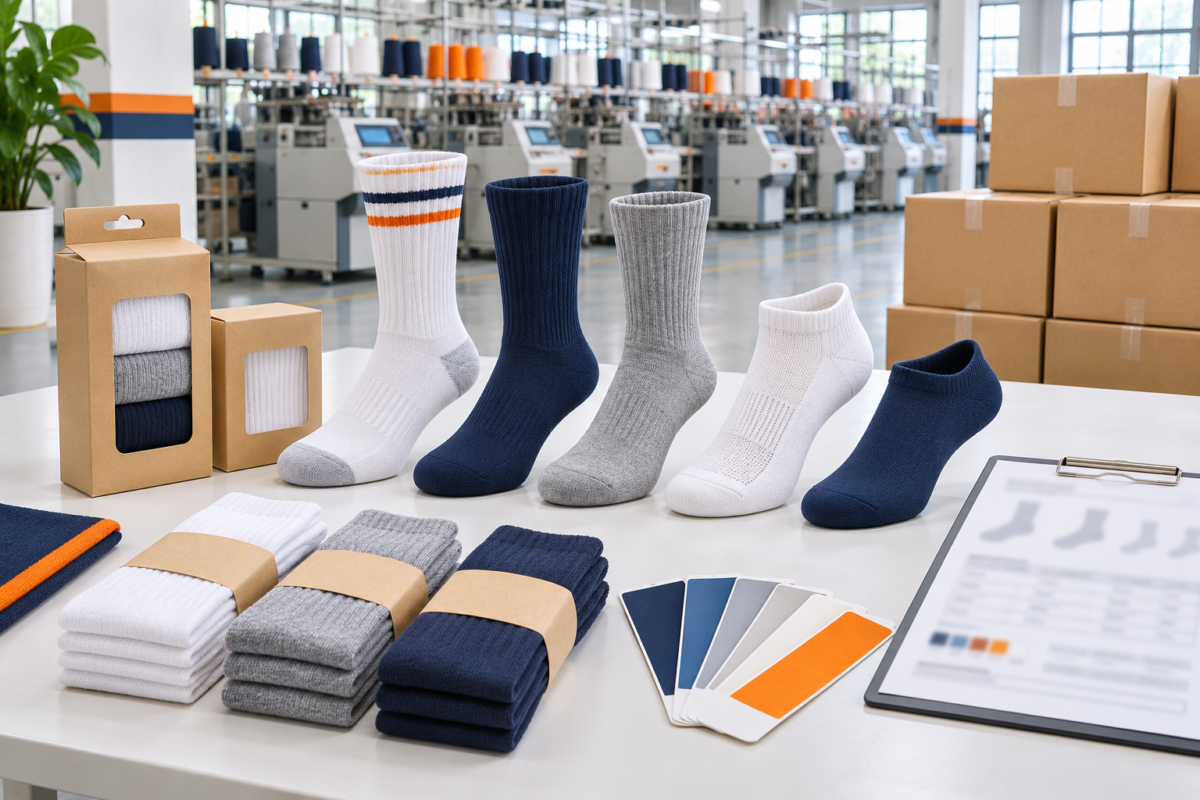
Pack ratios, carton quantities, barcode information and shipment details should match the latest approved records.
06 · Control Changes and Final Release
Packaging information may change after the first design. A retailer may update a barcode, the buyer may adjust an assortment or a destination may require different carton marks.
Every change should follow the agreed project handover and approval points and identify:
- The affected file or component
- The old and new information
- Quantities already produced
- Cost or timing impact
- Required approval
- The version released to production
Before shipment, compare the finished packaging, pack ratios and carton information with the latest approved records. Keep the final artwork and packing specification with the order documents so that later checks use the same reference.
07 A Practical Packaging Brief
Brands can begin the packaging discussion with seven items:
- Sales channel and destination market
- Reference image or preferred packaging style
- Required labels and product information
- Barcode and retailer requirements
- Pair, multipack and assortment structure
- Estimated order quantity
- Target delivery period
The supplier can then identify missing files, explain feasible options and confirm the sampling, cost and approval steps for the project.
At Canfly Socks, we support brands, retailers and private label customers through sock development, sampling, manufacturing, quality control, packaging and shipment coordination.
To discuss a project, send us your product reference, estimated quantity, target market and packaging requirements.
Email: sales05@zjcanfly.com
WhatsApp: +86 137 3535 0489