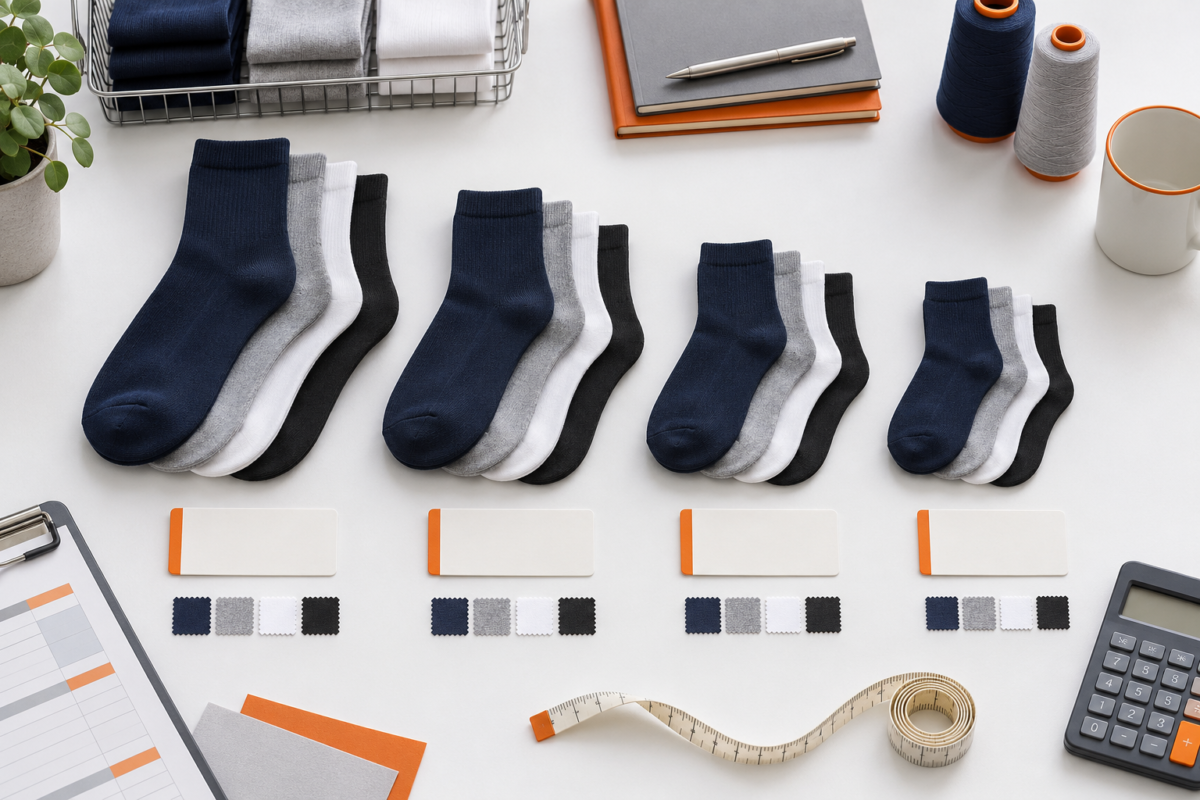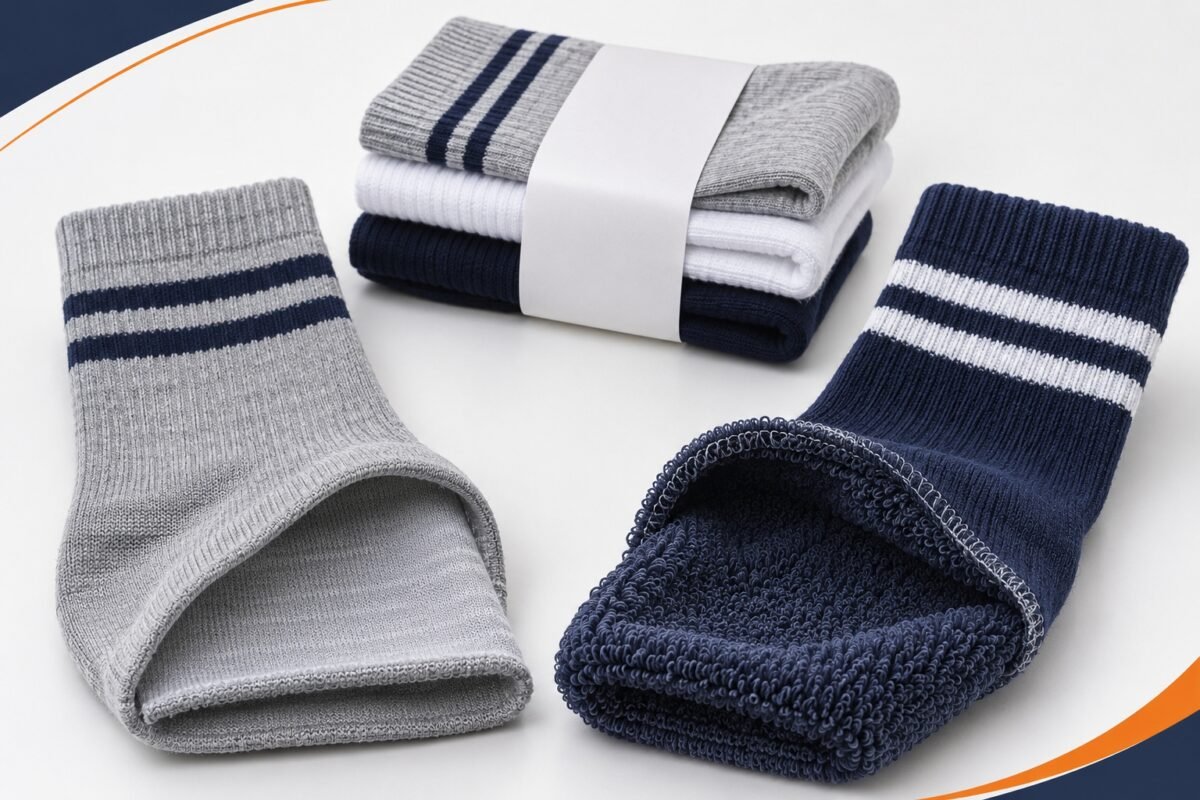


Size labels such as S, M, L or 6–11 look simple, but they do not provide enough information to manufacture a consistent sock.
Two products with the same size label may use different foot lengths, leg lengths, widths, stretch levels and constructions. Yarn, knitting structure, cushioning and finishing can also influence the way a sock fits.
Brands can create a clearer production reference by defining the target wearer, measurements, stretch expectations and approval method before bulk production begins. These details can be included in a custom sock development brief.


01 Define the Target Wearer and Use
Begin with the person who will wear the sock and the conditions in which it will be used. Useful starting information includes:- Target market and customer group
- Footwear or shoe-size range
- Adult, youth or children’s sizing
- Intended activity or wearing occasion
- Preferred sock height and coverage
- Desired compression or relaxed fit
- Relevant comfort or performance expectations
02 Create a Measurement Specification
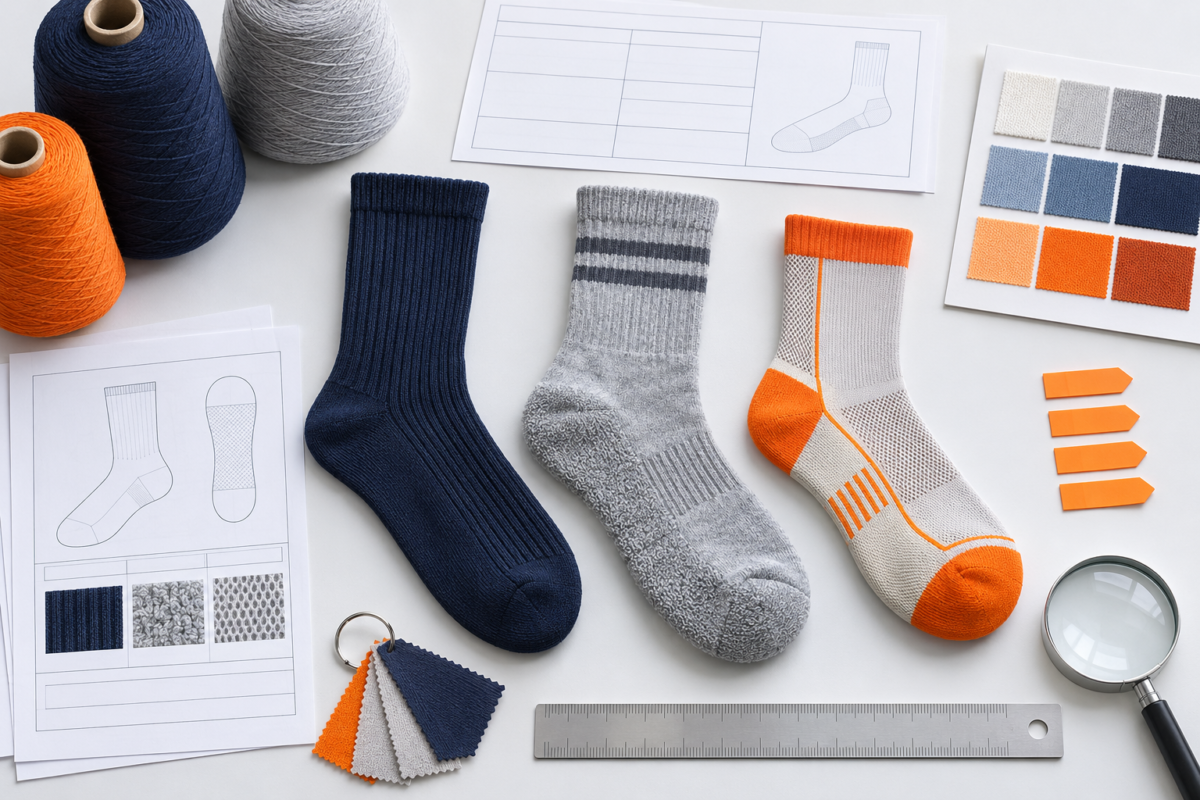
A physical sample should be evaluated against named measurement points rather than a general impression of size. The same approved references also help reduce differences between a sample and bulk production. The specification may include:- Foot length from heel to toe
- Foot width
- Leg length or overall length
- Leg width
- Cuff height and width
- Heel pocket dimensions
- Placement of cushioning or support zones
- Logo position and distance from reference points
03 Consider Stretch and Recovery
Flat measurements describe only part of the fit. Socks must stretch over the foot and then recover sufficiently to remain in place. Review the areas that need controlled stretch:- Cuff opening
- Leg and ankle
- Heel and instep
- Foot body
- Toe seam area
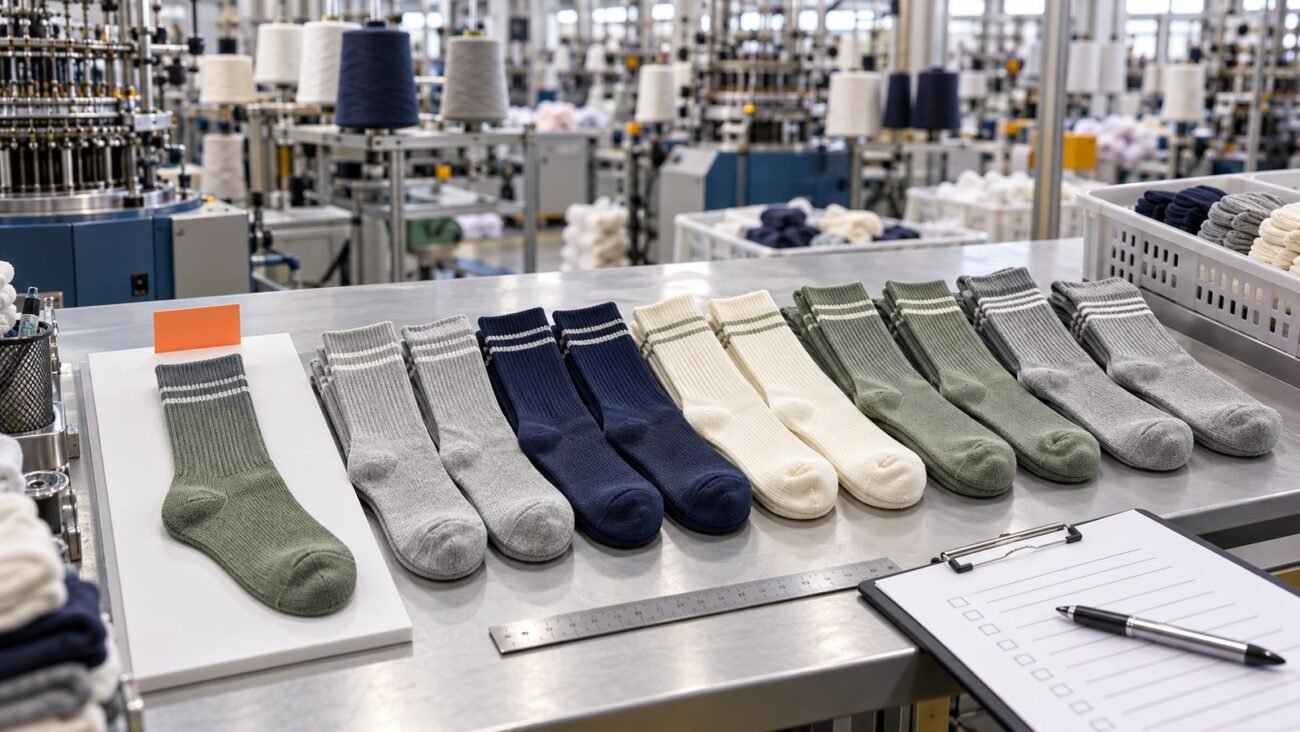
Flat measurements, stretch and recovery checks help define a repeatable sock size and fit reference.
04 Review the Sample on the Intended Foot Range
A sample can meet its flat measurements and still feel different when worn. Wear evaluation may consider:- Whether the heel sits in the intended position
- Whether the toe area has excess fabric or pressure
- Whether the cuff stays in place without excessive marking
- Whether the sock twists or moves during use
- Whether cushioning and support zones align correctly
- Whether the size covers the intended shoe-size range
05 Approve Tolerances and Reference Samples
Textile products naturally have some variation. Bulk-production requirements should therefore include agreed tolerances rather than an expectation that every pair will have an identical unstretched measurement. Before production, confirm:- Which measurements are critical
- The tolerance for each controlled measurement
- How samples will be conditioned before measuring
- How many pieces may be checked
- Which approved sample and specification are current
- How an out-of-tolerance result will be reviewed
Wear observations, approved samples and measurement tolerances should be transferred into production and quality-control records.
06 Transfer Fit Requirements into Production and QC
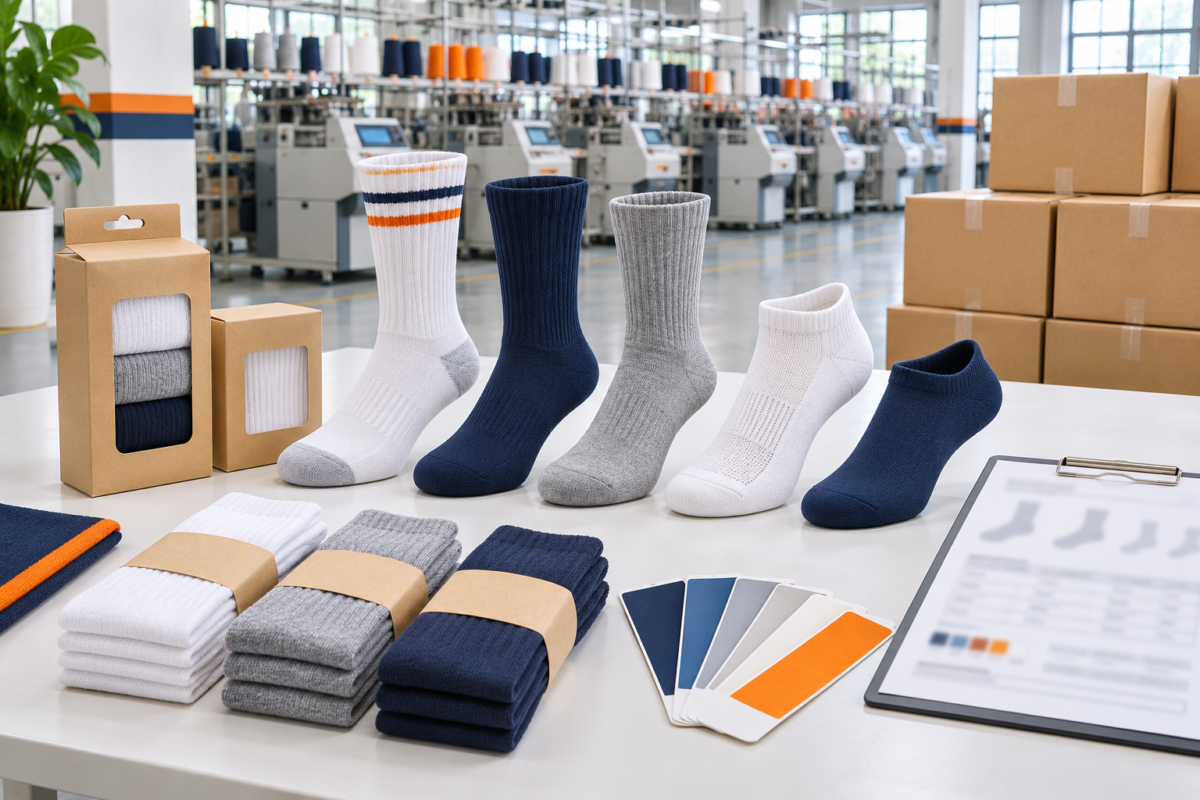
The final fit decisions should reach the production and quality teams through clear project handover points in a usable format. The production file may connect:- Approved size chart
- Measurement method
- Yarn and elastic references
- Knitting construction
- Approved sample version
- Stretch or wear-test observations
- Tolerance requirements
- Change records
07 Information to Send a Sock Supplier
Brands can begin a size and fit discussion with:- Target market and customer group
- Intended shoe-size range
- Product type and use case
- Reference sample or measurement chart
- Preferred sock height and fit
- Material or performance requirements
- Estimated quantity and target timing